
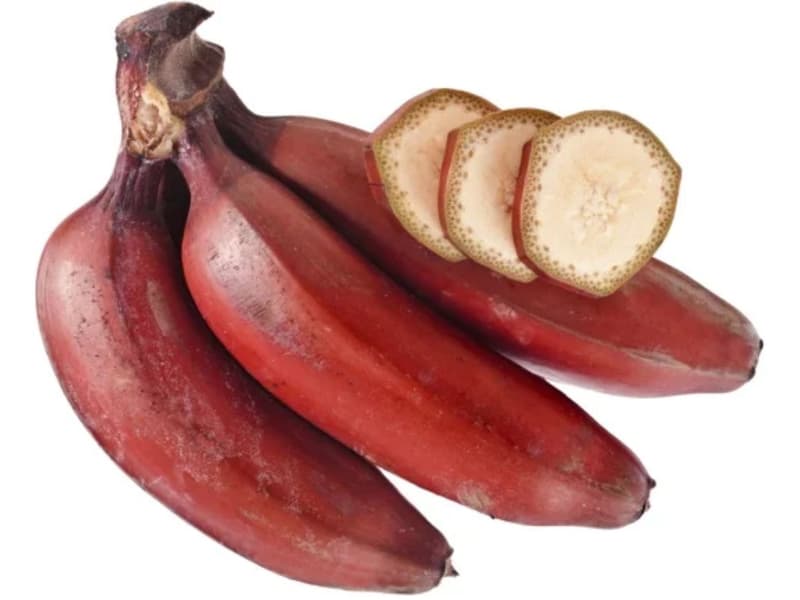
Red bananas at a lower degree of ripeness (they ripen in 2-3 days)
1,403 customers have this product in their favourites
9% of customers buy regularly
Discover these unique red bananas sourced from Ecuador. This exotic variety features a reddish-purple skin and a creamy, light pink flesh that is softer and sweeter than regular yellow bananas, with a subtle hint of raspberry. They are perfect for delicious desserts, fresh fruit salads, or as a sweet, nutrient-rich snack to enjoy on the go.
Similar products




Country of origin
Description

If the bananas are very fresh and firm, let them ripen for a few more days at room temperature, possibly in a paper bag like the one they arrived in. Even if their peel darkens in places and the fruit loses some firmness, ripening will occur, and the bananas will become sweet and deliciously aromatic.
Red bananas are a group of banana varieties with reddish-purple skin. Some are smaller and plumper than the common Cavendish banana, others much larger. When ripe, raw red bananas have a pulp that is cream to light pink in color. They are also softer and sweeter than yellow Cavendish varieties, some with a slight raspberry flavor, and others with an earthy one.
Red bananas should have a red or brown peel when ripe and are best consumed when unbruised and slightly soft. This variety contains more beta-carotene and vitamin C than yellow bananas. It also contains potassium and iron. The redder the fruit, the more carotene and higher the vitamin C level. As with yellow bananas, red bananas will ripen in a few days at room temperature and are best stored outside the refrigerator. Compared to the most common banana, the Cavendish banana, they tend to be smaller, have a slightly thicker skin, with a sweeter taste, but have a longer shelf life than yellow bananas.
Red bananas are consumed in the same way as yellow bananas, by peeling the fruit before eating them. They are frequently eaten raw, whole or chopped and added to desserts and fruit salads, but can also be baked or fried.