
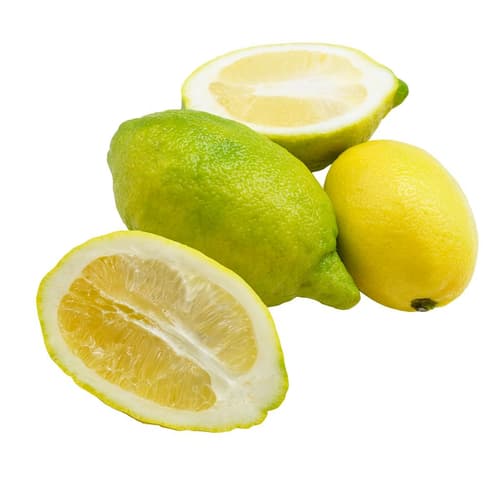
ECO Lamai Interdonato di Messina
500 gDelivery within 3 hours
AI Summary
Xtra price:
RON 12.86
Country:
Italia,
„Limone Interdonato Messina” is a lemon variety from the coastal area of the Province of Messina (Sicily, Italy) — on the Ionian coast — and benefits from Protected Geographical Indication (PGI). We cannot use PGI or PDO on the label because in bulk (as we receive it) it loses this designation, even if it is the same product - it should leave the region in its final packaging for the consumer.
Origin & story
The variety originates from a natural hybrid (or through intentional crosses) between a Cedro lemon and a local lemon (called „Ariddaru”) around the years ~1875-1880, experimented by the Garibaldian colonel Giovanni Interdonato on his property in Valle del Nisi, Sicily.
That is why this fruit bears the name of its father - „Interdonato”.
The traditional production area included several localities on the Messinese Ionian coast (e.g.: Messina, Scaletta Zanclea, Itala, Alì, Alì Terme, Nizza di Sicilia, etc).
The fruit is medium to large in size (≈ 80–350 g) and has an elliptical shape, with a more pronounced elongation („umbone”).
The peel is thin, with fine granulation, and initially opal-green, then turns yellow; the pulp is yellow, juicy, with rare seeds or seedless.
Reduced total acidity (citric acid < 5% in some cases) → sweeter/less acidic taste than ordinary lemons.
Traditionally, it is considered a „fine” lemon, appreciated for direct consumption or dishes where a delicate taste matters.
Harvesting begins early — the variety is early, usually available from September.
The production area has specific soils, climate, and microclimate, which contribute to the particular character of the fruit.
It can be consumed fresh, having a milder taste than other lemons.
Ideal for salads with thin slices and oil, vinegar, and salt — the fine peel adds a delicate aroma.
Also used in gourmet dishes, drinks, desserts — due to its less acidic taste.