Classic Crème Caramel: the delicate childhood dessert
The pure nostalgia of family Sundays, concentrated in a creamy, refreshing dessert bathed in a golden liquid caramel sauce with a deep flavor of real vanilla.
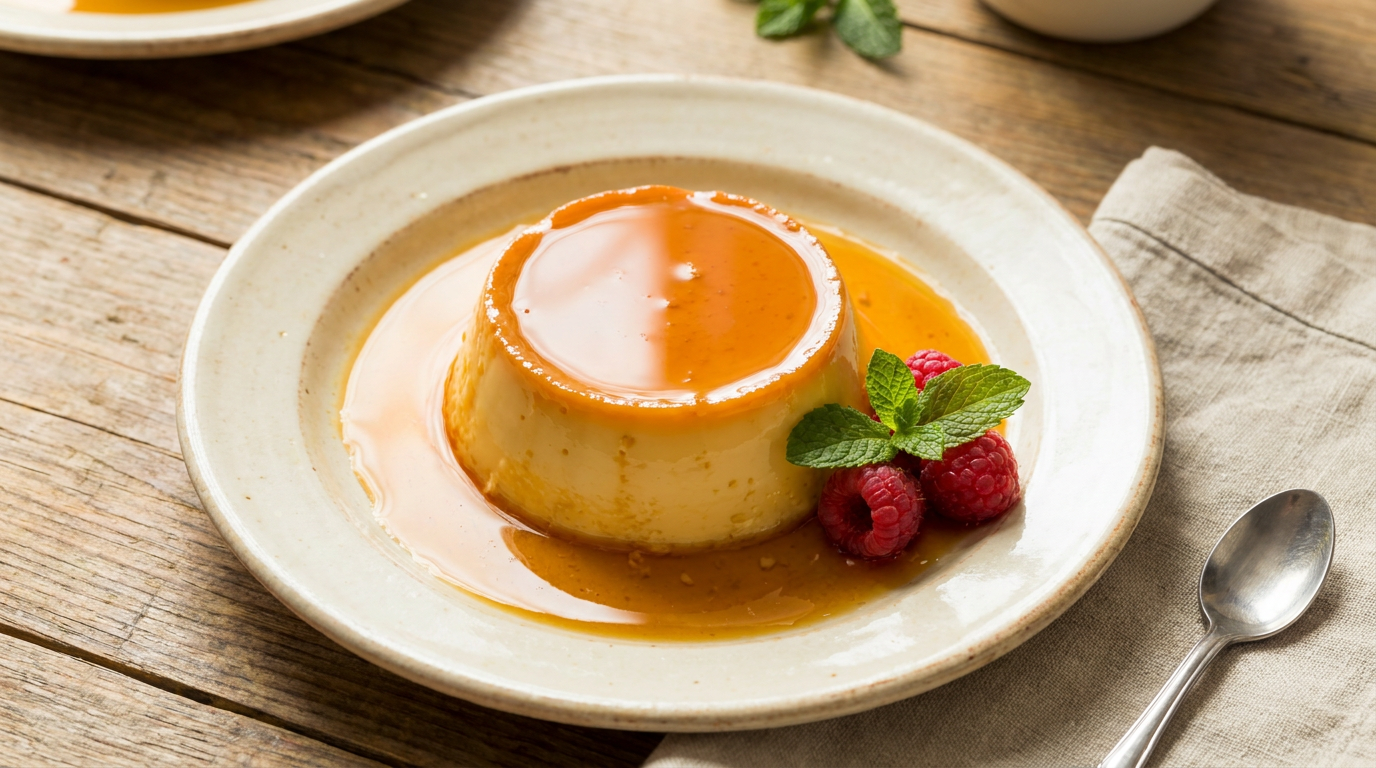
There are few desserts capable of instantly awakening fond memories like a generous portion of crème caramel. Known in French gastronomy as crème caramel and in the Iberian world as flan, our local version has a special nobility through the absolute simplicity of its ingredients. All you need is high-quality whole milk, fresh farm eggs, sugar, and a touch of real vanilla. The charm lies in how these four fundamental elements transform, under the gentle heat of the oven, into a silky, dense custard enveloped in a cascade of liquid caramel.
The secret to a memorable custard does not lie in sophisticated laboratory techniques, but in following a few precise rules of culinary chemistry. From the optimal shade of caramel, which should never turn bitter, to slow baking in a bain-marie that guarantees a uniform texture without bubbles or roughness, every detail counts. In the following lines, we reveal the complete guide to preparing an impeccable crème caramel at home, worthy of the finest pastry shop displays.
Golden Caramel: The Perfect Amber Shade
Caramelizing the sugar is the first and most spectacular step of the recipe. A successful caramel is fluid, fragrant, and sweet with a subtle toasted note. If left on the heat for too short a time, it will remain a simple, characterless sweet syrup. If burnt even by a few seconds too long, it will take on a bitter taste and a dark color that will ruin the entire dish.
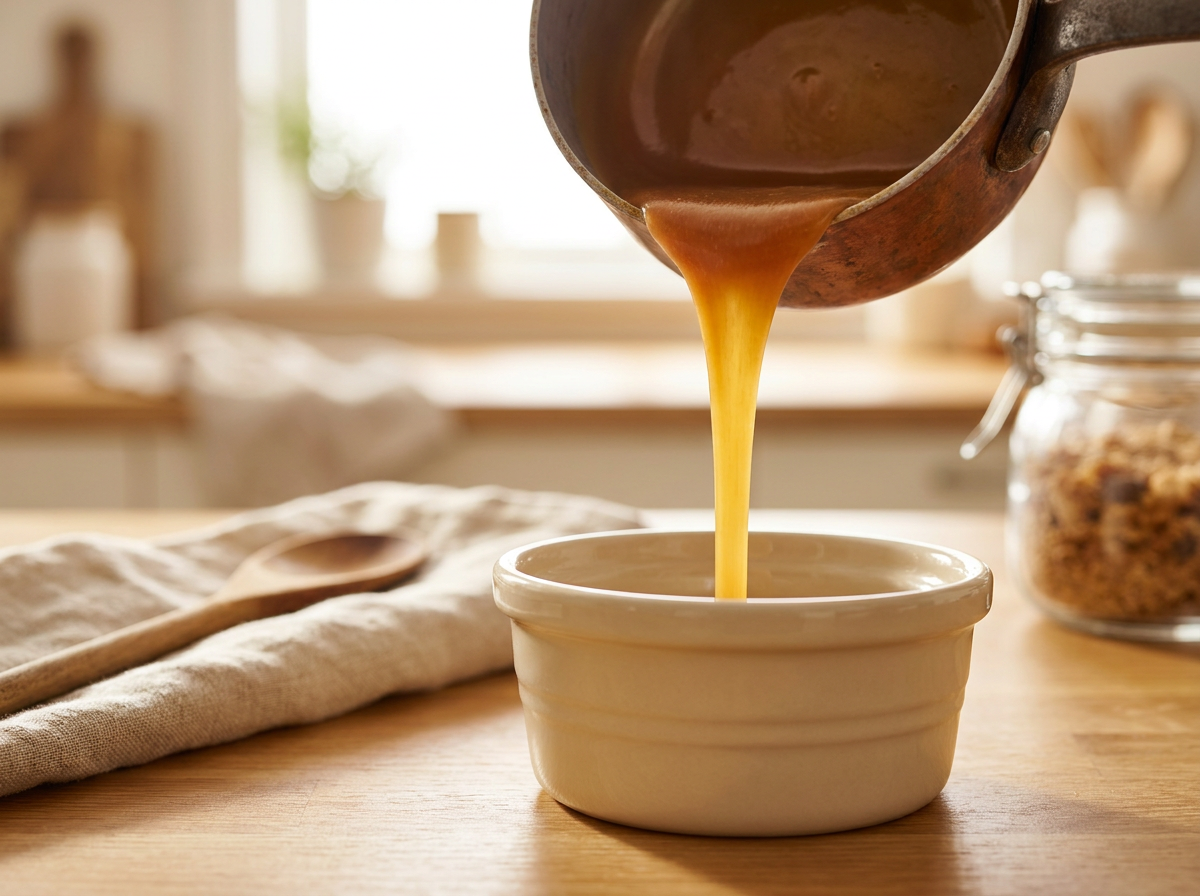
Step-by-step guide to flawless caramelization
- The right amount: Use approximately 150-180 g of white granulated sugar to coat a 22-24 cm round pan or 6 individual ramekins.
- Temperature control: Melt the sugar over medium-low heat in a heavy-bottomed saucepan. Do not stir vigorously with a spoon to avoid crystallization; instead, gently swirl the pan as the sugar begins to liquefy.
- Quick coating of the sides: As soon as the caramel reaches a warm amber color, pour it into the heat-resistant dish and swirl it in circular movements to coat the bottom and the sides halfway up.
- Cooling time: Allow the caramel to cool and set completely before pouring in the egg custard. You will hear fine little cracks in the sugar, a sign that the layer has set perfectly.

The balance of fresh eggs and full-fat milk: the magic of texture
Crème caramel contains no flour, starch, or gelatine. Its entire firm yet incredibly smooth texture when sliced comes exclusively from the coagulation of egg proteins in a milk suspension. That is why the freshness and quality of the core ingredients directly dictate the final taste and consistency of the dessert.
The optimal ratio of ingredients for 1 litre of milk
For a large family baking dish (8 generous servings), the ideal classic proportion is 8 large eggs per 1 litre of milk and 150 g of sugar. If you want an ultra-smooth consistency, you can use 6 whole eggs plus 2 extra egg yolks.
Choose fresh organic eggs or free-range eggs. The intensely coloured egg yolks give the custard that appetizing golden yellow shade.
The milk must be whole milk, with at least 3.5% or 3.8% fat. Fresh milk with cream top from local producers brings a natural sweetness and superior creaminess.
Essential tip: Whisk the eggs with the sugar only until the granules dissolve. Do not use an electric mixer on high speed and do not create excessive foam. Gradually incorporate the lukewarm milk and strain the mixture through a fine-mesh sieve before baking to remove any unmixed egg white.
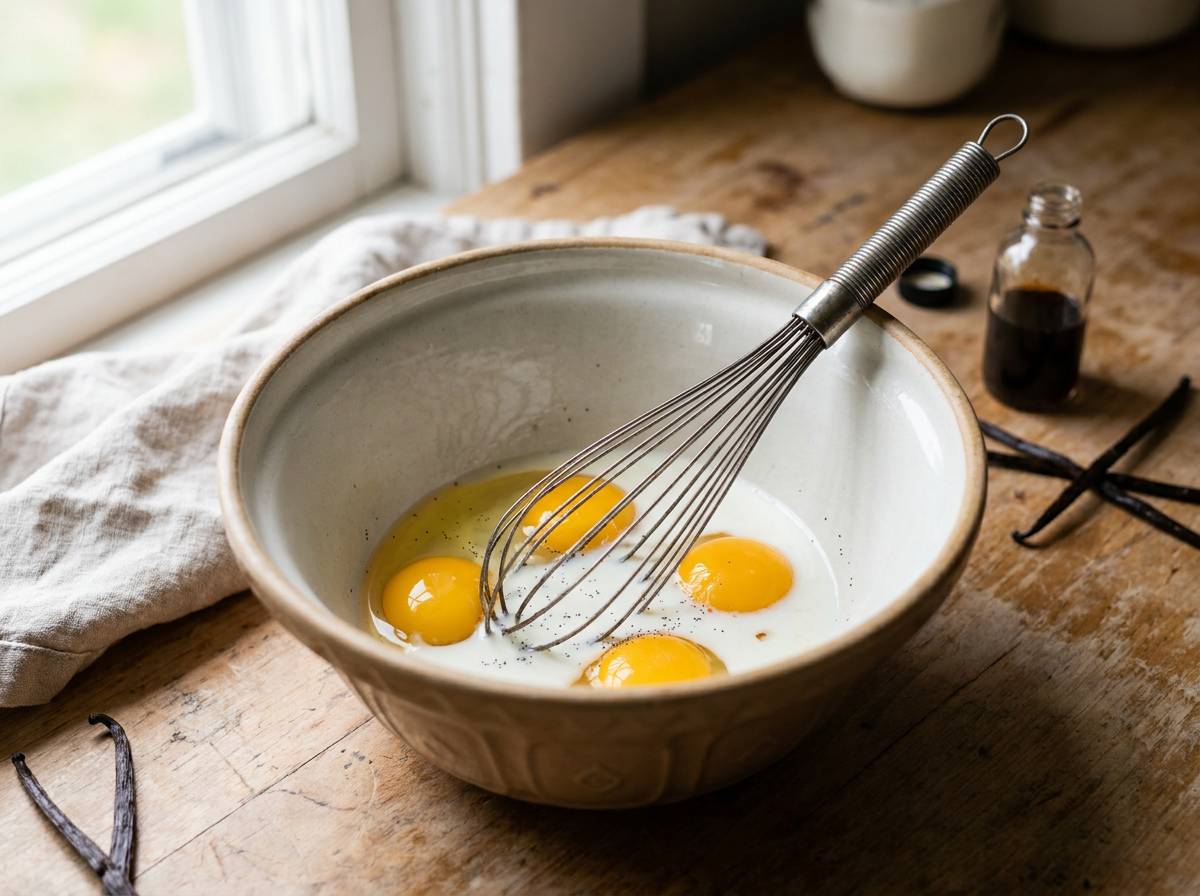
 Laptaria cu caimac Milk from the cow
Bain-marie baking: secrets to a smooth, hole-free texture
The difference between a silky-smooth crème caramel and a spongy one full of unsightly holes and a strong smell of boiled egg is strict temperature control. Egg proteins start to coagulate at 70°C and contract tightly if exposed to boiling temperatures.
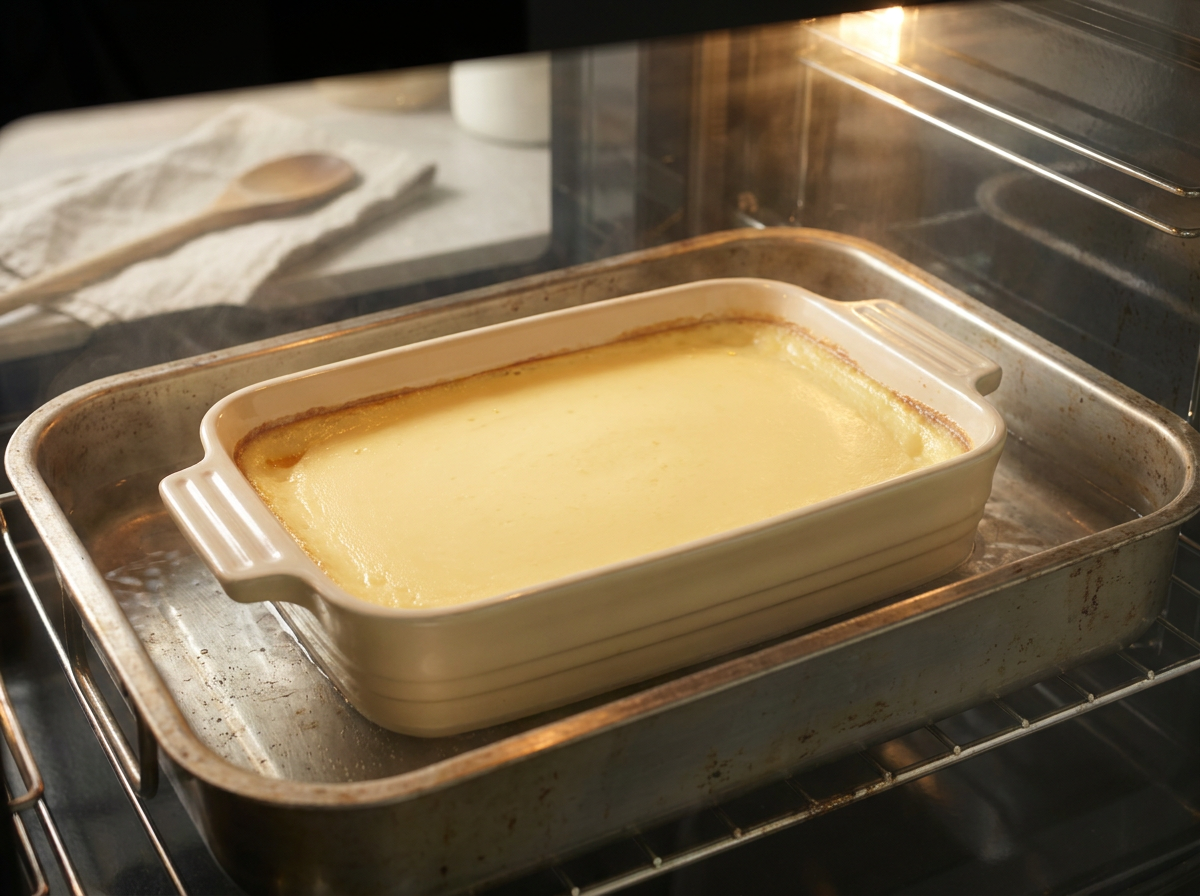
Hot water in the pan
Place the baking dish with the custard into a larger pan and pour hot water up to halfway up the sides of the dish. The water bath acts as a uniform thermal shield.
Gentle temperature
Preheat the oven to 150-160°C (top and bottom heat, no strong fan). The water in the pan must not boil at any point.
Timing and the consistency test
Bake for 50-60 minutes. The custard is ready when the edges are set, but the center wobbles slightly like a well-set panna cotta.
Slow overnight cooling
Do not unmold the warm custard. Allow it to reach room temperature, then keep it in the refrigerator for a minimum of 6-8 hours before unmolding.
Noble aromas and serving: pure vanilla and fresh notes
Although the composition is simple, the difference between an ordinary custard and a memorable dessert lies in the flavor profile. Authentic Bourbon vanilla unfolds a warm floral bouquet that mellows the egg flavor and enhances the caramel.
Accents that transform the dessert
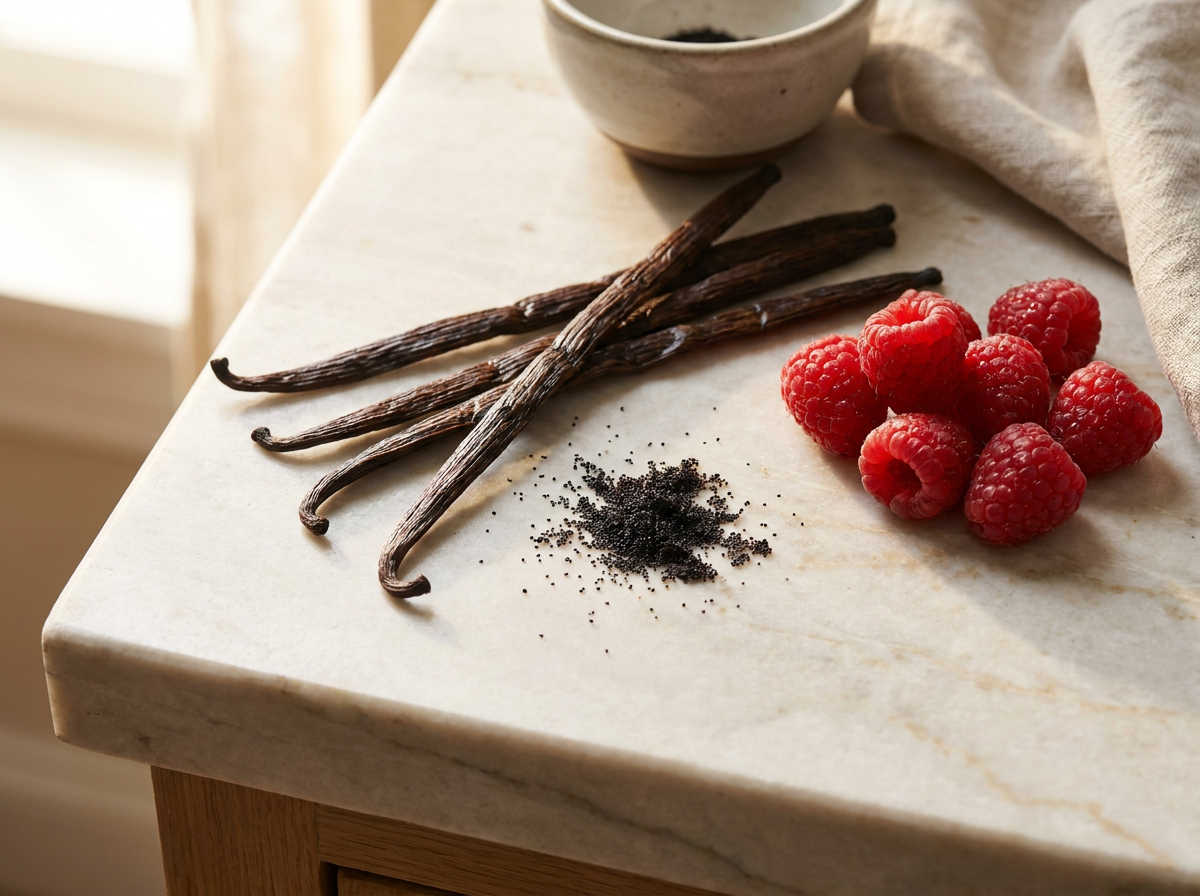
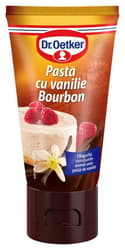
Real Bourbon vanilla: Use a split vanilla pod whose seeds you infuse into warm milk, or a teaspoon of pure vanilla paste. The natural black specks in the custard are the sign of absolute quality.
Fine citrus zest: If you like a fresh, Mediterranean-style note, add a thin strip of untreated lemon or orange peel to the milk and remove it before pouring the custard over the caramel.
Fresh fruit contrast: The rich sweetness of the caramel pairs splendidly with fresh raspberries, blackberries, blueberries, or redcurrants. The delicate acidity of the fruit cleanses the palate with every bite.