
How to prepare restaurant-style beef soup
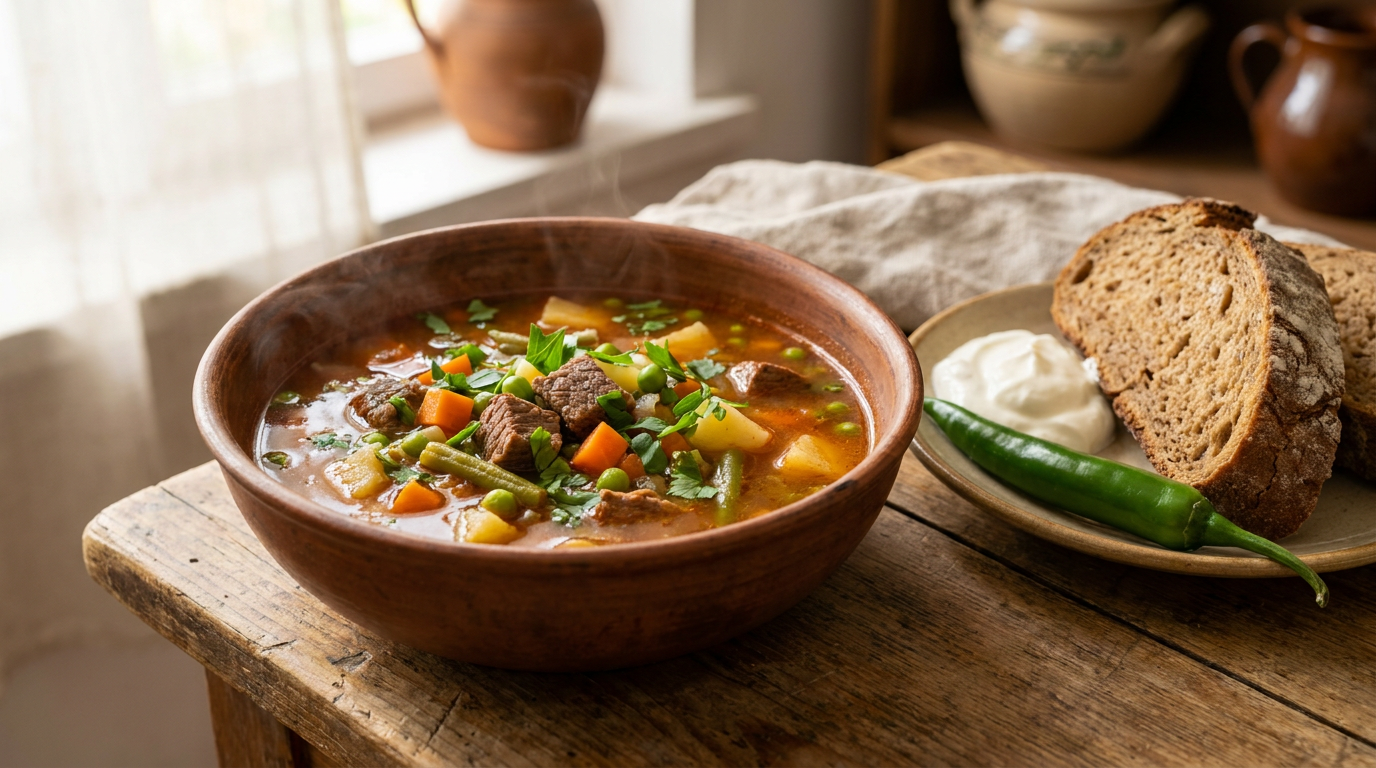
Traditional beef sour soup is the undisputed queen of Sunday meals and the most ordered dish in traditional Romanian restaurants. The intense flavor of tender meat simmered over low heat, the sweetness of carefully sautéed root vegetables, the freshness of garden vegetables, and the noble acidity of natural borș create that perfect balance you recognize from the very first spoonful.
How many times have you tried cooking it at home and felt it lacked that depth of flavor or that golden clarity from restaurants? The secret doesn't lie in magical ingredients, but in the precise technique that great chefs religiously follow. In this complete step-by-step guide, we reveal every essential detail, from choosing the right cuts of bone-in meat to the optimal temperature for adding the borș and fresh herbs.
1. Restaurant secrets: the right meat and base stock
A memorable beef soup cannot be built on lean brisket or trimmed tenderloin alone. In professional gastronomy, the body and silky texture of the soup come from the natural collagen released by bones and connective tissues. When you choose fresh beef and veal, the secret is to combine tender lean meat with cuts rich in bone and gelatin.
The ideal meat trio for soup
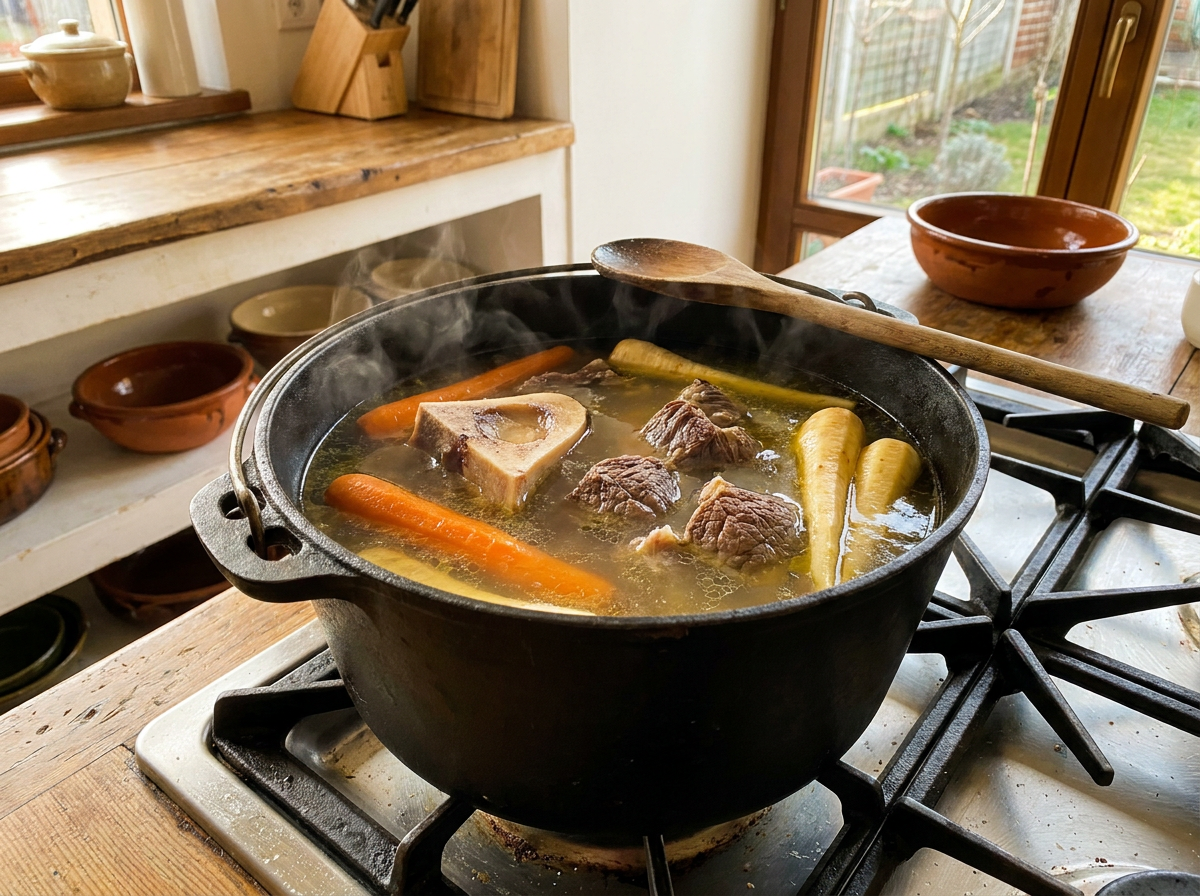
1. Bone-in beef shank: This is the centerpiece. It provides flavorful meat that becomes extremely tender after slow simmering, plus marrow and collagen from the bone that give that velvety consistency typical of restaurants.
2. Beef soup bones: Don't neglect them. Simmering cracked bones on low heat for at least two hours extracts deep minerals and flavors that plain water can never achieve.
3. Veal leg or marbled chuck: Added as a complement, cut into equal two-centimeter cubes, ready to be enjoyed in every spoonful without being stringy or dry.
The flawless boiling and skimming process
Place the meat and bones in a spacious 6 or 8-liter pot and cover them with cold tap water, leaving a layer of at least four fingers above the meat. Cold water ensures the gradual dissolution of proteins and the formation of a compact foam on the surface. If you put the meat directly into hot water, the pores close instantly, and the soluble proteins will make the liquid cloudy.
Turn the heat to medium. As the water approaches the boiling point, a brownish foam will form. Carefully remove this scum using a fine skimmer. Repeat 3 or 4 times until the surface remains completely clean. As soon as the broth comes to a boil, reduce the heat to low. The broth should only gently simmer, without aggressive boiling. Add a teaspoon of coarse salt, two bay leaves, and a few black peppercorns, then let everything simmer partially covered for about 90 minutes, until the meat is easily pierced with a fork. Get inspired by our classic recipe for clear beef soup with vegetables for additional clarifying techniques.
If you want an uncompromised restaurant-quality soup, remove the cooked meat onto a platter, cut it into uniform cubes, and strain the stock through a fine sieve lined with clean cheesecloth before adding the vegetables. You will get a golden, clear, and spectacular base.
2. Gently sautéed root vegetables: sweetness and golden color
Have you ever noticed the warm, copper shade of beef sour soup in good restaurants? It doesn't come from dyes or additives, but from the beta-carotene extracted from carrots through a short, gentle sautéing in fat. When you throw raw root vegetables directly into boiling water, their taste remains flat and watery. When you sauté them lightly, the natural sugars delicately caramelize, releasing a deep sweetness. Discover the fresh selection of local root vegetables for optimal results.
Vegetable geometry: the perfect dicing
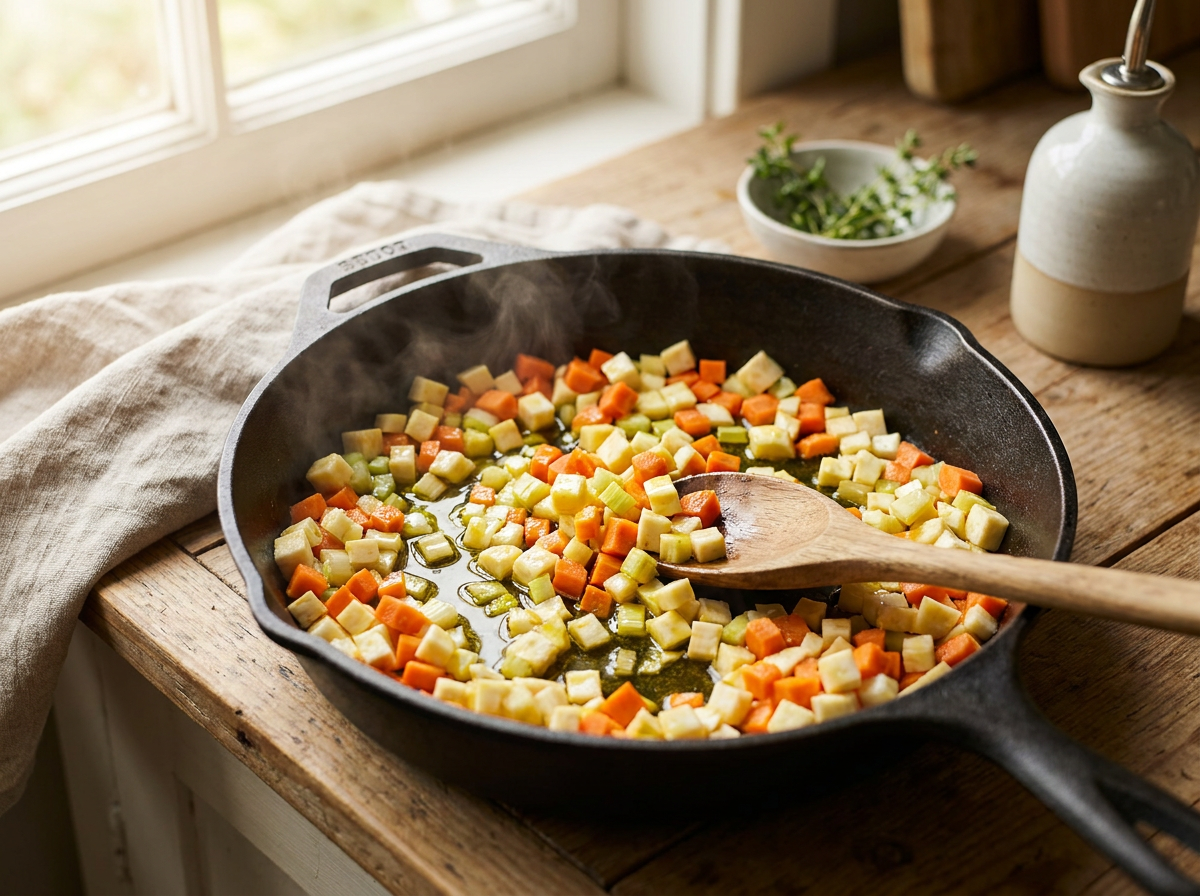
A hallmark of a professionally prepared soup is the uniformity of the ingredients. All root vegetables should be cut into small cubes of approximately 5 millimeters (large brunoise). Even cutting guarantees not only an impeccable visual appearance on the plate, but also that all vegetables will cook at the exact same time.
Step-by-step braising technique
Heat two tablespoons of sunflower oil and a small knob of butter in a large pan. Add a finely chopped yellow onion and a pinch of salt. Sauté the onion over low heat for 3 minutes until translucent, without letting it brown at all.
Add the diced carrots, parsnip root, and celery root cubes. Stir constantly for 5 to 7 minutes over gentle heat. You will see the oil take on an intense golden-orange hue. At this point, pour two ladles of warm beef stock over the vegetables, cover the pan with a lid, and let them steam for 8 minutes. The root vegetables will soften halfway and become incredibly fragrant.
Pour the entire contents of the pan into the large pot with beef stock and the tender meat pieces. Let everything simmer together over low heat for 10 minutes so the flavors begin to fuse.
3. Symphony of garden vegetables: texture and freshness
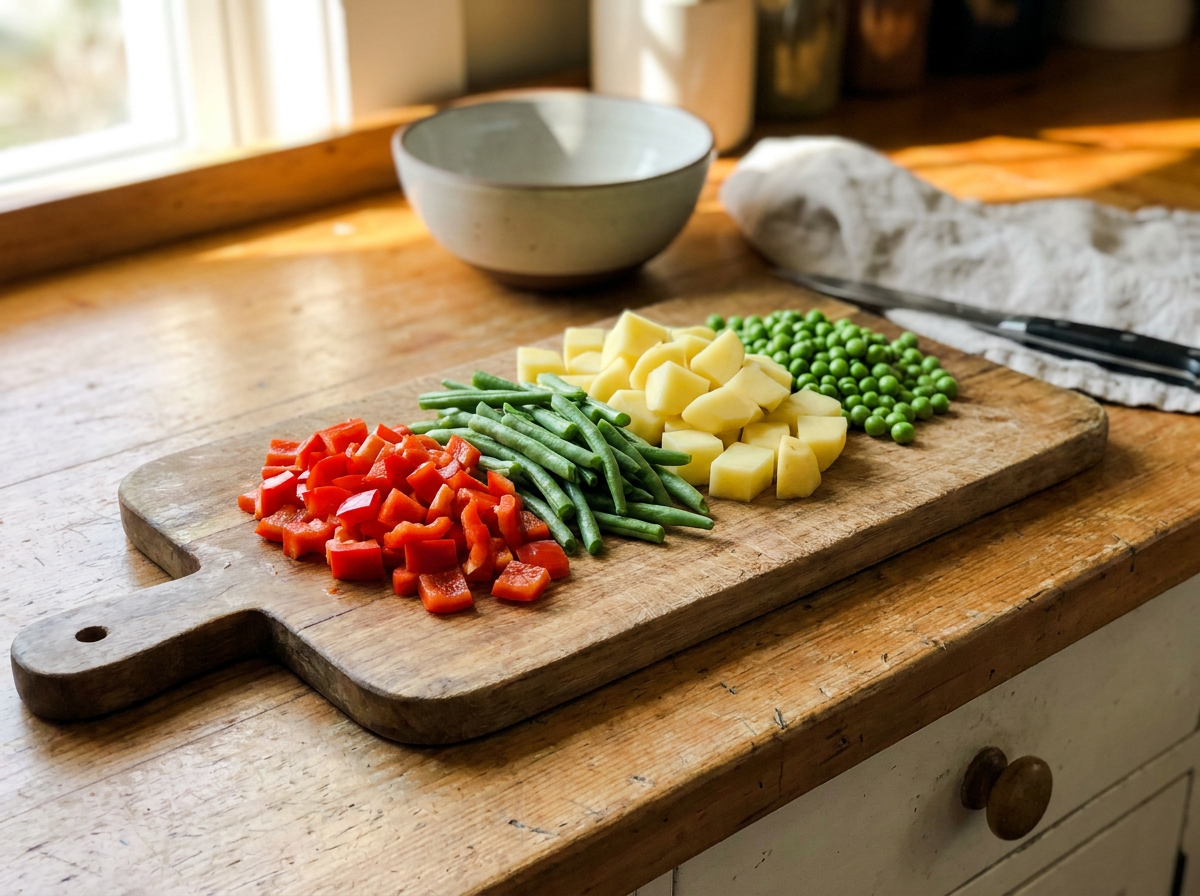
A successful beef soup is an explosion of contrasting colors and textures: the intense green of green bean pods, the bright red of kapia pepper, the round grains of sweet peas, and golden potato cubes. Beginners' big mistake is throwing all the vegetables into the pot at once. The result is a homogenized, overcooked meal. The restaurant secret lies in respecting the cooking times for each ingredient from the fresh vegetables range.
Chronological order of addition
Step 1: Potatoes and bell pepper. Peel two medium potatoes and cut them into 1.5-centimeter cubes. Slice a red bell pepper or kapia pepper into thin strips. Add them to the pot 10 minutes after the root vegetables. Potatoes need about 15 minutes to be perfect.
Step 2: Green beans and peas. Use tender green beans cut into 2-centimeter pieces and sweet peas. These have a delicate texture and lose their color if cooked for too long. Add them 10 minutes before the end.
Step 3: Peeled tomatoes and tomato paste. Tomatoes bring acidity and umami flavor, but acid slows down the cooking of potatoes. Therefore, strained tomatoes or diced peeled tomatoes should only be added after the potatoes are almost tender. Check out the aromatic vegetable soup recipe as well for culinary inspiration.
Chronology of cooking vegetables in the soup
| Vegetable | Addition time | Cooking time | Desired texture |
|---|---|---|---|
| White / yellow potatoes | Minute 0 of vegetables | 15 - 18 minutes | Tender, intact |
| Kapia / bell pepper | Minute 0 of vegetables | 15 minutes | Velvety and sweet |
| Green bean pods | After 5 minutes | 10 minutes | Slightly crunchy (al dente) |
| Fine green peas | After 7 minutes | 8 minutes | Juicy and green |
| Strained / diced tomatoes | After 10 minutes | 5 minutes | Integrated into broth |