Complete guide to baby weaning
Introducing solids to babies is a journey full of tasty discoveries, emotions, and food-smudged smiles. The transition from milk to the first spoonfuls of vegetable puree opens up a whole universe of natural flavors and nourishing textures. At Sezamo, we are by your side with fresh organic vegetables, trusted organic purees, and nutritionist advice for a balanced diet.
Magical moments: When and how to start the first spoonful
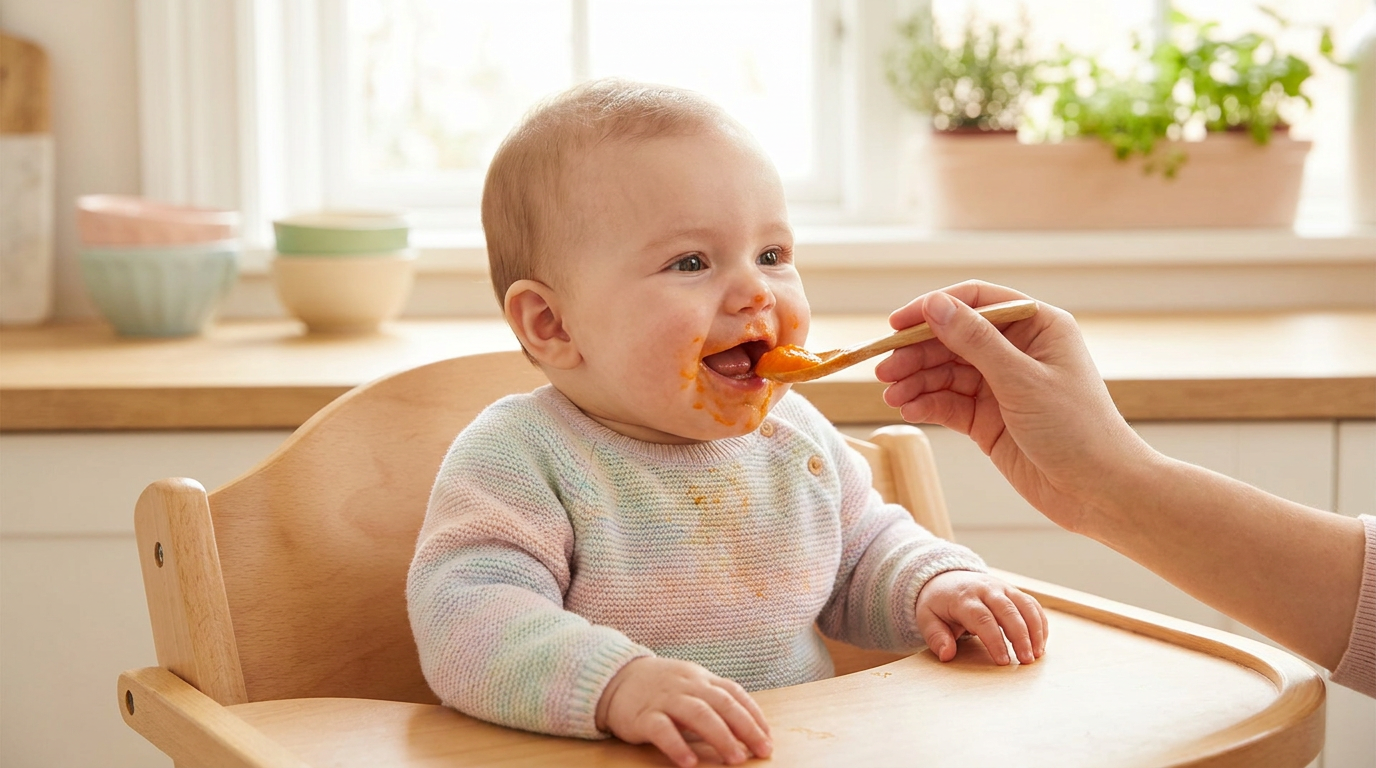
The World Health Organization and the European Society for Paediatric Gastroenterology, Hepatology and Nutrition recommend exclusive breastfeeding or formula feeding until 6 months of age. The infant's digestive and renal systems develop rapidly in the first months, and before 17 weeks of age, it is not ready for the enzymes needed to digest solid foods.
As an important physiological and emotional transition, it is essential to observe your baby's individual signs of readiness. Calendar age is not the only indicator, but rather the stage of neuromuscular development. Solid foods in the first months play a complementary role, while milk remains the main source of energy and hydration.
The baby holds their head upright and can sit in a high chair without tilting to the side.
Watches the food on your plate closely, grabs objects with their hand, and brings them straight to their mouth.
Asks for milk more often, opens their mouth when seeing the spoon, and seems ready to try new flavors.
The 3-day rule and the art of first vegetable purees
The first stage of weaning relies on rigor, calmness, and careful observation. The 3-day rule involves introducing a single new ingredient for three consecutive days, preferably at lunchtime. This pause allows you to easily monitor the baby's digestive or dermatological reactions.
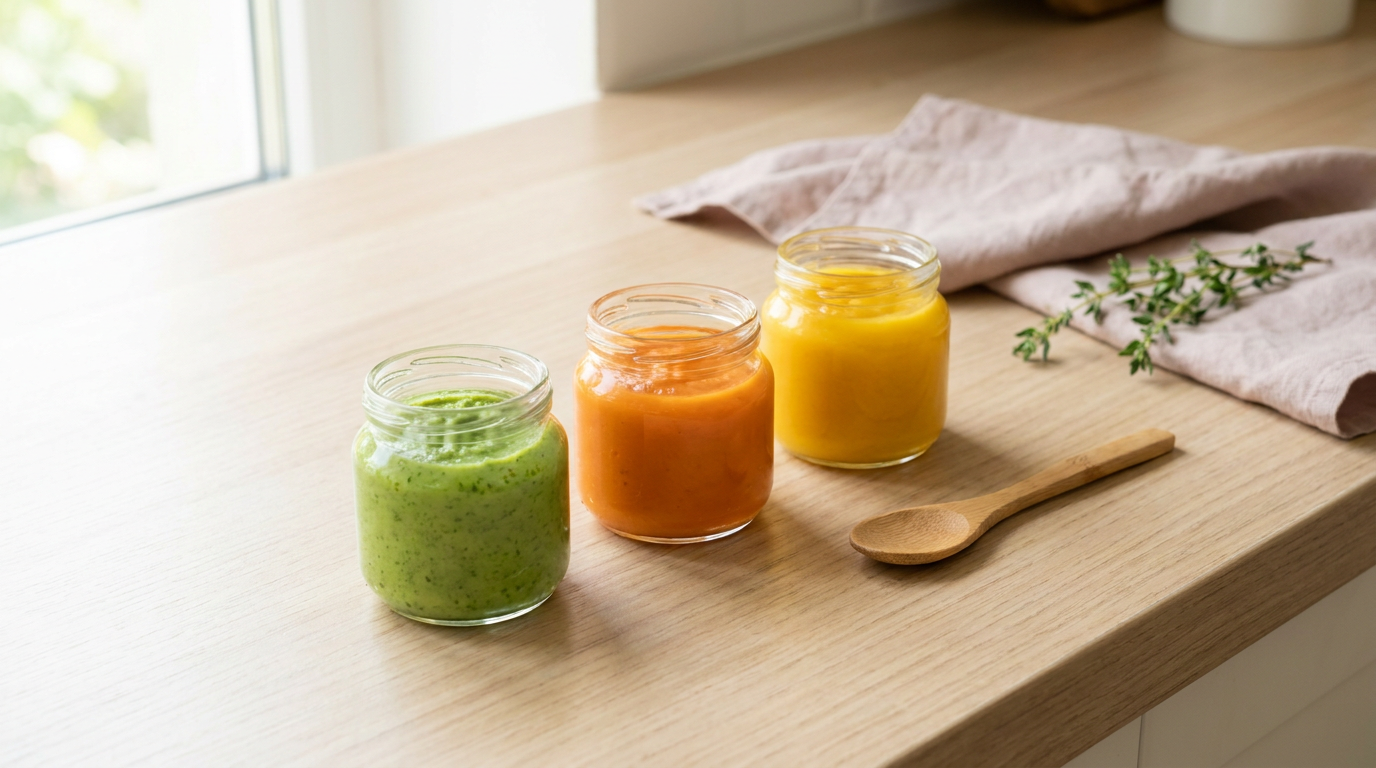
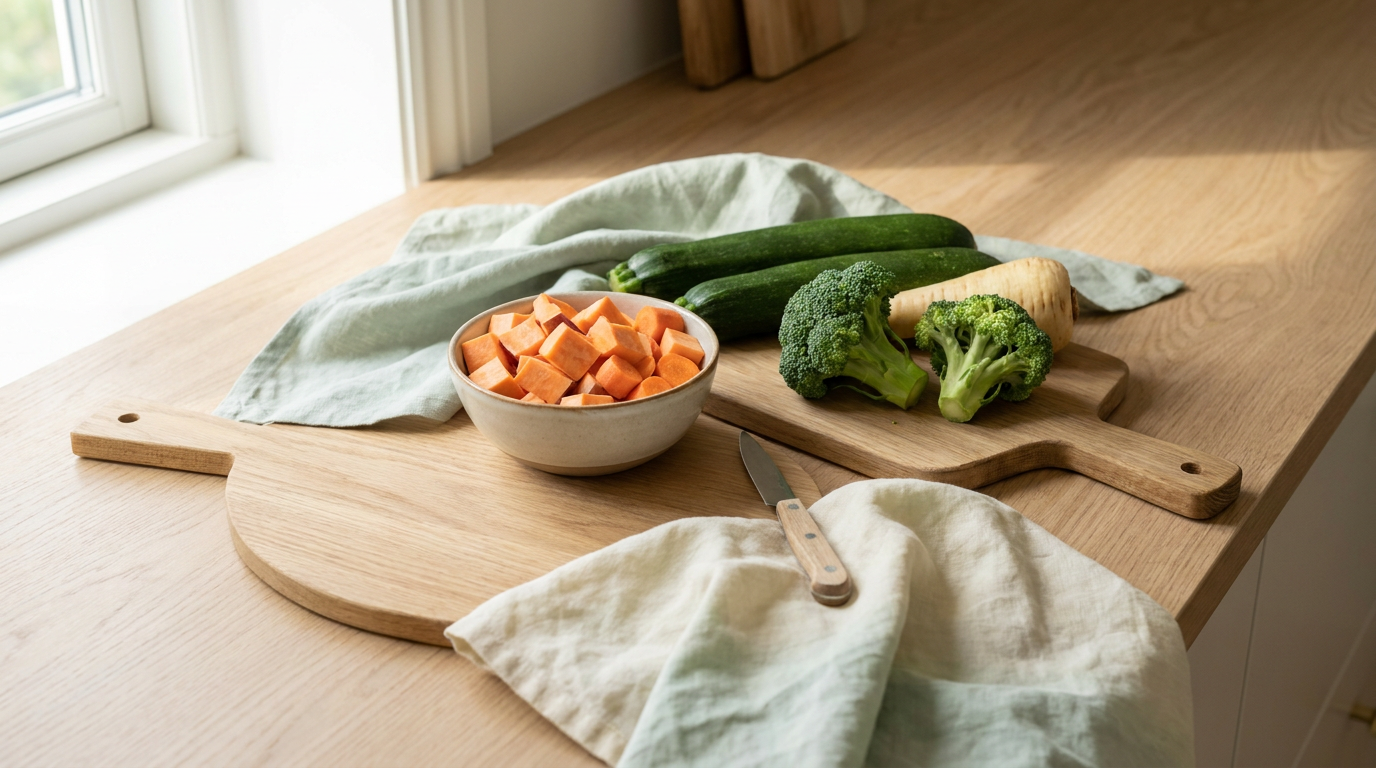
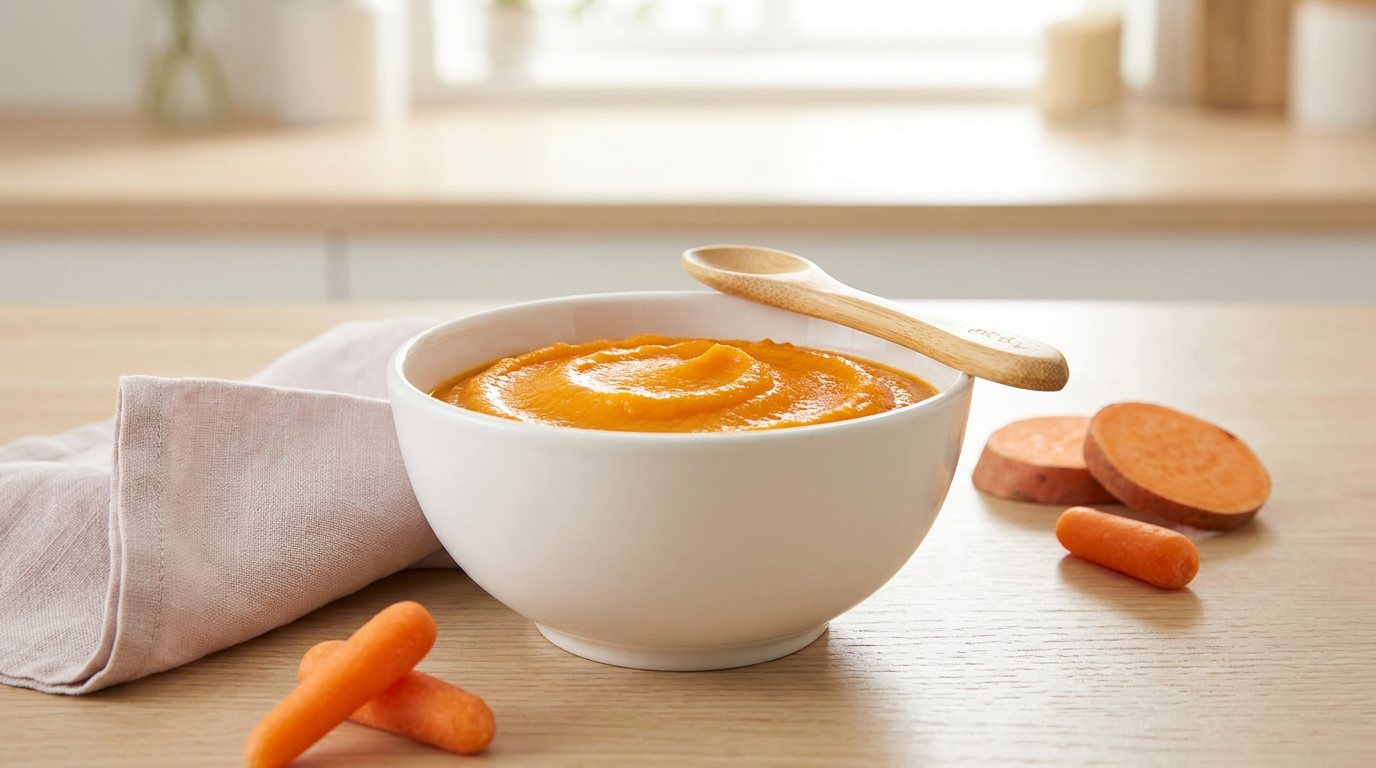
It is recommended to start with sweet, easily digestible organic vegetable purees: sweet carrots, zucchini, sweet potatoes, and parsnips. Steaming is the ideal method to preserve heat-sensitive vitamins and the vibrant color of vegetables.
After pureeing the cooked vegetables until you get a smooth and creamy consistency, you can add a few drops of cold-pressed olive oil. Healthy fats help absorb fat-soluble vitamins (A, D, E, K) and support brain development.
Do not add salt, sugar, or spicy seasonings to the food of a baby under 1 year old. Their kidneys are still developing, and the little ones' taste buds are extremely sensitive and appreciate the pure taste of vegetables.

 Stoian Farm Romanian Carrots
Diversification table by age: From 6 to 12 months
The baby's meal plan gradually adapts as their digestive system matures and the first teeth appear. Here is a guide structured by age stages to easily navigate through diversification.
| Age | Recommended foods | Texture | Meal frequency |
|---|---|---|---|
| 6 - 8 months | Carrot, zucchini, sweet potato, parsnip, apple, pear, avocado, chicken or turkey meat, well-cooked egg yolk. | Very fine, liquid, or creamy puree. | 1 - 2 solid meals per day + milk. |
| 8 - 10 months | Broccoli, cauliflower, mashed peas, plain unsweetened yogurt, fresh cottage cheese, white fish (pike-perch), sugar-free whole grains. | Puree lightly mashed with a fork, small soft pieces. | 2 - 3 solid meals + 1 snack. |
| 10 - 12 months | Well-cooked legumes (red lentils), small pasta, polenta, finely minced meat, soft fruit strips. | Soft pieces that the baby can pick up on their own. | 3 main meals + 2 small snacks. |
For busy days, travel, or walks in the park, you can confidently choose ready-made meals and purees made from organic ingredients, carefully controlled, from the Sezamo selection.