
Guanciale vs. Pancetta: What is the difference and which one do we choose for Carbonara?
Guanciale or pancetta? This is the question that divides Italy into two passionate camps. Discover the secrets of the two specialties and find out which one to choose for a perfect Carbonara.
The great dilemma of Italian cuisine
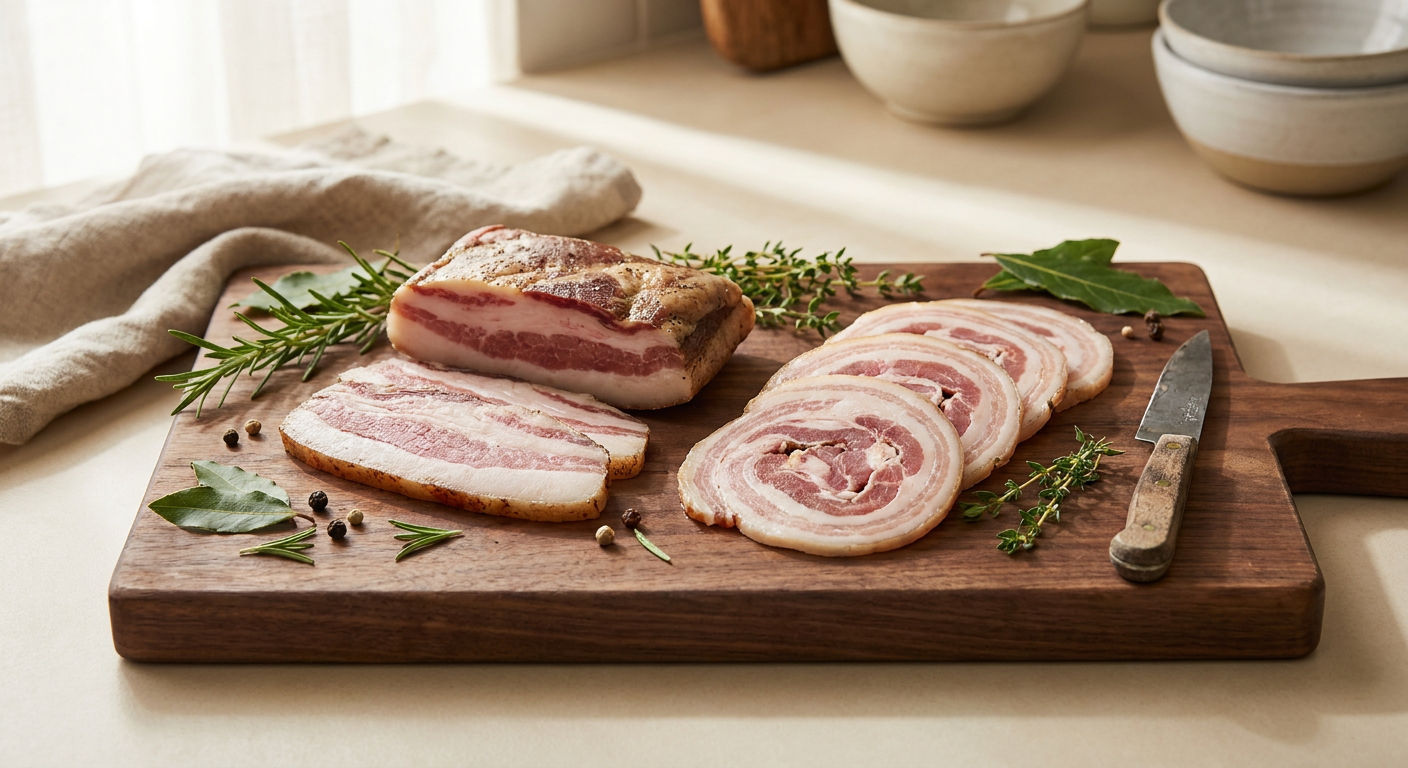
When it comes to Italian pasta, details make the difference between a mundane dish and a culinary work of art. Guanciale and pancetta are the undisputed stars of cured meats, but although they seem similar at first glance, they hide well-kept secrets. From the cut they are obtained from to the spices used, each brings a unique personality to the plate. Let's analyze them closely and put an end to the dispute surrounding the famous Carbonara pasta.
Guanciale: The fatty gold of central Italy
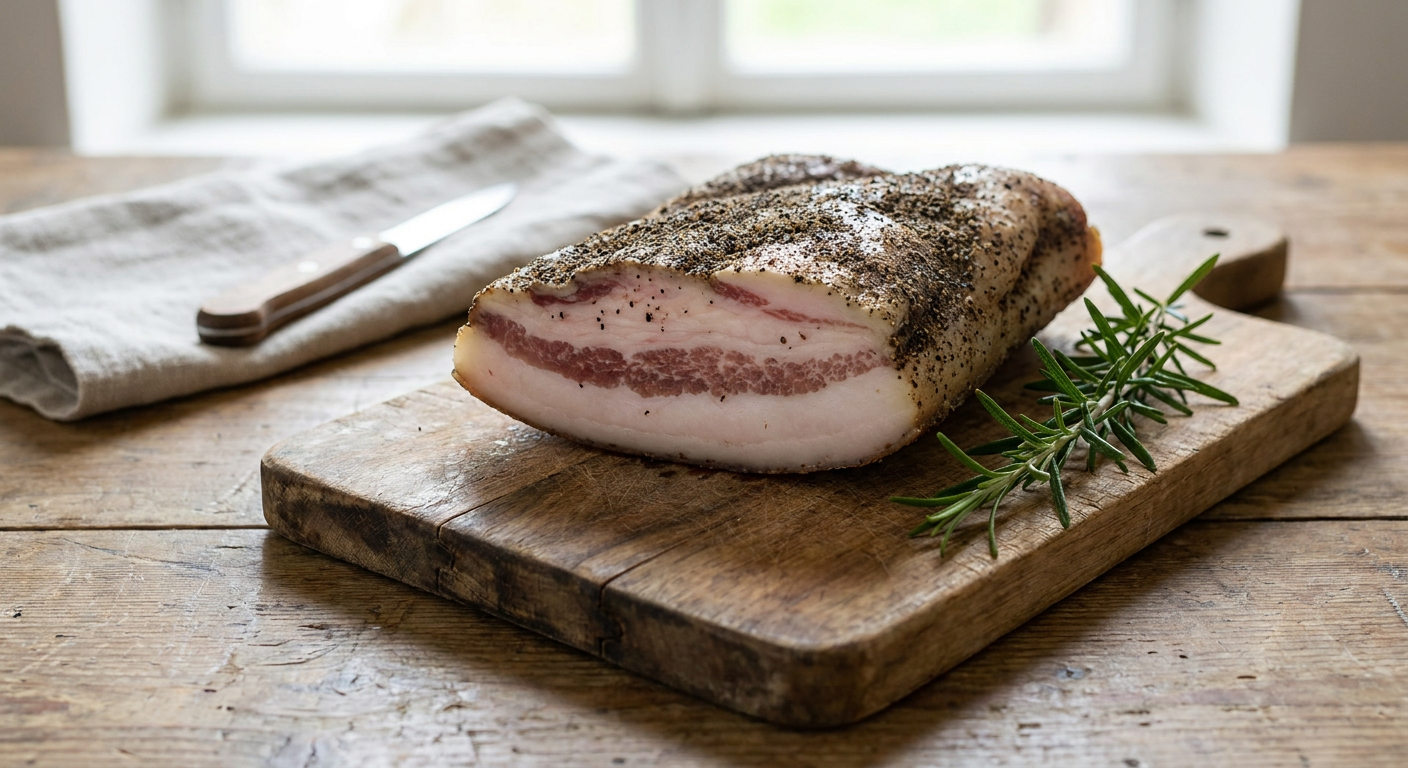
Guanciale comes from the pork jowl or cheek (in Italian, 'guancia' means cheek). It is a cut of meat with a special structure, where the fat is much denser and finer than that of the belly. Traditionally seasoned with salt, black pepper, and sometimes garlic or sage, it is cured for at least 30 days. The result? An intense, deep flavor that is spectacularly released in the pan. When you fry it, the fat melts completely and becomes translucent, leaving behind incredibly crispy cubes.
Pancetta: Rustic versatility in fine layers
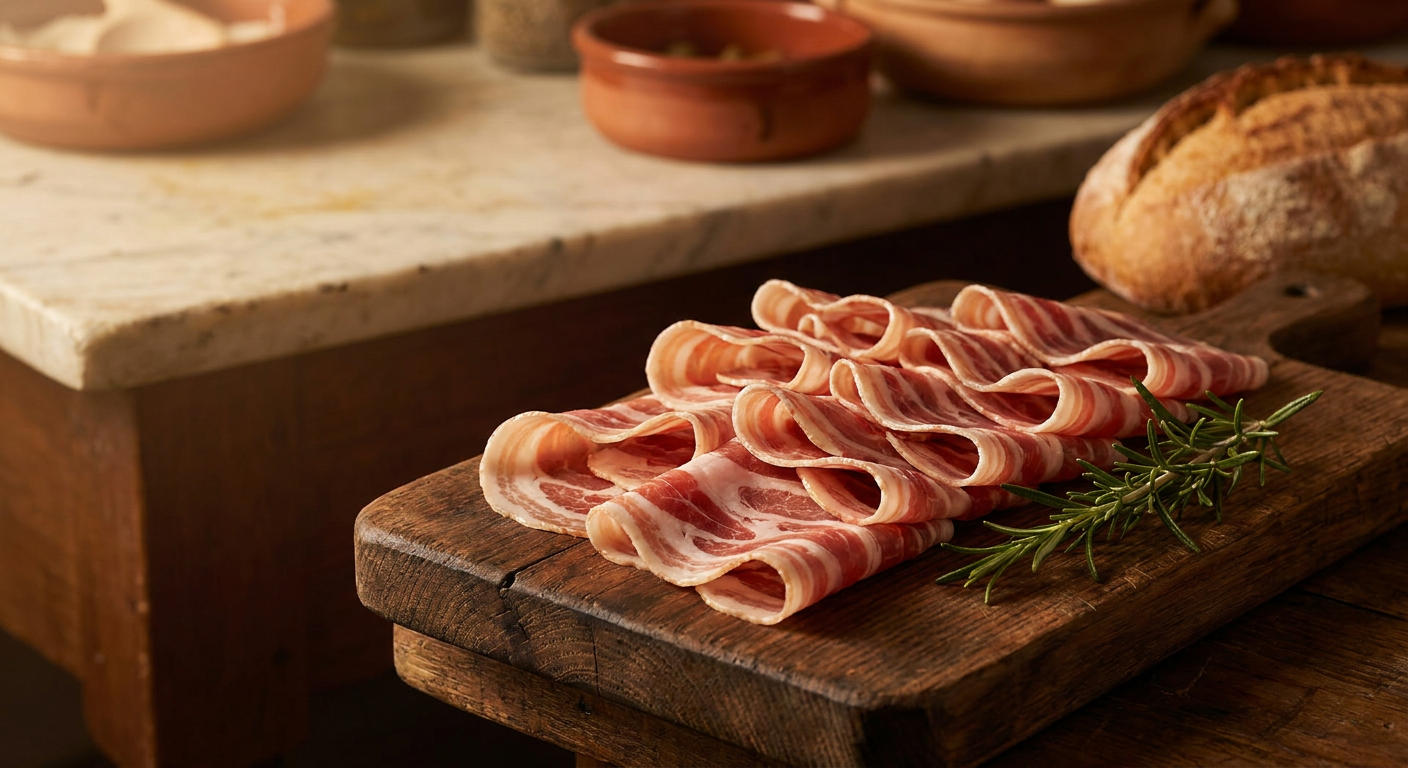
Pancetta is made from pork belly (in Italian, "pancia" means belly). Unlike guanciale, pancetta has alternating layers of lean meat and soft fat, which gives it a spectacular striped appearance. You can find it rolled (arrotolata) or flat (tesa), often seasoned with nutmeg, cloves, and pepper. It has a more delicate texture and a milder taste, making it extremely versatile. It melts easily when cooked and is perfect for wrapping roasts or vegetables, but also for adding a savory note to soups or risotto.
Guanciale vs. Pancetta at a glance
| Feature | Guanciale | Pancetta |
|---|---|---|
| Source | Pork jowl / cheek | Pork belly |
| Structure | Dense and fine fat, little lean meat | Alternating layers of lean meat and soft fat |
| Seasoning | Salt, intense black pepper, sage/garlic | Salt, pepper, nutmeg, cloves, herbs |
| Taste | Intense, robust, rich in umami | Mild, sweetish, aromatic, more delicate |
| Fried texture | Extremely crispy on the outside, soft on the inside | Crispy-soft, browns quickly |
| Classic recipes | Carbonara, Amatriciana, Gricia | Risotto, soups, wrapped roasts, appetizers |
💡 But what about bacon?
Bacon is the Anglo-Saxon cousin of the two Italian specialties. The big difference is that bacon is almost always smoked, while guanciale and pancetta are only air-cured. Smoking brings a strong woody aroma that can overpower the delicate taste of Italian pasta. If you want to respect tradition, avoid smoked bacon in Carbonara.
The verdict for the perfect Carbonara
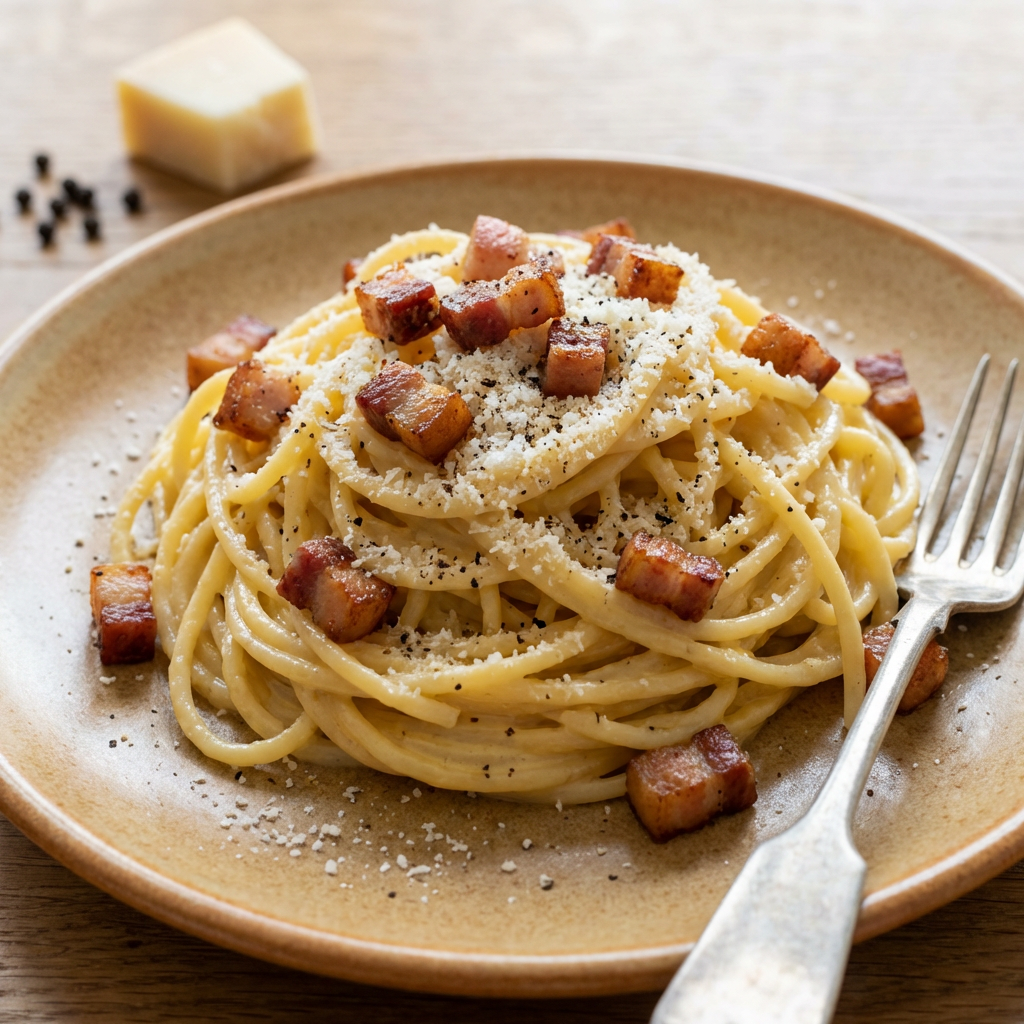
If you want to prepare a portion of Spaghetti Carbonara just like in Rome, there is only one answer: Guanciale. Its dense fat melts in the pan and emulsifies perfectly with the egg yolk and Pecorino Romano cheese, creating that velvety and creamy sauce without using a single drop of sour cream. Pancetta is an excellent alternative if you cannot find guanciale, but the final taste will be less intense.
Prepare your own Italian feast
Whether you choose the intensity of an authentic guanciale or the delicacy of an aromatic pancetta, the secret lies in the quality of the ingredients. At Sezamo you can find Italian specialties brought directly from top producers.