Homemade sour cherry syrup: The complete guide to a pure taste
That unmistakable aroma, sweet and intensely tart, that instantly awakens your brightest childhood memories. Homemade sour cherry syrup is more than just a pleasant drink for warm days. It is the concentrated essence of summer, carefully bottled in elegant bottles to bring joy to your pantry all year round. Without a drop of chemical preservatives, synthetic flavourings, or artificial additives—just pure fruit, quality sugar, and a subtle touch of citrus that locks in that brilliant ruby hue.
Ruby Fruits and the Equation of Perfect Taste
The secret of any traditional pantry preserve begins long before lighting the stove or taking jars out of the cupboard. In the case of genuine sour cherry syrup, the fruit dictates the entire personality of the final drink. Unlike sweet cherries, which offer plenty of sweetness but little acidity, sour cherries have that charming natural balance: a vigorous malic acidity wrapped in a noble, slightly almond-like aroma thanks to the compounds near the pit.
To achieve a deep color and a full-bodied texture, the fruit must be ripe, fleshy, and whole. When the fresh picking season is over, an equally generous modern alternative is carefully selected frozen sour cherries. Fruits such as Gradena Pitted Sour Cherries or Alnatura Organic Frozen Sour Cherries are harvested at peak ripeness and flash-frozen. This quick-freezing process offers an unexpected advantage in syrup making: it breaks down the cell walls of the pulp, allowing the juice to be released almost instantly without the need for aggressive squeezing.
Fruit Selection
Whether you are working with well-washed fresh fruit or pre-cleaned frozen sour cherries, make sure to remove any stems or damaged fruit to preserve the purity of the liquid.
The Right Sugar
Use fine granulated sugar such as Kitchin Fine Sugar. The fine grain dissolves quickly on contact with the cold juice, preventing unwanted caramelization.
Natural Acidity
A few tablespoons of Alnatura Organic Lemon Juice not only enhance the flavor, but also prevent the sugar from crystallizing and preserve the spectacular ruby color.




Cold maceration versus hot infusion
In our grandmothers' old recipe notebooks, there are two main schools of thought when it comes to homemade syrup. Neither is wrong, but each produces a completely different aromatic profile and texture. Understanding these two methods gives you the freedom to choose the option that best suits your consumption habits and available pantry space.
1. The cold method: raw freshness
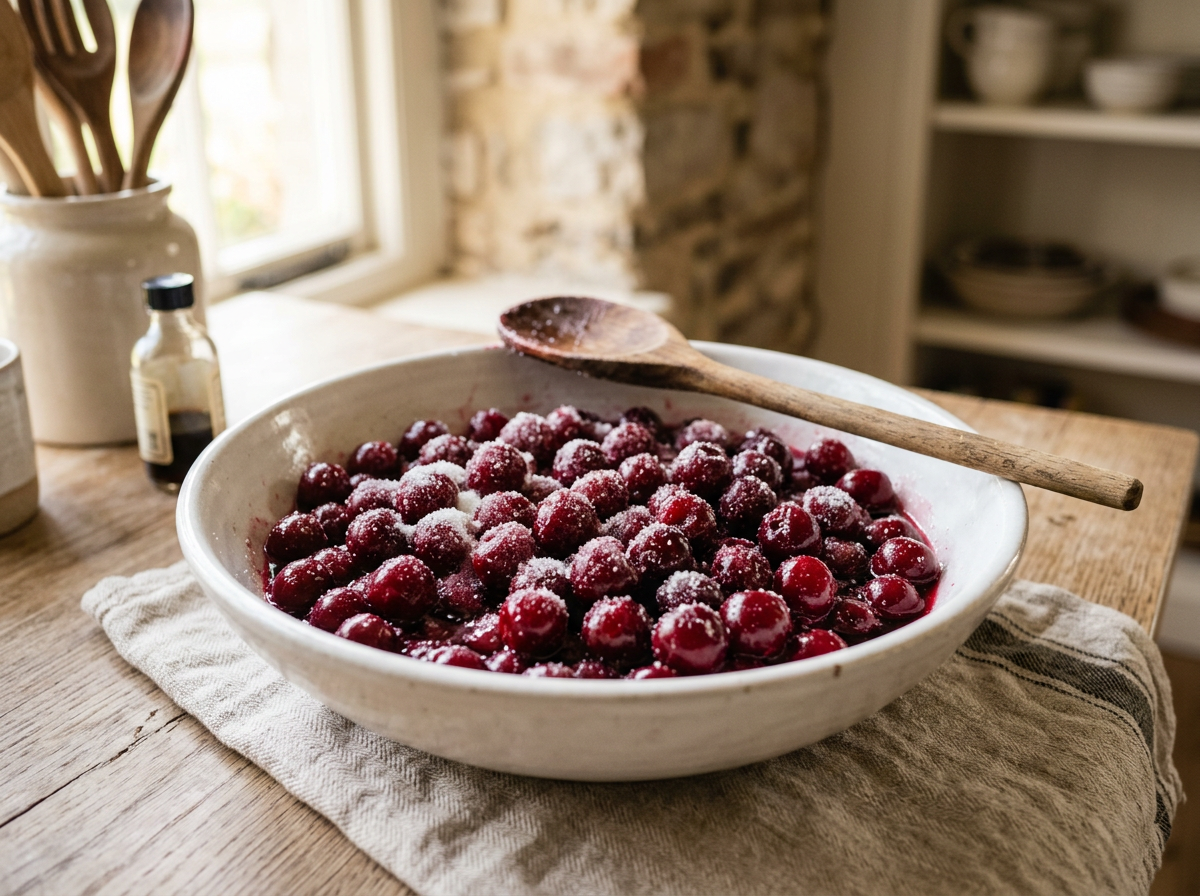
The no-cook method involves mixing pitted sour cherries with sugar and leaving them to macerate in a cold place for 24 to 48 hours, stirring occasionally with a clean wooden spatula.
- Preserves vitamin C, active enzymes, and the delicate volatile aromas of fresh fruit intact.
- The resulting color is a bright, translucent red full of brilliance.
- Requires low-temperature storage, ideally in a very cool pantry or directly in the refrigerator.
2. The short-boiled method: viscosity and shelf life
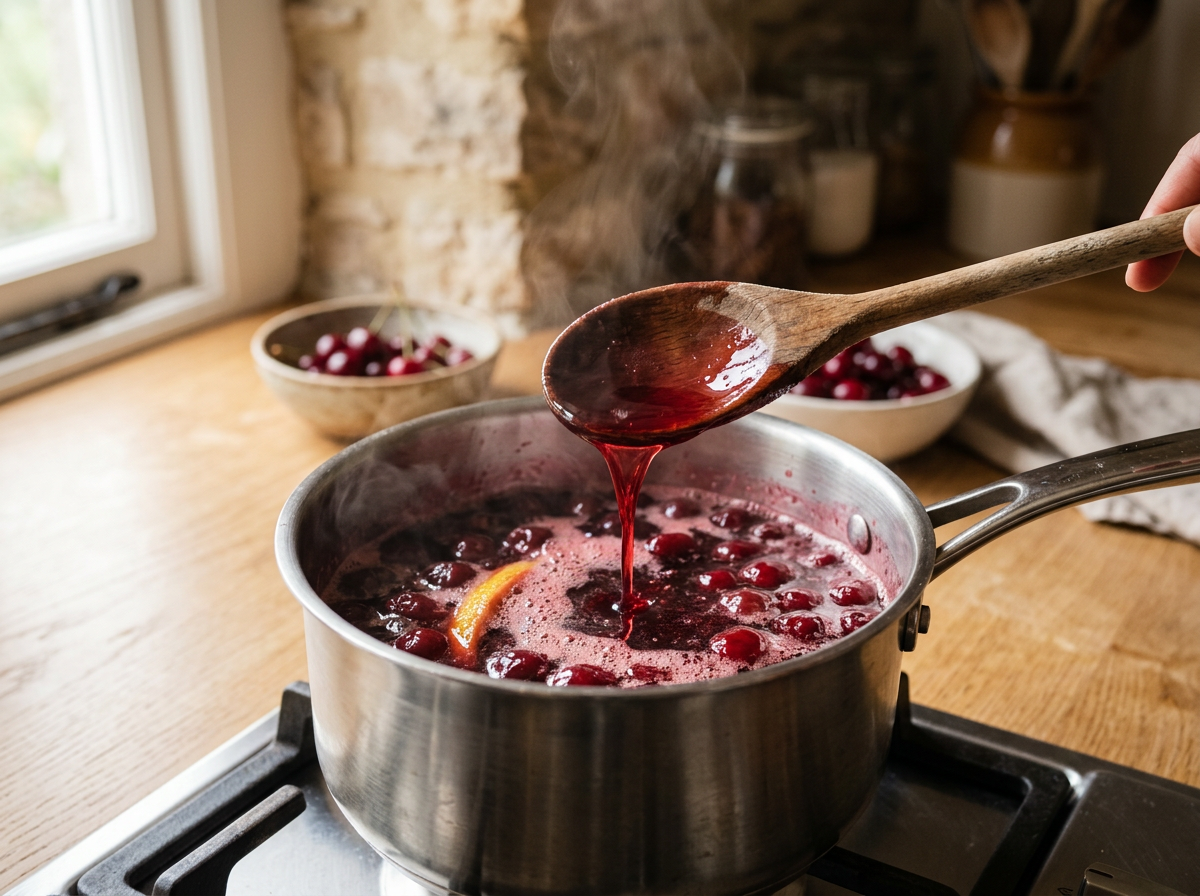
After the fruit has released all its juice, the strained liquid is placed over medium heat and brought to a boil for just 5 to 7 minutes, constantly skimming off impurities from the surface.
- Gentle heat inactives any wild yeast present on the fruit skin, ensuring a shelf life of over 12 months.
- The syrup acquires a silky, dense texture that flows spectacularly in a continuous ribbon.
- Can be kept worry-free at standard pantry temperature, without the risk of unwanted fermentation.
Step-by-step guide: The benchmark recipe for 2 liters of pure syrup
To achieve guaranteed success on the first try, here are the exact quantities and step-by-step workflow, tested for a perfect balance between sweetness and acidity.
Ingredients needed
- 2 kg ripe sour cherries (weighed after pitting, or 2 bags of quality frozen sour cherries)
- 1.8 - 2 kg fine white sugar (for 1:1 cold preservation; or 1.5 kg if you choose the short boiling method)
- 4 tbsp organic lemon juice (or the juice of 1 large yellow lemon)
- Optional: half a Bourbon vanilla bean for velvety notes
Equipment needed
- A large ceramic, enameled, or food-grade stainless steel bowl (avoid aluminum vessels)
- Clean wooden or silicone spatula or large spoon
- Fine mesh strainer and clean double-layer cheesecloth (unbleached cotton)
- Funnel with strainer and glass bottles with airtight stoppers
- Fruit prep and pitting: Wash the fresh sour cherries under cold running water and remove the stems and bruised fruit. Carefully pit the cherries to preserve as much of the flesh as possible. If using pitted frozen sour cherries, place them directly into the bowl without thawing beforehand.
- Layering and adding sugar: Place a generous layer of sour cherries in a large bowl, then sprinkle with an even layer of fine sugar. Continue alternating until all ingredients are used, making sure the top layer is completely covered in sugar. Pour the fresh lemon juice over the top.
- Slow maceration (24–48 hours): Cover the bowl with a clean linen cloth and leave it in a cool place or pantry. Stir 3–4 times a day from the bottom of the bowl toward the surface. The sugar will draw all the liquid out of the fruit cells via osmosis, gradually transforming into a thick ruby nectar.
- Gentle straining through double cheesecloth: Once all sugar crystals have completely dissolved, place a large fine strainer lined with double cheesecloth over a clean pot. Pour in the mixture and let the juice drain by gravity for 1–2 hours. Do not press the fruit aggressively, so the liquid remains as clear as a ruby.
- Finishing and bottling: If opting for the cold version, pour the syrup directly into oven-sterilized and dry bottles, then seal them immediately. If choosing the boiled version, bring the syrup to a gentle simmer for 5 minutes, skim off any white foam, and pour the hot liquid into warm bottles, sealing the caps tightly.
Bottle sterilization and natural preservation without compromise
A common fear among those wanting to make homemade syrup is fermentation or the appearance of mold. In the past, many popular recipes recommended adding chemical preservatives, crushed aspirin, or sodium benzoate. We assure you with complete conviction that these substances are completely unnecessary if you observe container hygiene and simple principles of household thermodynamics.
Sugar itself, at an optimal concentration of over 60 degrees Brix, acts as a natural osmotic preservative by lowering the activity of free water. Combined with the malic acid from sour cherries and the citric acid from lemon, the environment becomes hostile to the growth of microorganisms.
Oven sterilization
Wash the glass bottles with hot water and neutral detergent, rinse them thoroughly, and place them on a clean baking tray. Put the tray in a cold oven, set the temperature to 120 degrees Celsius, and leave them for 20 minutes. Scald metal caps or rubber seals separately in boiling water for 5 minutes.
Dry canning (Insulating blanket)
Pouring the hot syrup into the warm bottles and sealing them tightly immediately creates a natural vacuum as it cools. Wrap the bottles in thick blankets for 24 to 48 hours for slow cooling. This step completes a thorough and flawless natural pasteurization.
Refreshment in a glass: the art of serving and home mixology
Once you have the bottles lined up in the pantry, the truly spectacular part begins: savouring it. Sour cherry syrup is incredibly versatile, easily turning from a simple lunchtime refresher into a sophisticated mocktail for evenings with friends on the terrace.
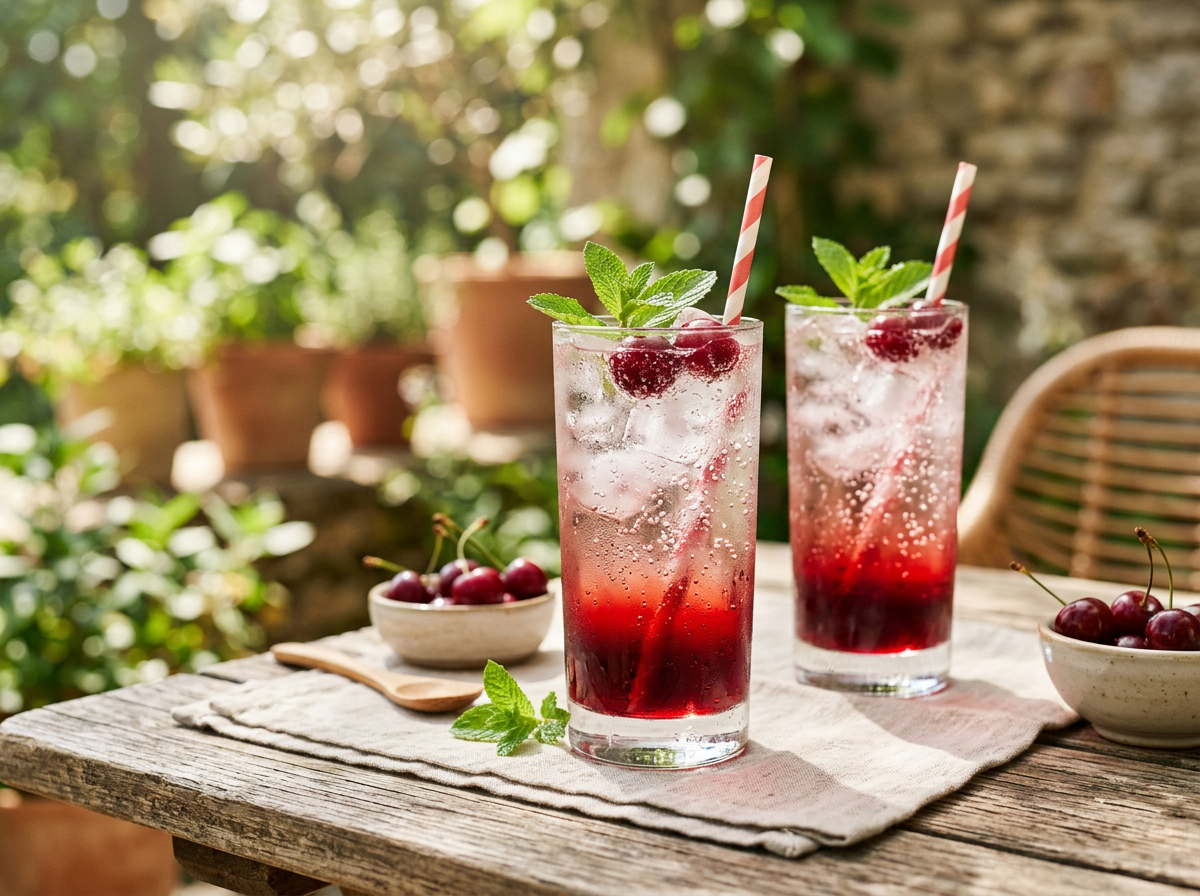
Classic soda with big bubbles
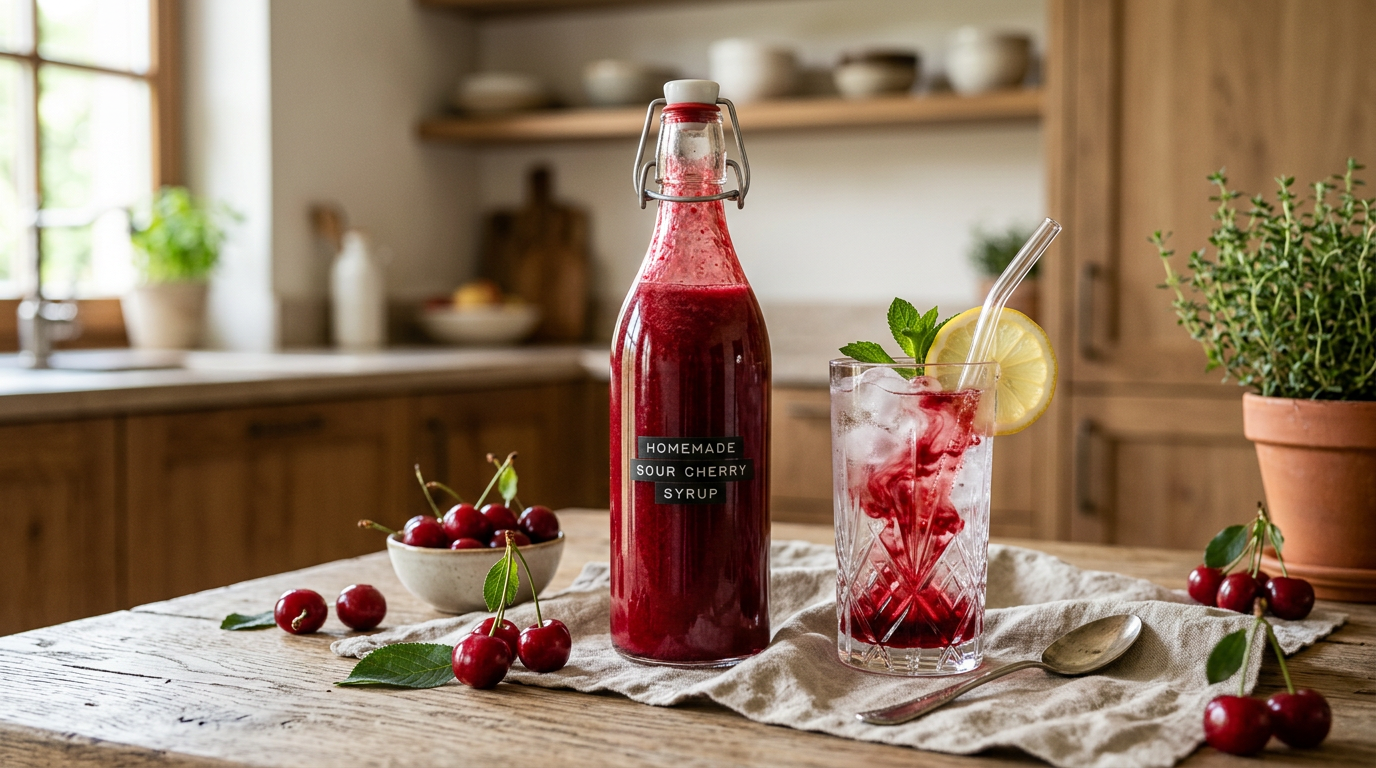
Pour 40 ml of sour cherry syrup into the bottom of a tall glass filled with crushed ice. Top up with 200 ml of intensely sparkling mineral water such as Aqua Carpatica Forte or Biborteni Aqua Magnesia. Add a sprig of fresh mint and a thin slice of lemon. The powerful bubbles carry the sour cherry aromas straight to the senses.
Non-Alcoholic Sour Cherry Spritz
Mix 30 ml sour cherry syrup with 120 ml premium tonic water with natural quinine and 50 ml fresh pink grapefruit juice. The slightly bitter taste of the tonic blends magically with the fruity sweetness of the sour cherry, creating an aperitif worthy of the most acclaimed urban bistros.
And if time didn't allow you to make the syrup at home or your stock ran out sooner than planned, you can always choose a bottle of Laurul sour cherry syrup or other authentic varieties from our selection of natural and traditional syrups.


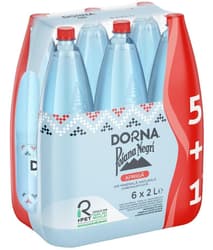
 Aqua Carpatica carbonated mineral water forte
Zero-waste philosophy: what to do with the leftover sour cherry pulp
After straining the syrup through cheesecloth, you are left with a few kilograms of fragrant sour cherries in the strainer, already soaked in sugar and concentrated juices. Many make the mistake of throwing these fruits away, believing they have already given their best. In reality, the leftover pulp is a culinary treasure that can be transformed into at least three exceptional treats.
Express ten-minute jam
The fruit is already sweetened and softened. Place it in a heavy-bottomed saucepan along with a teaspoon of cinnamon or a vanilla pod. Let it boil rapidly over high heat for 10-12 minutes until the residual liquid reduces and reaches a jam-like consistency. You will get an amazingly tasty rustic jam.
Noble filling for pastries
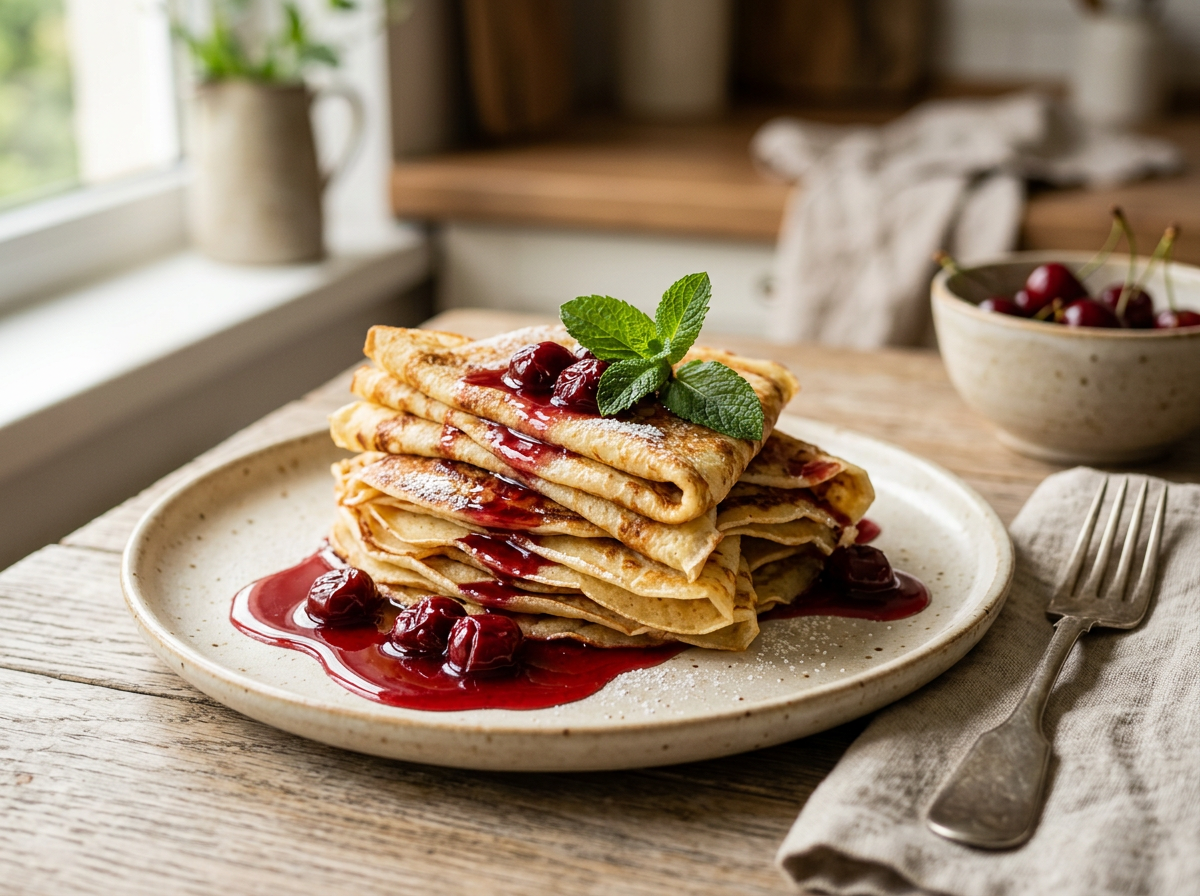
The strained sour cherries are perfect for filling fluffy pancakes or for scattering over a generous scoop of artisanal sour cherry ice cream. Their firm texture provides that tart burst that contrasts perfectly with the delicacy of any golden-brown pastry.