
Tomato soup: Tradition with noodles or creamy indulgence with basil?
Whatever your favorite Sunday lunch memory may be, a hot bowl of tomato soup has the magical power to turn an ordinary day into a moment of pure comfort. But when it comes to preparation, the kitchen is divided into two passionate camps: the clear, light nostalgia of classic soup with fine homemade noodles, or the dense, velvety, and fragrant texture of roasted tomato cream soup with fresh basil. Let's explore the secrets of each recipe, the key ingredients, and the ideal moment for every bowl.
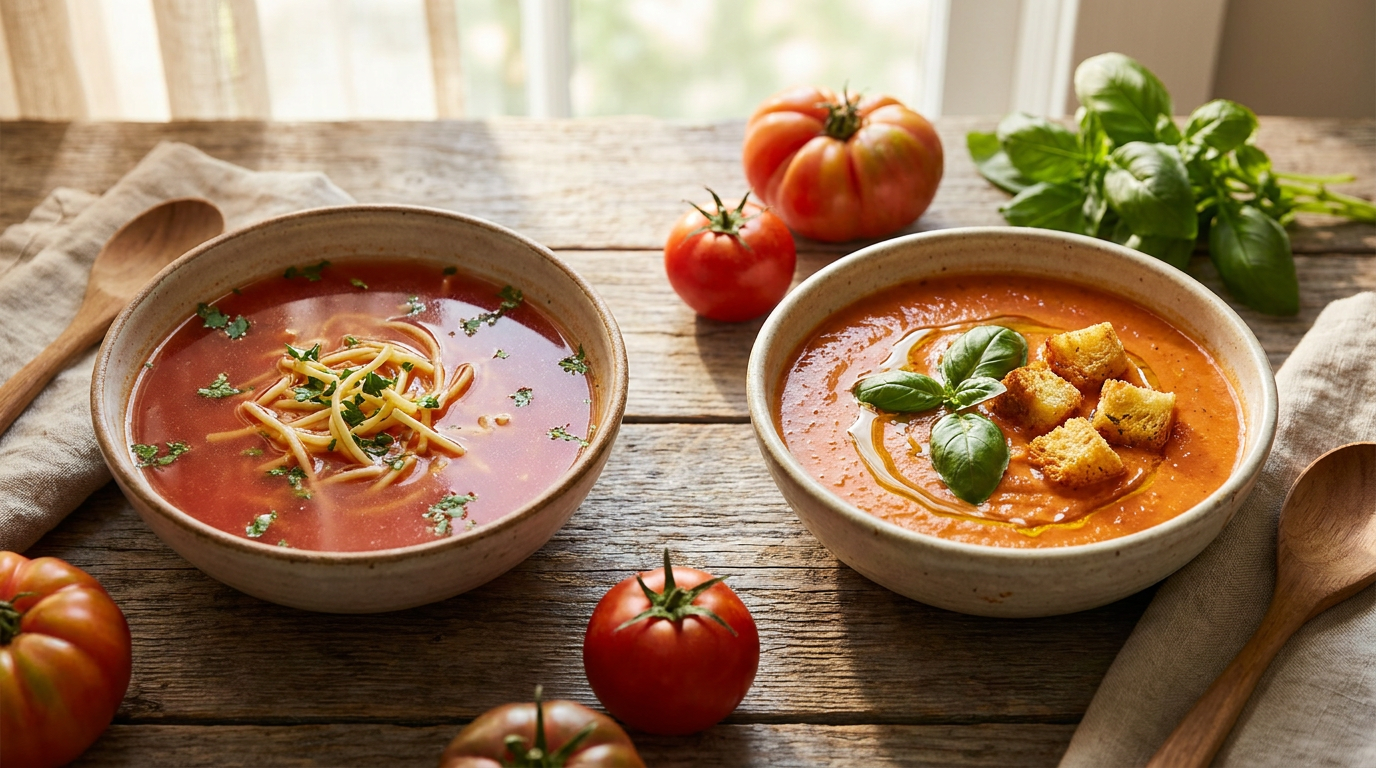
Pure tradition: Clear tomato soup with homemade noodles
For generations, the taste of summers at grandparents' came down to a generous pot of clear tomato soup, enriched with golden strands of noodles kneaded with fresh eggs and a generous sprinkle of finely chopped green parsley.
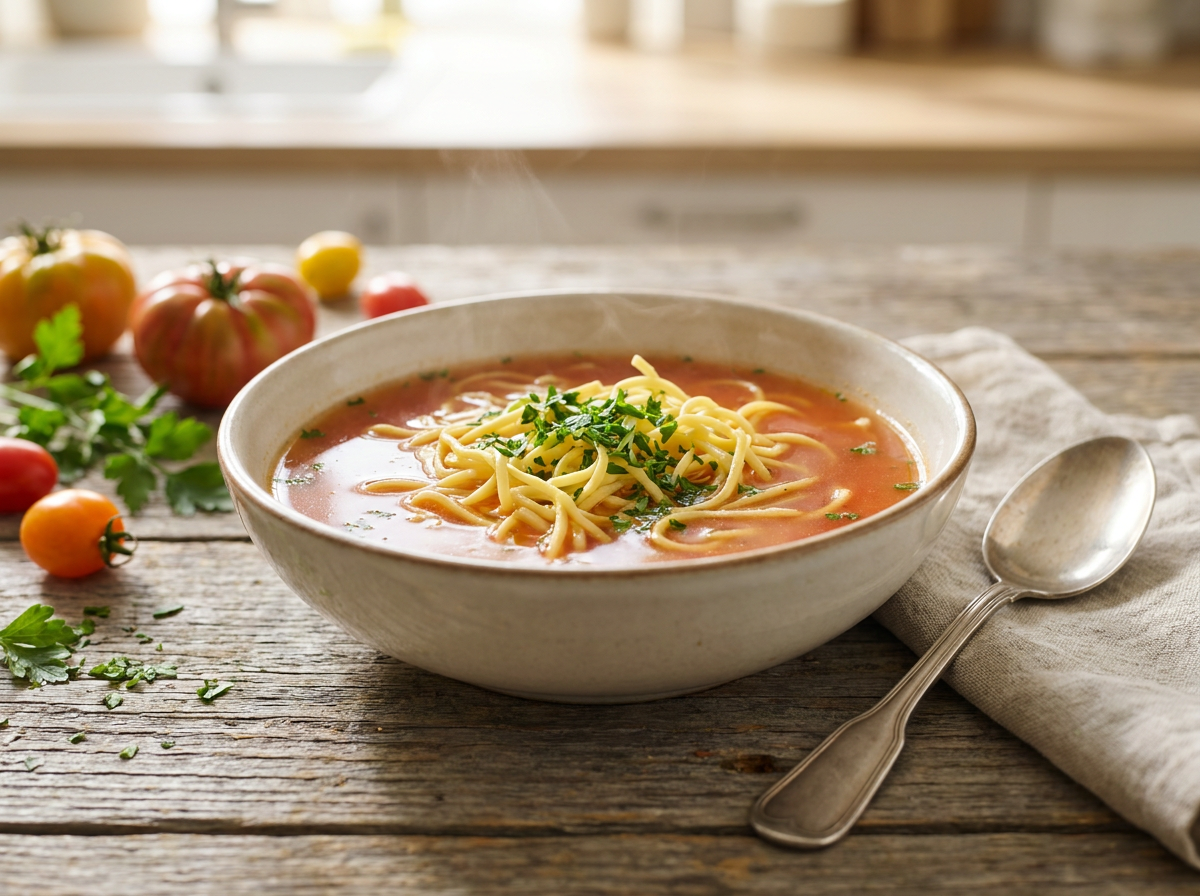
The classic soup relies on the absolute purity of the ingredients. The flavorful base is built by slow-simmering garden vegetables: a whole yellow onion scored with a cross, two sweet carrots cut into thin rounds, a small piece of parsnip root, and a generous slice of flavorful celeriac. The concentrated vegetable broth is left to simmer over low heat for 20 minutes, until all the essential oils from the root vegetables infuse the liquid.
Over this clear and golden base, pour the freshly squeezed juice from our selection of fresh tomatoes, briefly blanched and carefully peeled. Unlike sour soups made with borș or lemon, this soup retains a delicate, natural acidity, complemented by the subtle sweetness of gently cooked carrots.
The ultimate secret of this recipe lies in the choice and boiling of the pasta. Whether you choose soup pasta in the form of extra-fine egg vermicelli, wide homemade noodles, or drop noodles poured with a fork directly into the pot, the quality of the durum wheat and the density of the dough dictate the final texture of the dish. Artisanal pasta made with three or four eggs per kilogram has that special elasticity that prevents it from becoming soft and sticky during prolonged contact with the hot broth.
When the soup is almost ready, turn off the heat and add freshly chopped green parsley or a few leaves of young lovage. Cover the pot with a lid for five minutes, allowing the fresh herbal aromas to infuse the entire surface of the soup.
What makes the traditional version irresistible?
The brilliant clarity of the broth, the clean and nostalgic taste of sweet garden tomato, and the springy texture of fine homemade noodles. It is a comforting and easily digestible meal, ideal for family lunches or evenings when you seek authentic simplicity.
Mediterranean indulgence: Velvety roasted tomato cream soup with basil
If noodle soup is a rustic hug, cream of tomato soup is a sensory journey to the Italian coast, where flavors concentrate through oven roasting and are rounded out with fine cheeses.
Unlike traditional boiling, the magic of this soup begins on a large baking sheet lined with parchment paper. Fleshy tomatoes cut in half are placed pulp-side up, surrounded by whole garlic heads cut at the top, thick slices of red onion, and sprigs of thyme. Everything is generously drizzled with extra virgin olive oil and sprinkled with coarse salt and crushed pepper.
At a temperature of 200°C, for 30-35 minutes, the natural sugars in the pulp caramelize intensely around the edges, while the garlic cloves turn into a sweet and creamy paste. Excess water evaporates, leaving behind only the pure, concentrated essence of well-roasted tomatoes.
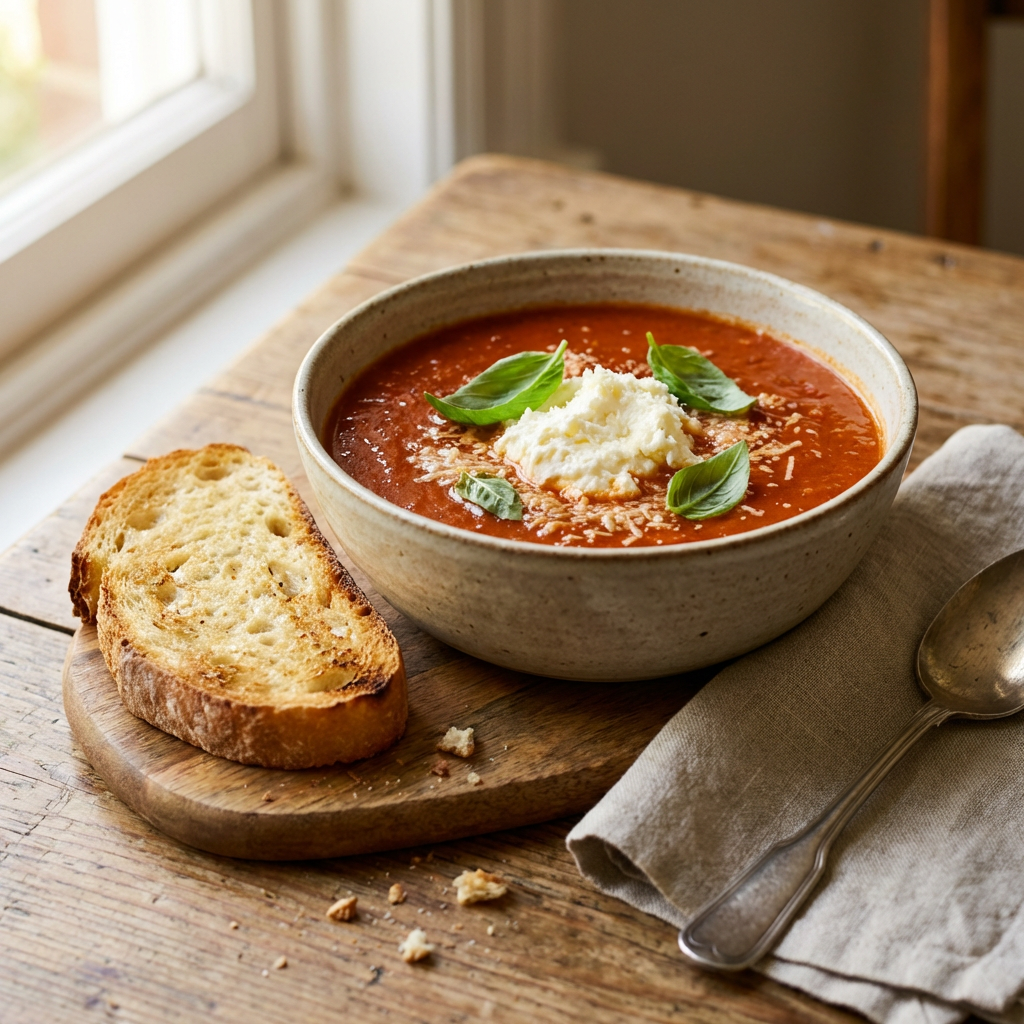
The roasted vegetables are transferred directly into a deep pot or high-powered blender, removing the dry garlic skins. Add a cup of warm clear vegetable stock and a generous tablespoon of creamy mascarpone or heavy cream with 30% fat content. Blending at high speed for 90 seconds creates a velvety emulsion with a spectacular ruby-orange color.
You can discover all the illustrated steps on the dedicated page for roasted tomato soup with mascarpone and basil in our Chef Sezamo catalog. Served with shaved Parmesan aged for 24 months and crunchy sourdough bread croutons, this cream soup becomes the star of any festive dinner.
The secret to an irresistible aroma
Fresh basil leaves should never be boiled directly, as prolonged heat destroys volatile aromatic compounds and turns the green color into a dull brown. Add the leaves directly to the blender at the end of blending or tear them by hand right into the bowl before serving for ultimate freshness.
The Ingredients: Which tomatoes do you choose for each dish?
No recipe can surpass the quality of its basic ingredients. The success of an exceptional soup depends 80% on the variety and ripeness of the tomatoes you add to the pot or baking tray.
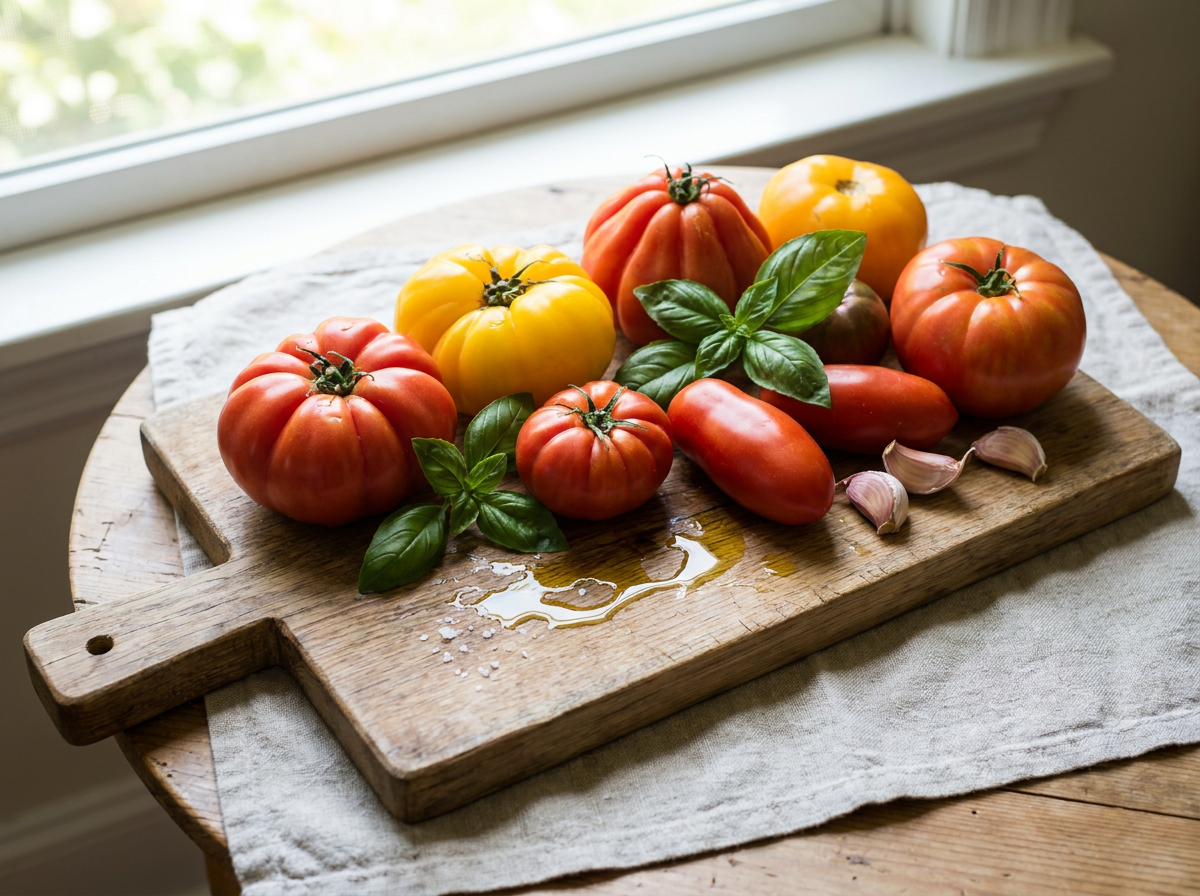
For a traditional tomato soup, you need juicy tomatoes, rich in juice and with an optimal balance between acidity and sweetness. Romanian garden varieties, huge Oxheart tomatoes, or pink tomatoes from local producers are the undisputed stars. Their generous flesh releases a large amount of clear, aromatic liquid, giving that authentic flavor of a sun-drenched garden.
On the other hand, for a thick cream soup, the most suitable are elongated San Marzano tomatoes, fleshy plum tomatoes, or well-ripened cherry tomatoes. They have a low water content, few seeds, and a higher concentration of natural pectin and carotenoids, which ensure a naturally creamy texture without the addition of flour or starch.
For clear soup with noodles
Choose Romanian garden tomatoes, Oxheart, or well-ripened Dobrogean tomatoes. If you are cooking out of season, pure tomato juice without added salt or preservatives makes an impeccable and flavorful base.
For cream soup with basil
Use San Marzano tomatoes, roasted fleshy plum tomatoes, or combine fresh tomatoes with a high-quality thick tomato passata for an intense ruby color and rich body.