
Totul despre pepenele galben: Ghid complet de vară
Pepenele galben e regele verii pentru un motiv întemeiat. Dulce, suculent și plin de vitamine, e fructul perfect pentru zilele fierbinți. Iată tot ce trebuie să știi despre el, de la soiuri la beneficii pentru sănătate și cum să îl păstrezi proaspăt cât mai mult timp.
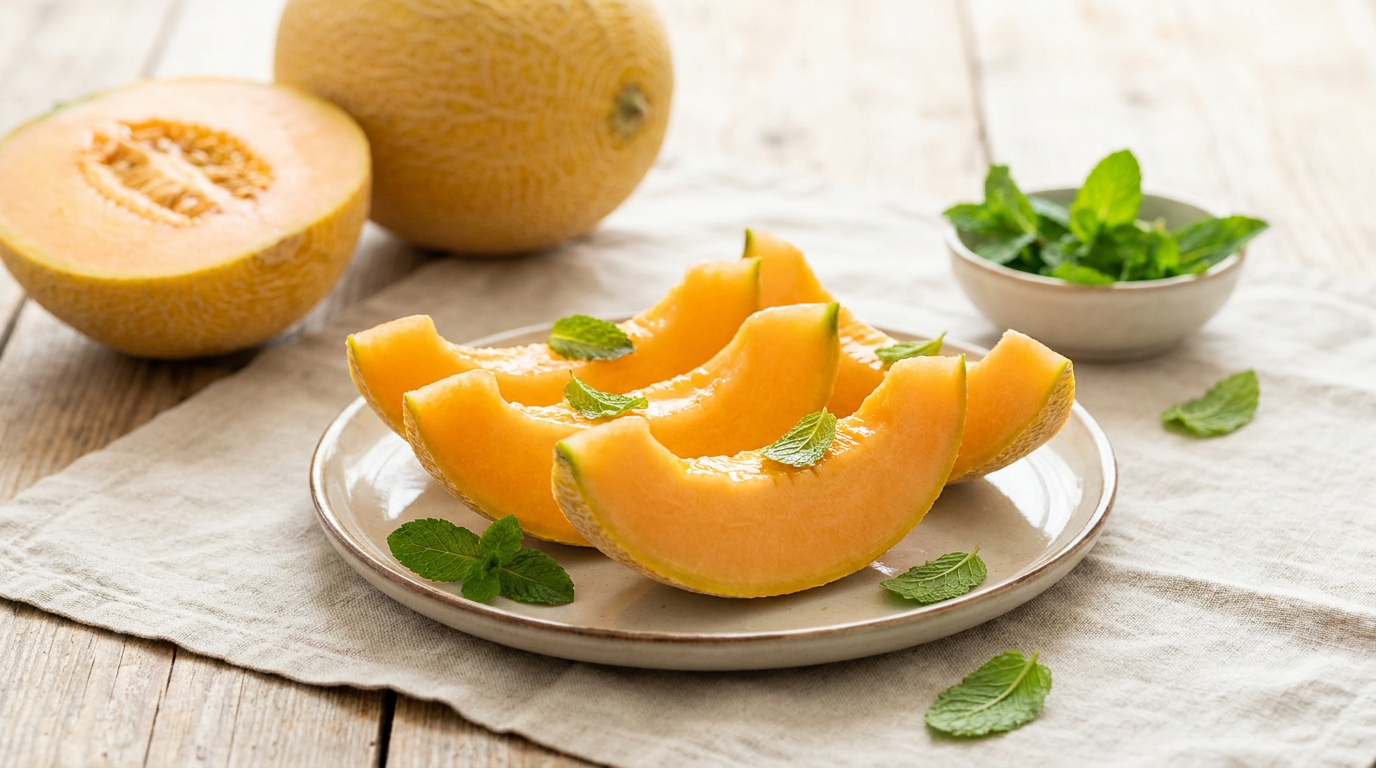
Cu miezul dulce ca mierea și extrem de suculent, pepenele galben e unul dintre cele mai iubite fructe ale verii în România. Face parte din aceeași familie cu pepenele verde, castraveții și dovleceii, deși gustul lui te-ar putea păcăli să crezi altceva. Numele popular ascunde de fapt mai multe soiuri, cu forme, culori și arome diferite, dar toate au ceva în comun: sunt formate aproape în întregime din apă, ceea ce le face aliatul perfect în zilele toride.
La comandă online, pepenele galben ajunge direct din câmp la ușa ta, gata de savurat. Hai să vedem cum alegi soiul potrivit, cum știi că ai unul copt și dulce chiar din prima felie, ce beneficii îți aduce și cum îl folosești cel mai bine în bucătărie.
Un fruct, sute de fețe: soiurile de pepene galben
Când auzi "pepene galben" probabil te gândești la un singur fruct. De fapt, sub această denumire populară se ascund mai multe soiuri, fiecare cu textura și aroma lui. Să știi ce soi ai în coș te ajută să alegi exact experiența pe care o cauți, fie că vrei un miez cremos și intens parfumat, fie unul crocant și floral.
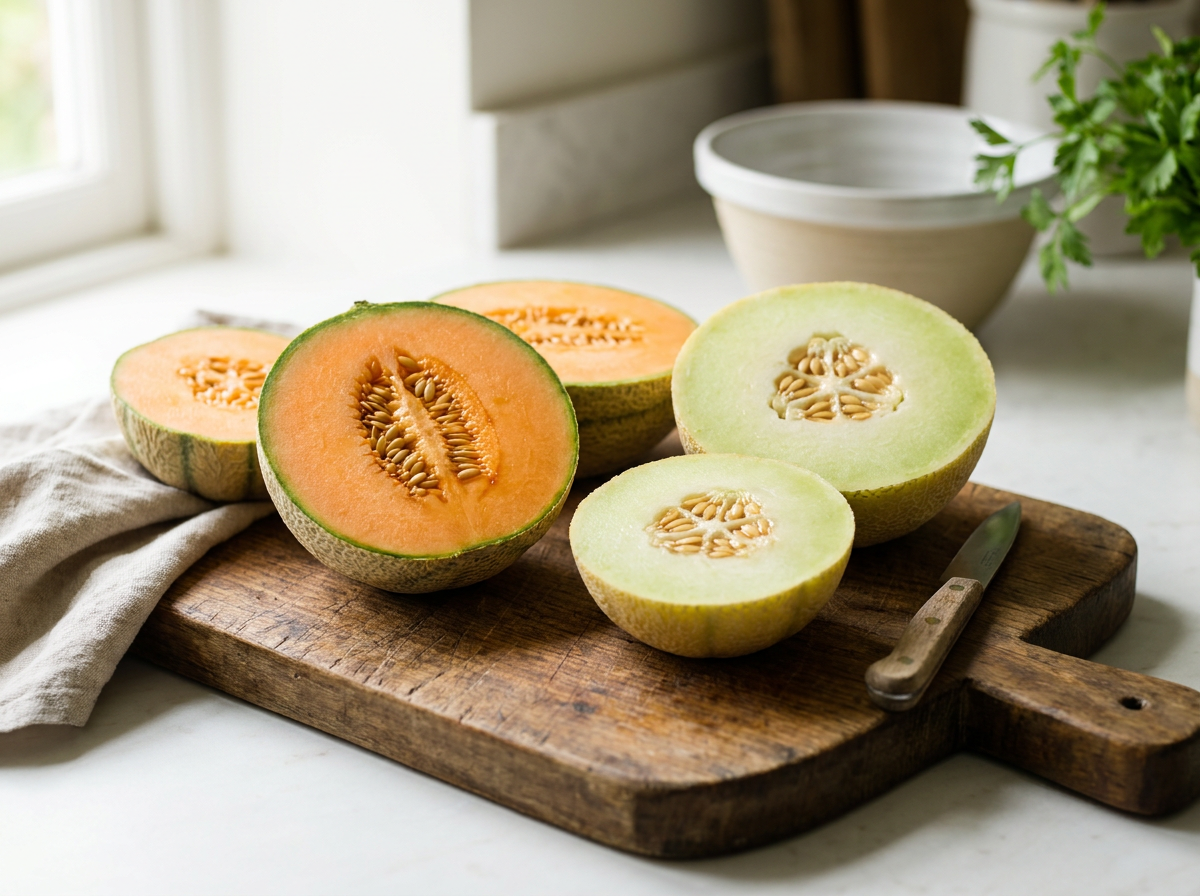
- Cantalupe. Cel mai răspândit soi la noi, cu coajă striată și miez portocaliu intens. Foarte aromat și dulce, e alegerea sigură pentru salate și desert.
- Galia. Coajă cu o plasă fină, miez verde deschis spre alb. Aromă florală și textură fermă, perfect pentru combinații sărate.
- Honeydew (pepene de miere). Coajă netedă, galben verzuie. Miez foarte dulce, mai puțin aromat, ideal pentru smoothie și limonadă.
Găsești și variante bio, cultivate în România, o alegere bună dacă vrei un pepene copt natural, fără forțarea coacerii.
Cum recunoști, acasă, un pepene copt și dulce
Ai comandat pepenele online, deci nu poți să îl ridici sau să îl miroși înainte să îl cumperi, așa cum ai face la piață. Vestea bună e că poți verifica prospețimea și gradul de coacere chiar acasă, în câteva secunde, imediat ce îl scoți din pungă.
- Greutatea. Un pepene copt se simte greu pentru dimensiunea lui, semn că are multă apă și e suculent.
- Capătul înflorit. Partea opusă codiței trebuie să cedeze ușor la o apăsare blândă cu degetul mare.
- Aroma. Un pepene copt miroase dulce chiar prin coajă, mai ales la capătul înflorit.
- Sunetul. O bătaie ușoară cu degetul trebuie să sune plin și surd, nu gol.
Ce face pepenele galben pentru tine, dincolo de gust
Pe lângă gustul dulce și răcoritor, pepenele galben e un aliat de nădejde pentru sănătate în sezonul cald. Compoziția lui bogată în apă și nutrienți îl transformă dintr-un simplu desert într-un obicei sănătos de vară, mai ales în zilele când corpul pierde repede lichide și minerale prin transpirație.
apă în compoziție, pentru o hidratare rapidă în zilele toride
vitamina A din beta caroten, bună pentru vedere și piele
vitamina C, sprijin pentru imunitate și antioxidant puternic
kcal la 100g, printre cele mai puțin calorice fructe de vară
Pe lângă vitaminele A și C, pepenele galben aduce și o doză bună de potasiu, mineralul care ajută la refacerea echilibrului electrolitic după o zi de căldură sau după mișcare. Conține și folat, util pentru refacerea celulară, plus fibre solubile care susțin digestia și te ajută să te simți sătul mai mult timp, deși are foarte puține calorii. Toate acestea vin într-un pachet dulce, care nu are nevoie de niciun adaos de zahăr ca să fie savuros. E motivul pentru care pepenele galben apare des în recomandările pentru un mic dejun sau o gustare de vară ușoară și răcoritoare, mai ales pentru copii sau pentru zilele când pofta de apă lipsește, dar corpul tot are nevoie de hidratare.
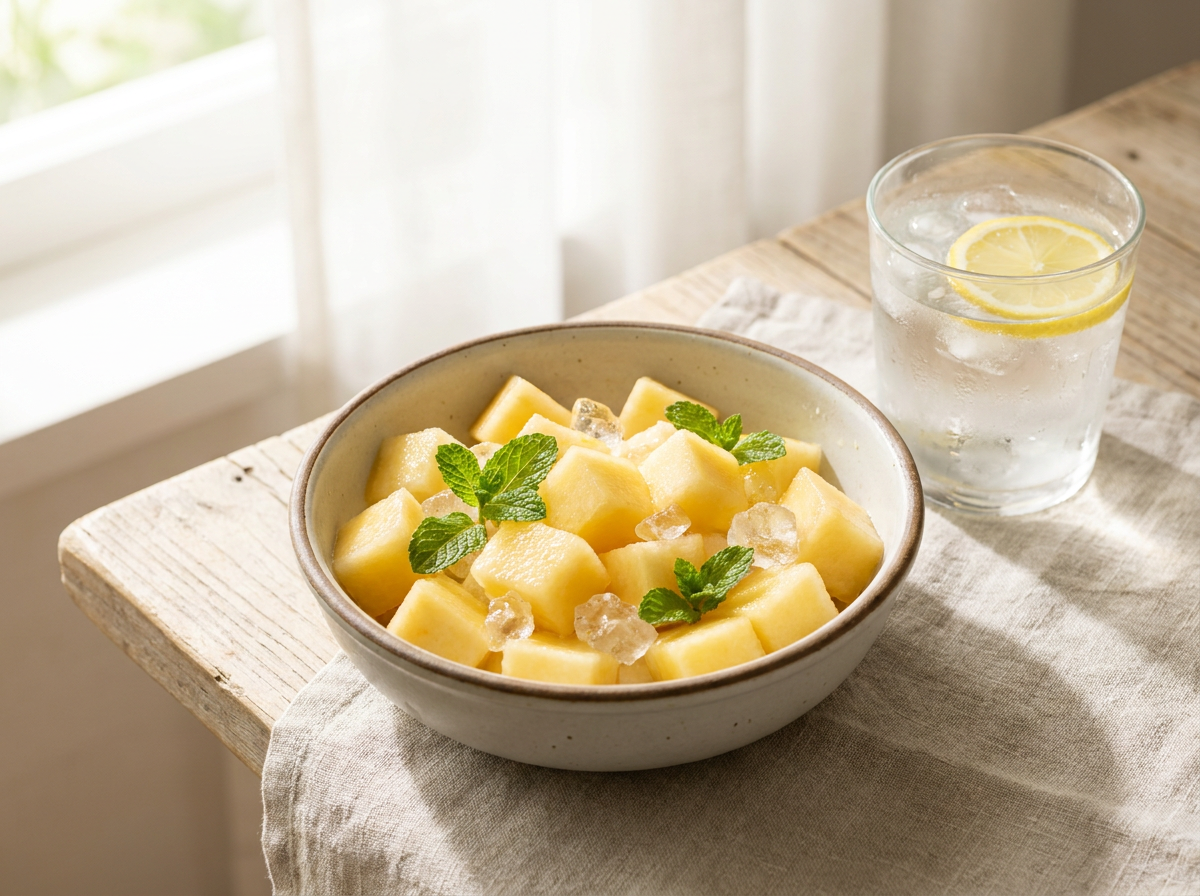
O cană de pepene galben acoperă aproape toată doza zilnică recomandată de vitamina A.
Cum îl păstrezi proaspăt mai mult timp
Un pepene galben întreg rezistă mult mai mult decât crezi, dar odată tăiat, ceasul începe să bată mai repede. Câteva reguli simple te scapă de risipă și îți păstrează fructul suculent zile la rând.
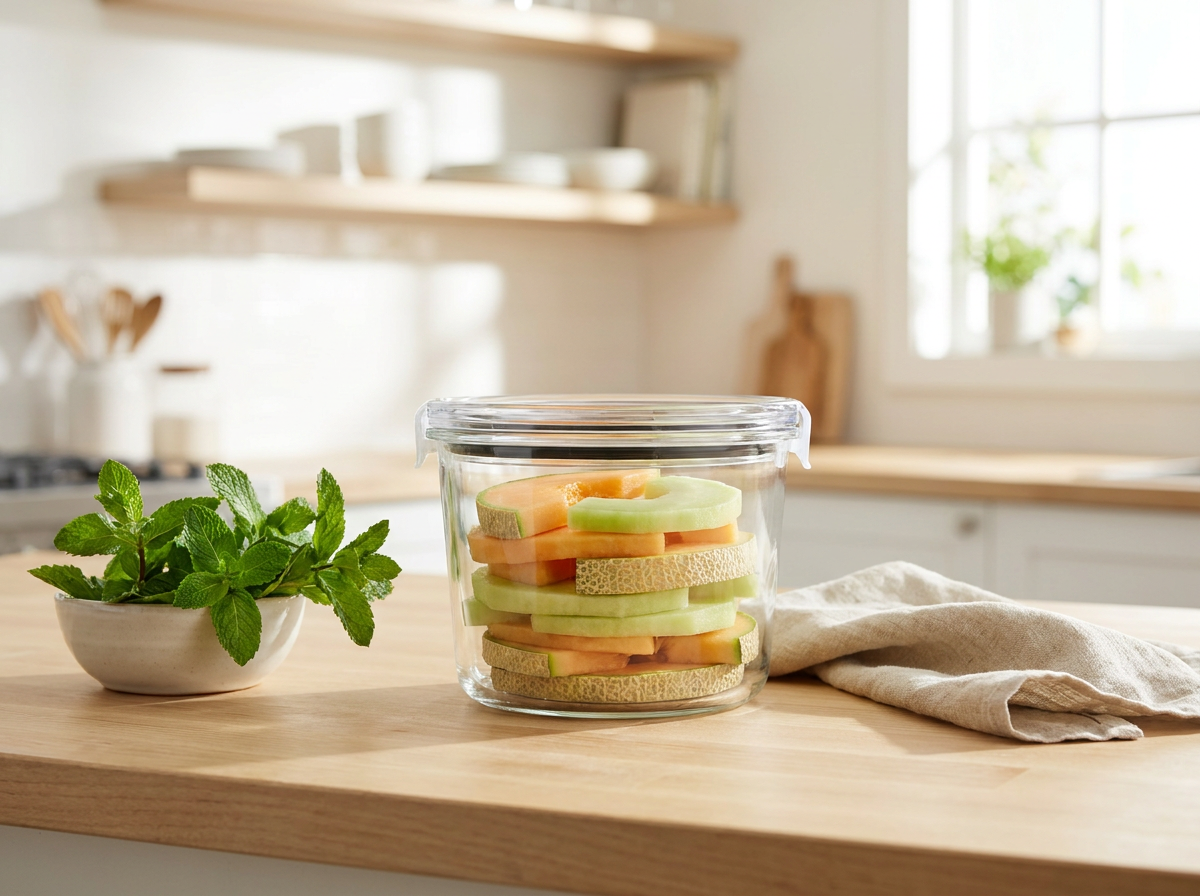
- Întreg, la temperatura camerei. Rezistă până la o săptămână, uneori mai mult dacă nu e complet copt.
- Tăiat, la frigider. Într-o cutie ermetică sau folie alimentară, ține 3 până la 4 zile maximum.
- Congelat, în cuburi. Perfect pentru smoothie-uri și limonadă, se păstrează până la 3 luni.
- Departe de fructele etilenice dacă vrei să încetinești coacerea, sau lângă ele dacă vrei să o grăbești.
Un detaliu la care puțini se gândesc: pepenele galben întreg, necoji, rămâne bine chiar la temperatura camerei, pe blatul din bucătărie, fără să îi fie afectată nici textura, nici aroma. Abia după ce îl tai, cursa contra timpului începe cu adevărat, pentru că miezul expus la aer începe să piardă din suculență și poate prelua mirosuri din frigider dacă nu e bine acoperit. Dacă știi că nu îl termini repede, cea mai bună strategie e să tai doar cât ai nevoie și să lași restul întreg, cu coaja pe el, până ești gata de încă o porție. Iar dacă vezi că nu mai apuci să îl mănânci la timp, cuburile congelate sunt soluția perfectă, nu se irosește nimic și ai mereu la îndemână baza pentru un smoothie răcoritor într-o dimineață fierbinte de vară.
De la salată la aperitiv: cum îl folosești în bucătărie
Pepenele galben nu e doar pentru desert. Versatilitatea lui îl face la fel de bun în combinații sărate ca și în cele dulci, iar câteva perechi clasice îi scot în evidență toată savoarea.
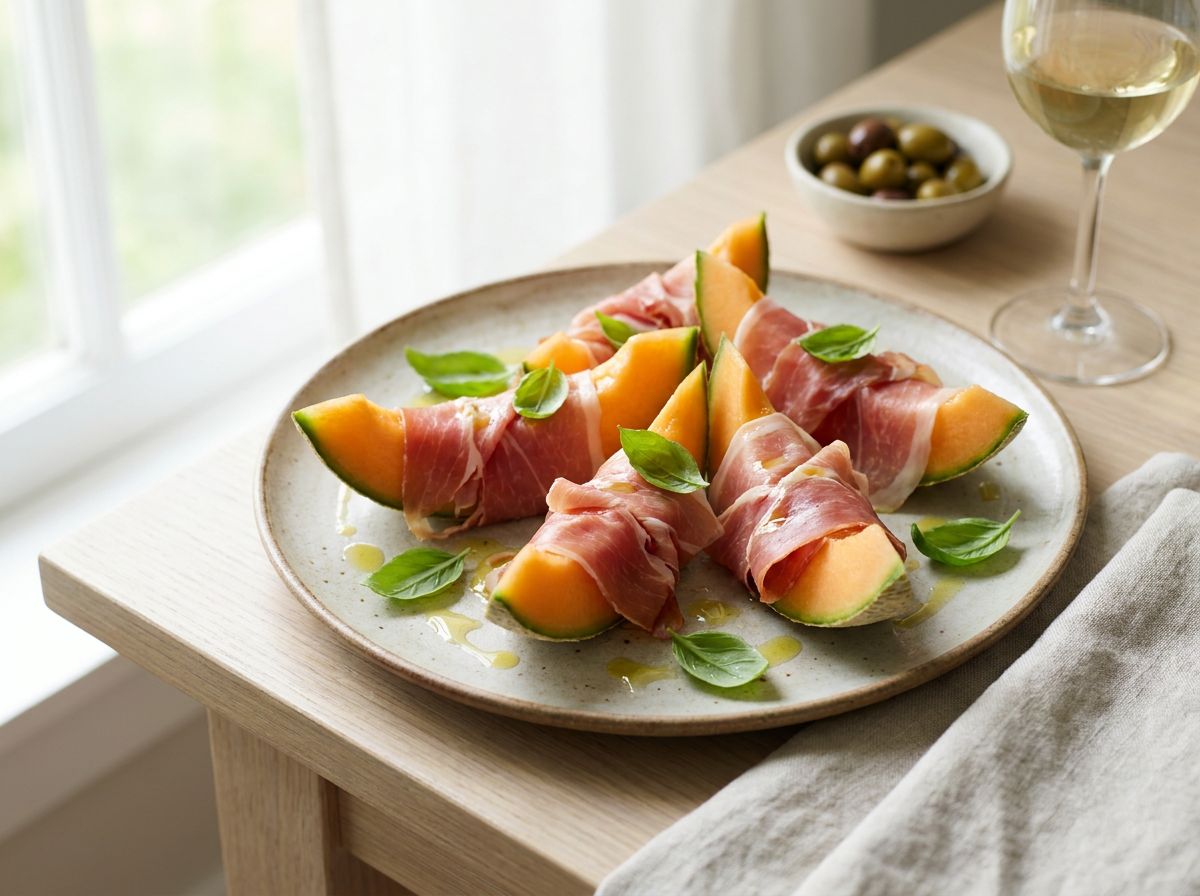
Combinația dulce sărat cu brânză feta și mentă e un clasic mediteranean nelipsit dintr-o masă de vară, pe care îl găsești în salata de pepene cu brânză feta și mentă sau în varianta cu lime din salata cu pepene. Pentru un aperitiv rapid și elegant, înfășoară felii subțiri de pepene galben în prosciutto, fără nicio altă preparare. Dacă vrei ceva răcoritor, dă feliile la blender cu puțină apă și gheață pentru o limonadă naturală, sau congelează cuburile pentru o înghețată rapidă de casă. Vara, pepenele galben își găsește locul și în cocktailuri, alături de mentă și lime.