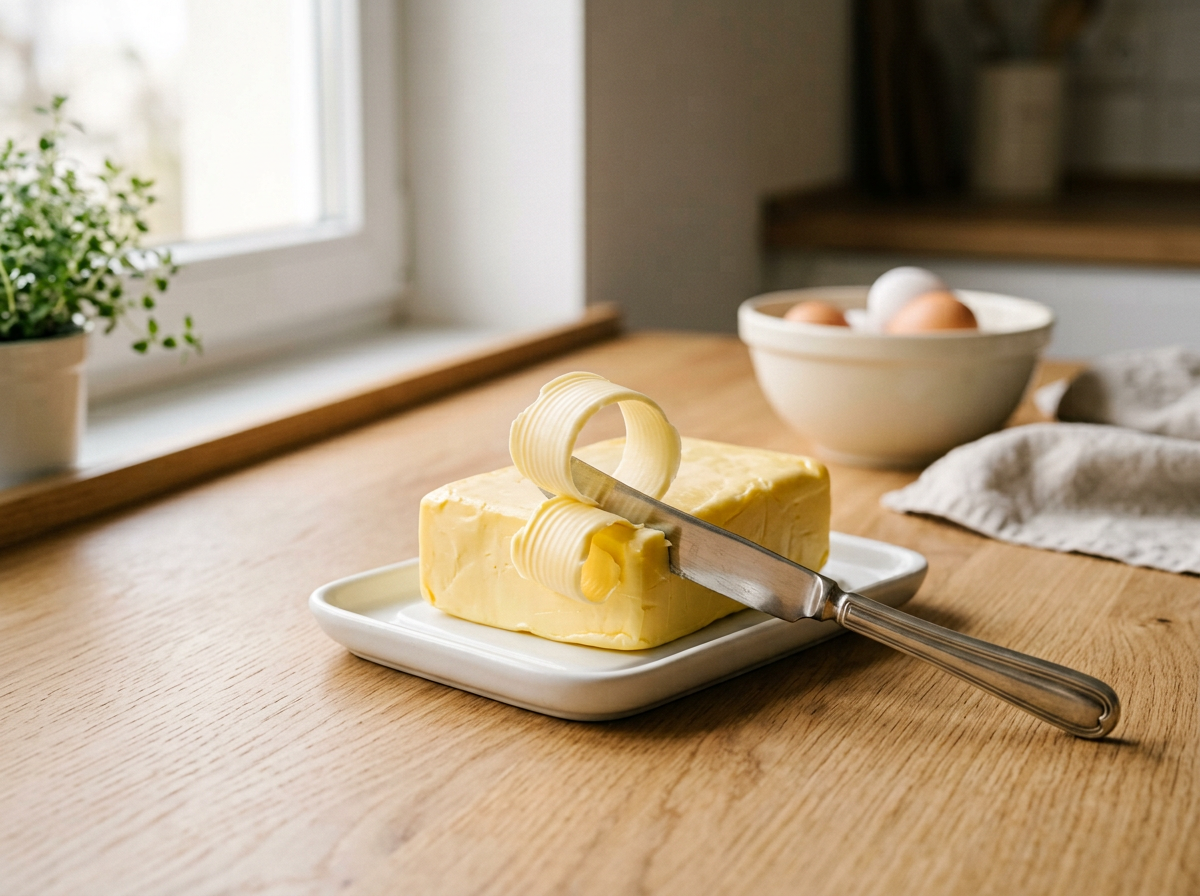
Butter remains the quintessential noble ingredient in European pastry. Obtained exclusively by churning fresh cream from cow's milk, standard butter contains a minimum of 80% or 82% pure fat, around 16% water, and between 1% and 2% milk solids, composed of noble proteins and lactose.
This seemingly simple composition hides a culinary miracle. During baking at temperatures above 130 degrees Celsius, the milk proteins and lactose undergo the Maillard reaction, producing irresistible aromatic compounds with notes of toasted hazelnuts, toffees, and fresh cream. No neutral vegetable fat can replicate this aromatic richness.
Another decisive element is the melting point: between 32 and 35 degrees Celsius. Because this value is below the human body temperature of 36.5 degrees Celsius, cakes made with butter melt instantly on the tongue, offering a silky and pleasant sensation without any residual greasy film.



 ALBALACT Butter 82% Fat