Eggplant Zacusca: Traditional Step-by-Step Recipe
Nothing captures the warmth of Romanian autumn better than the unmistakable aroma of grilled eggplants and roasted kapia peppers, slowly transforming into a golden, rich, and flavorful zacusca.
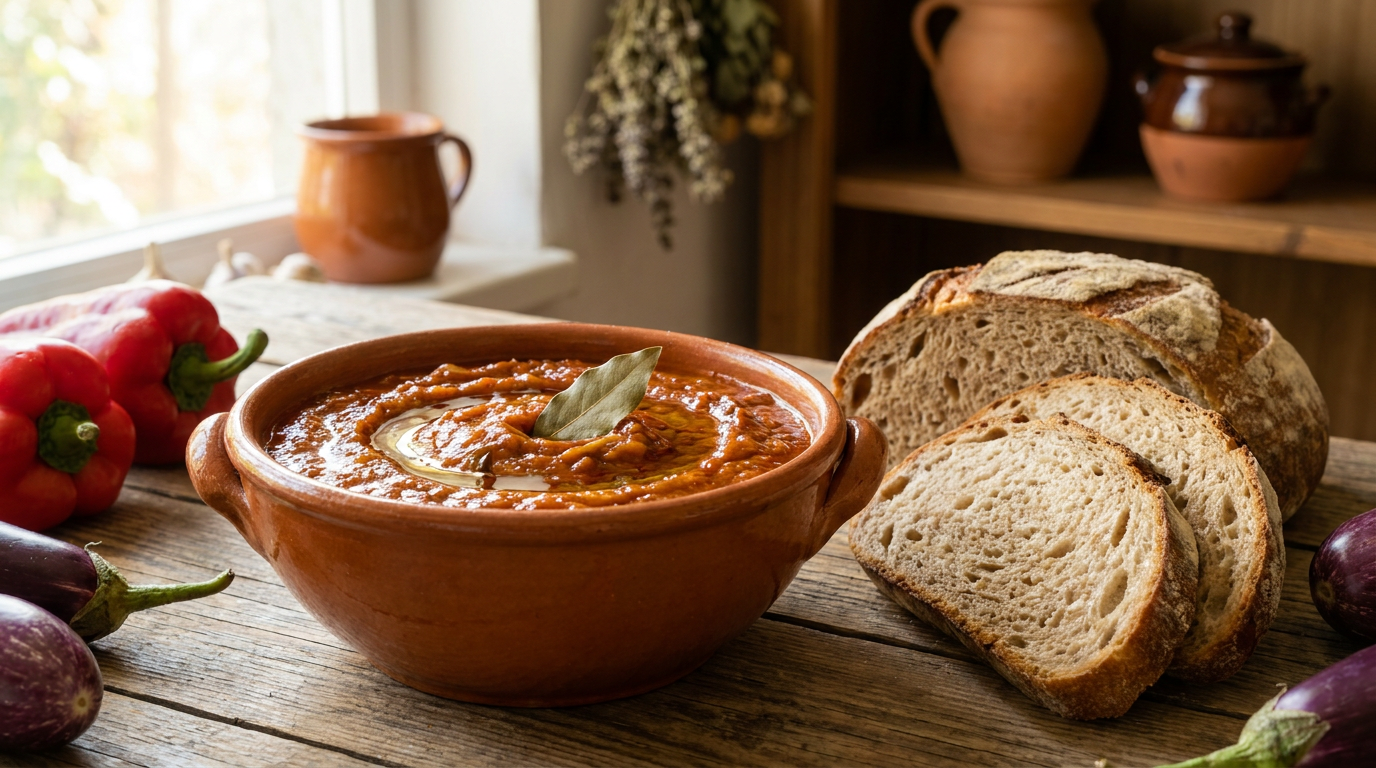
For many of us, zacusca is more than just a preserve for the pantry. It is a true late-summer ritual, a family story gathered around the heavy cast-iron pot, and the promise of quiet winter mornings when a generously spread slice of bread becomes the most comforting breakfast.
Preparing an eggplant zacusca that retains its vibrant color, the natural sweetness of the vegetables, and a velvety texture is not a matter of luck, but of following simple rules of culinary chemistry. From the balance of proportions to the technique of draining eggplants and the patience of simmering over low heat, discover in this guide all the essential steps for a memorable zacusca that you can easily prepare with carefully selected fresh vegetables.
The alchemy of ingredients: the 3:2:1 golden ratio
The secret to an unforgettable zacusca does not lie in complicated spices, but in harmoniously respecting the ratio between vegetables. The classic formula passed down from generation to generation recommends the proportion of 3 parts roasted eggplants, 2 parts roasted peppers (capia or gogoșari) and 1 part sweet yellow onion. This combination guarantees a velvety texture, without the acidity of the peppers or the bitterness of the eggplants dominating the dish.
Roasted eggplants
Choose fresh, medium-sized eggplants with shiny black skin and a green stem. After roasting and draining thoroughly, you will get about 1.5 kg of sweet and soft flesh.
Capia and gogoșari peppers
Capia peppers bring smoky aroma and characteristic sweetness, while fleshy gogoșari peppers offer a fruity note and a spectacular ruby red color.
Yellow onion
Finely chopped onion gently sweated over very low heat forms the silky base of the sauce. Through slow cooking, the natural sugars in the onion caramelize delicately.
| Ingredient | Raw quantity | Role in dish | Selection tip |
|---|---|---|---|
| Fresh eggplants | 3 - 4 kg raw | The main body and texture of the zacusca | Light in hand, without large woody seeds |
| Red capia peppers | 2 - 2.5 kg raw | Intense smoky aroma and natural sweetness | Thick flesh, straight, easy to roast evenly |
| Yellow onion | 1 - 1.2 kg | The aromatic base and binding sauce | Firm, with well-dried outer skin |
| Tomato juice or tomato paste | 500 - 700 ml | Balance of acidity and shine | Concentrated tomato paste or passata with no added sugar |
| Sunflower oil | 400 - 500 ml | Emulsification, preservation, and smoothness | Quality pressed oil, with a neutral or subtle taste |
| Natural spices | Bay leaf, peppercorns, salt | Rounding off the flavors without overpowering the vegetables | Non-iodized salt for pickling and preserves |
The art of roasting and peeling vegetables: embers, stovetop or oven
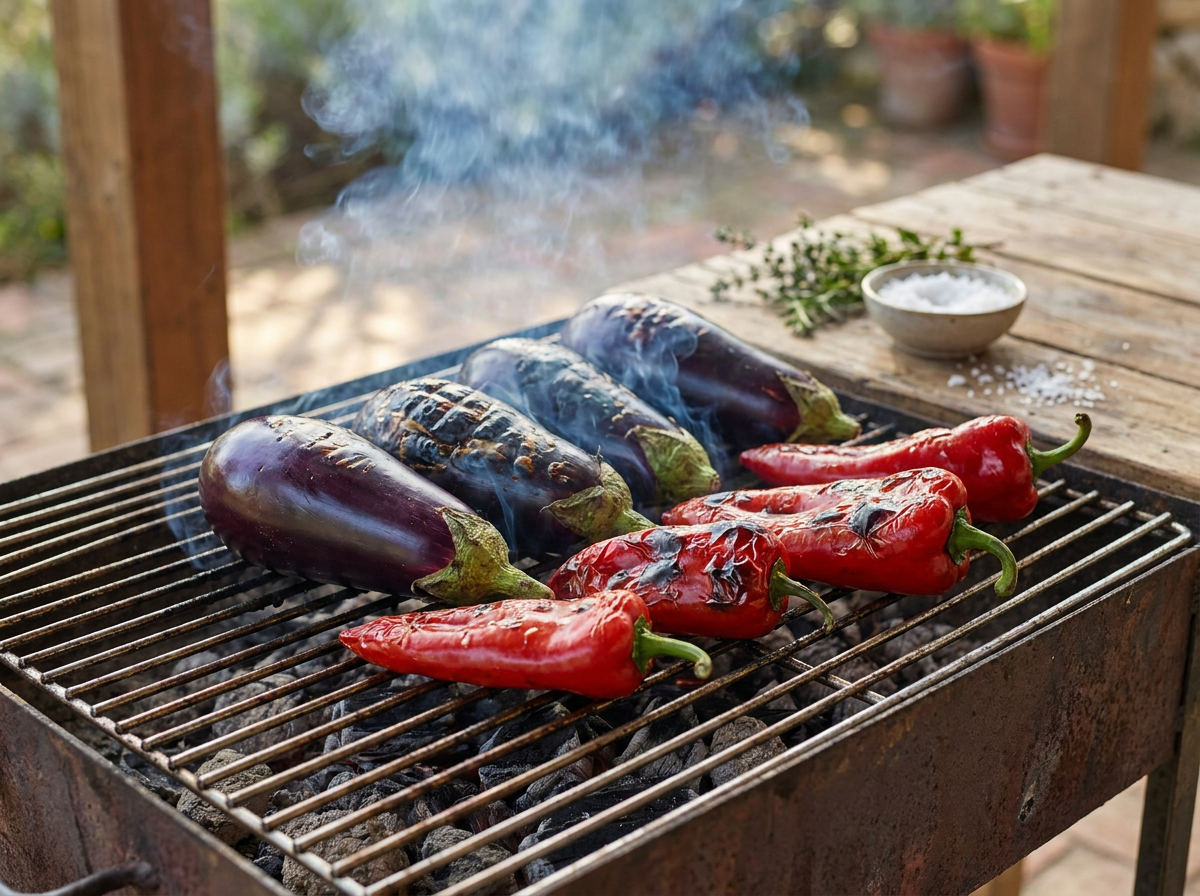
Properly roasting the vegetables is the step that defines the flavor profile of the dish. An eggplant roasted quickly at very high heat gets a light-colored flesh and a subtle smoky aroma, without retaining excess water.
High, even heat
Roast the eggplants on a grill or a hot griddle until the skin is completely charred and the flesh becomes soft all the way to the stem.
Hot peeling
Peel the hot eggplants with a wooden spatula. Avoid contact with cold water, which washes away the concentrated juice and smoky flavor.
Thorough draining
Place the eggplant flesh on a tilted cutting board for at least 2 hours to eliminate the bitter, dark liquid.
Gentle heat and the cast-iron pot: secrets to perfect simmering
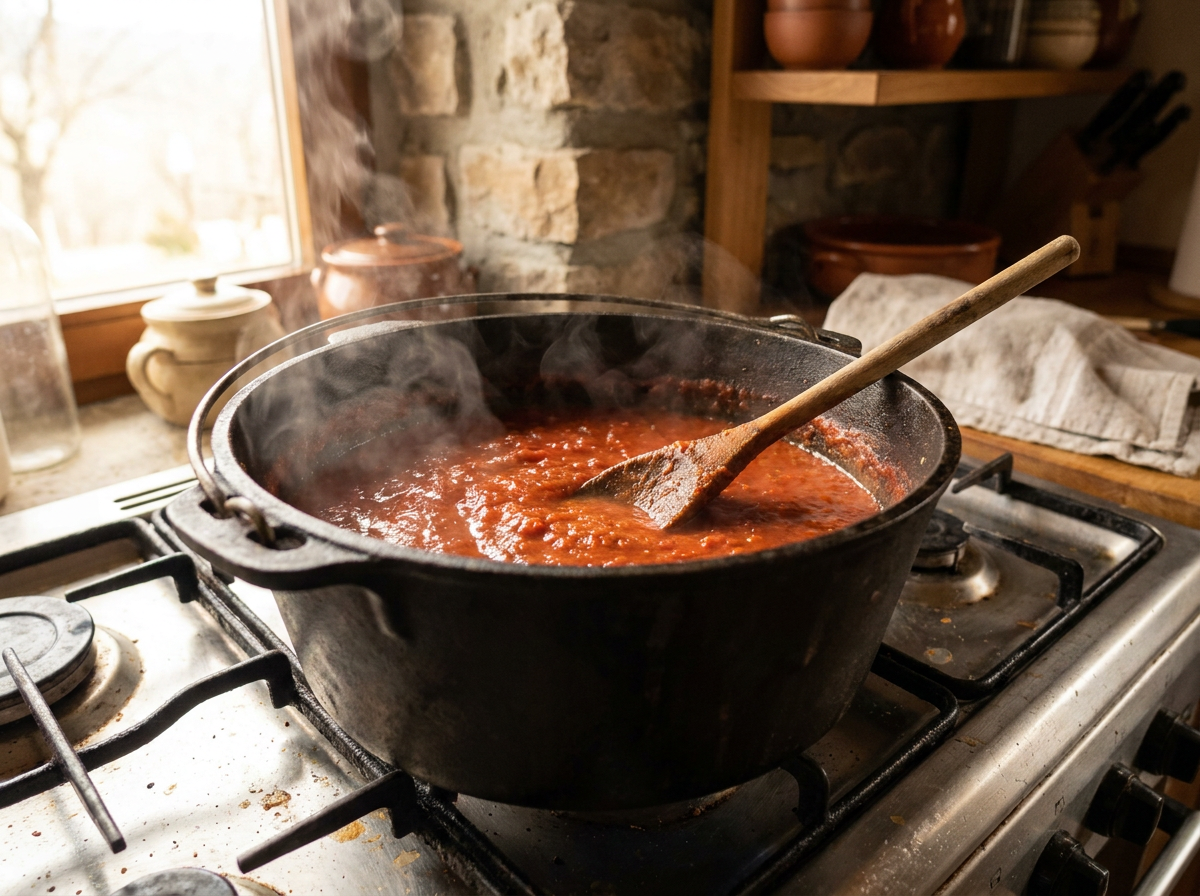
Simmering zacusca is a process of slow reduction and blending. In a heavy-bottomed pot, pour sunflower oil and sweat the onion over low heat until it becomes translucent and soft, without browning.
How do you know when zacusca is ready?
- Compact texture: When you drag a wooden spoon across the bottom of the pot, the mixture should leave a clear path that closes slowly.
- Oil on the surface: The ultimate sign of complete cooking is the appearance of fine oil droplets on the surface of the zacusca, showing that all the moisture from the vegetables has evaporated.
- Ideal time: Over gentle heat, simmering takes between 2 and 3 hours, stirring continuously to prevent sticking to the bottom of the pot.
Sterilizing jars: the secret to winter preservation without preservatives
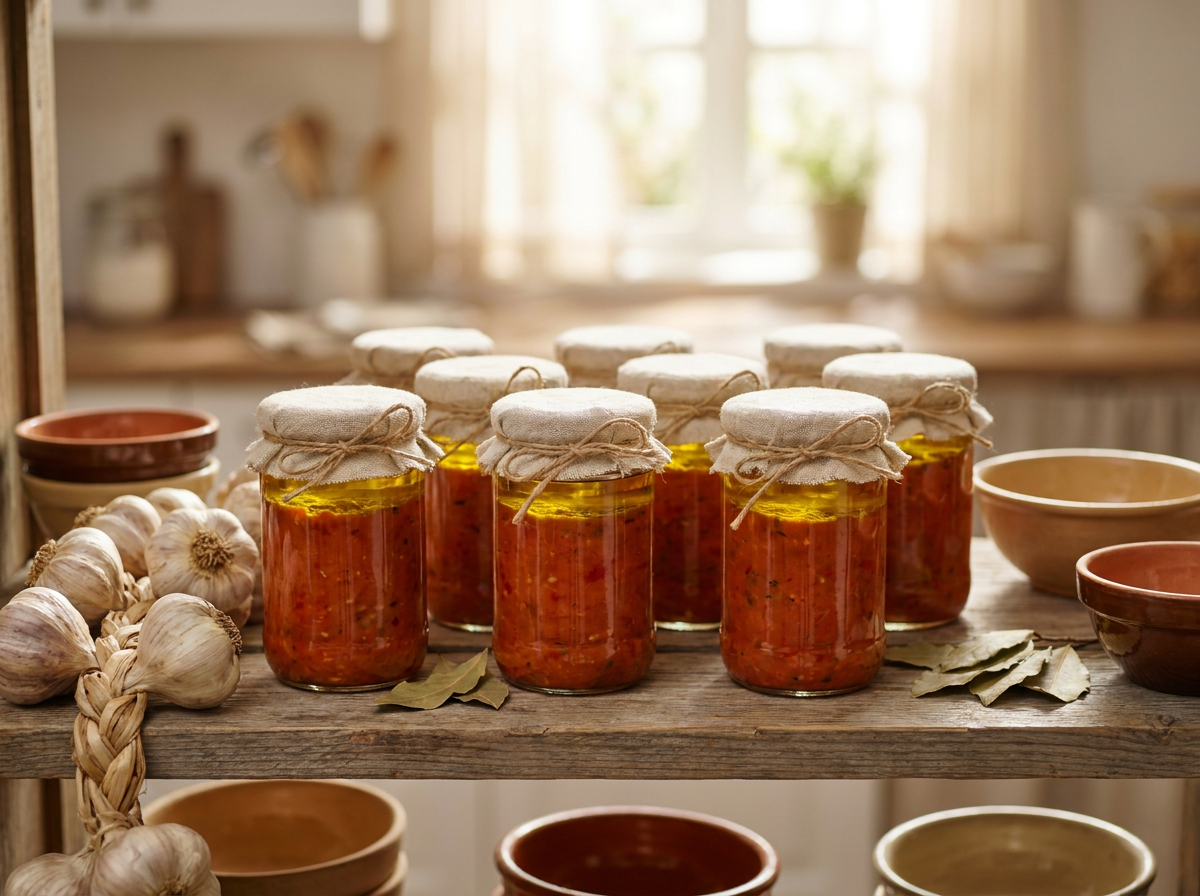
A well-cooked zacusca packed in sterilized jars will keep impeccably in the pantry for up to 2 years, without the need for any chemical preservatives. The high temperature during pouring and the airtight seal create a natural protective vacuum.
Sterilizing the jars
Wash the jars and lids with warm water and dish soap, then dry them in an oven preheated to 120°C for 15 minutes.
Hot pouring
Pouring the boiling hot zacusca directly into warm jars. Add a thin film of hot oil on top before tightening the lid.
Slow cooling under blankets
Wrap the hot jars in thick blankets and let them cool down gradually for 24 - 48 hours to ensure a guaranteed vacuum seal.
Do's for guaranteed success
- Use new lids with a firm thread, free of rust or deformities.
- Wipe the rim of the jar with a clean paper towel before putting the lid on.
- Store the jars in a dark, dry, and cool place (10 - 15°C).
Common mistakes to avoid
- Do not pour hot zacusca into cold jars, otherwise the glass may crack instantly.
- Do not rush the cooking by increasing the heat, as the zacusca will scorch at the bottom of the pot.
- Do not use raw garlic at the end, as it may ferment over time in the pantry.
The tasting ritual: sourdough bread and artisanal delights
An authentic zacusca deserves to be enjoyed alongside an artisanal bread with a crispy crust and an airy sourdough crumb. The sweet and smoky flavor of the roasted vegetables blends perfectly with the slightly acidic note of slowly fermented grains.
Rustic classic
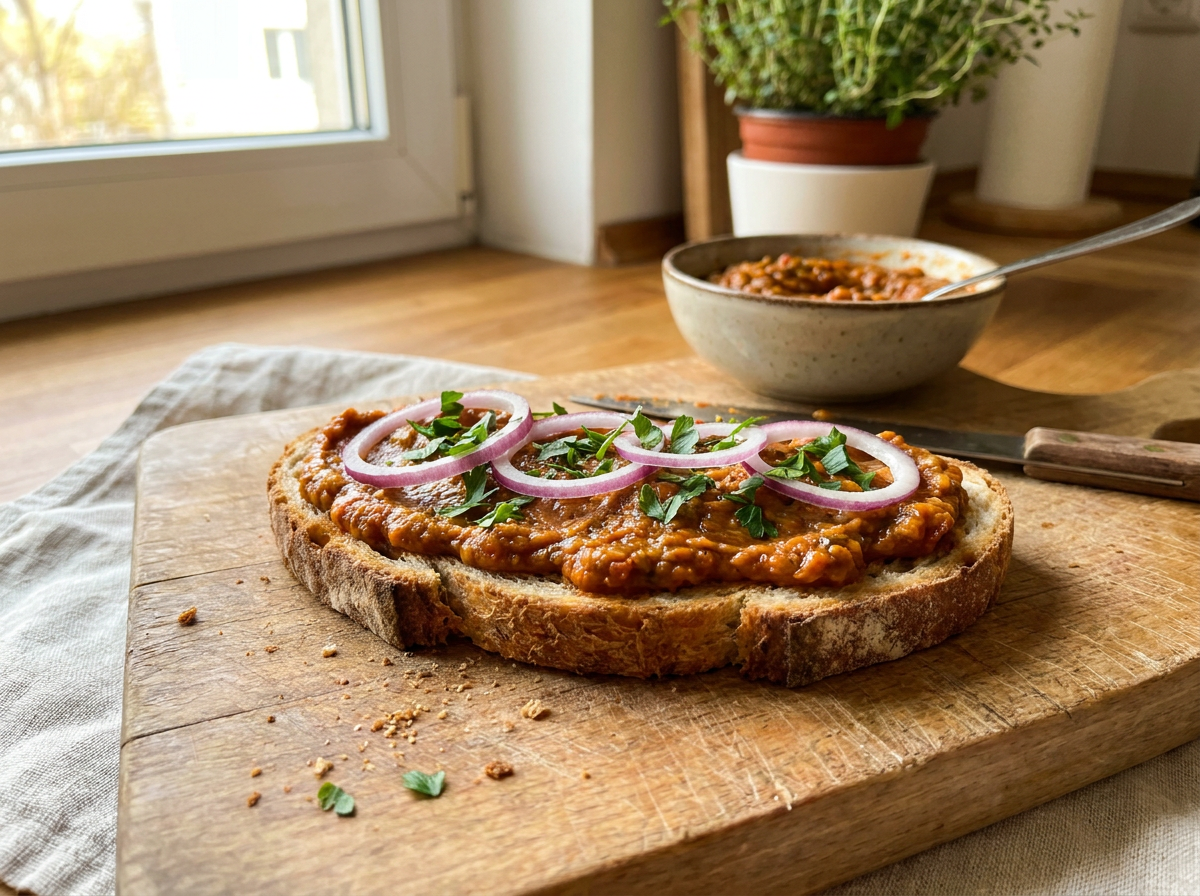
Country bread lightly toasted on the stovetop, generously spread with zacusca and sprinkled with thin red onion rings.
Warm breakfast
A generous spoonful of warm zacusca alongside soft fried eggs or a slice of aged telemea cheese.
Festive appetizer
Crispy bruschetta topped with zacusca, toasted walnut kernels, and fresh basil or parsley leaves.
And if autumn catches you with no time for baking and boiling in a cauldron, you can order traditional zacusca made by passionate local producers directly from the canned and convenience foods section, delivered to your door in 3 hours.