How to make bean soup with smoked meat
A bean soup with smoked meat cooked by the book is the quintessence of autumn cuisine: creamy beans that melt in your mouth, a velvety broth enriched with noble collagen, and that unmistakable beechwood aroma. Here are the complete secrets for a perfect taste, without bloating and without compromise.
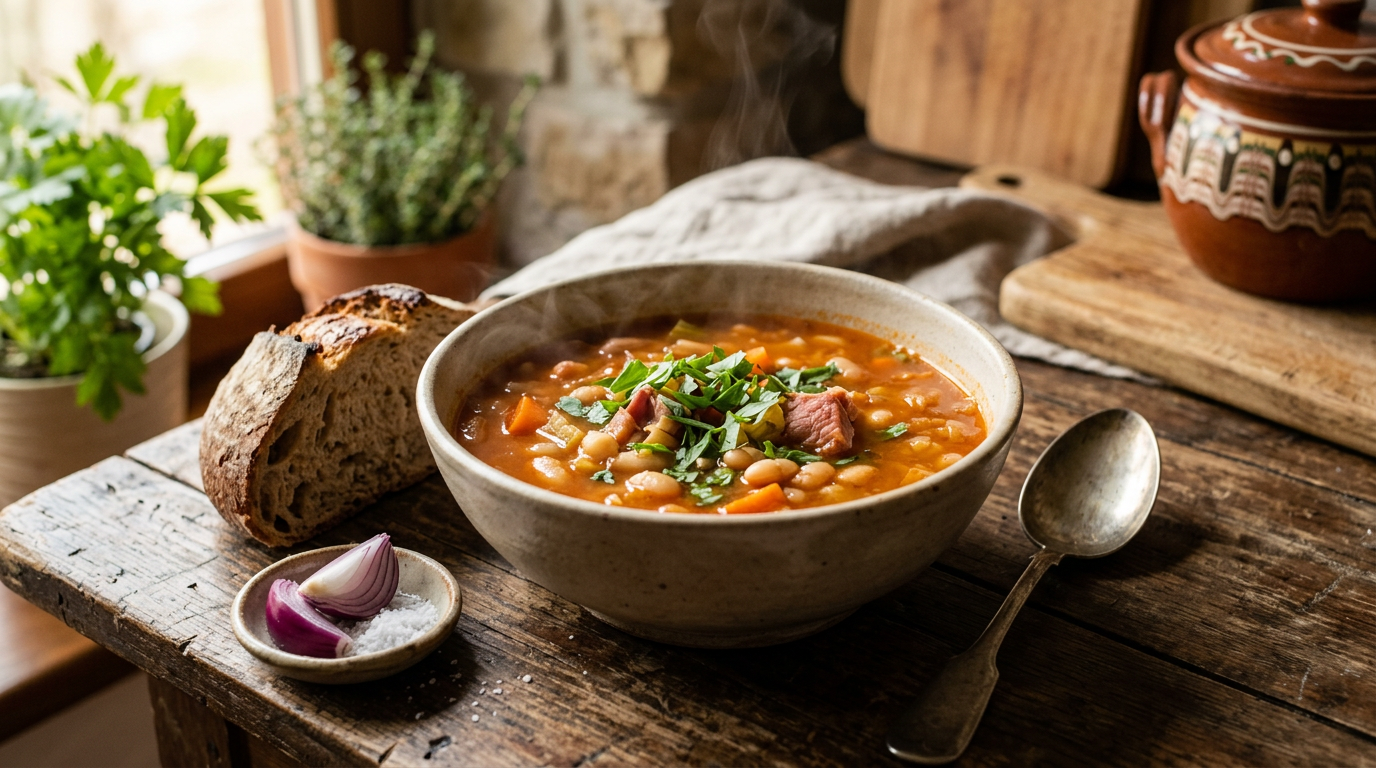
Few dishes evoke as much nostalgia in our gastronomic memory as a generous pot of bean soup with smoked meat, steaming invitingly on the lunch table. Every region of the country preserves small secrets passed down from generation to generation: in Transylvania the focus is on aromatic tarragon preserved in vinegar and thick sour cream, while in the south and east of the country the soup is perfected with freshly fermented borș and generously chopped green lovage.
The success of this soup is not a matter of luck, but of understanding simple kitchen processes: how to soak the beans to make them tender, why we need to change the water, how to simmer smoked meat to transform tough collagen into a silky texture, and when is the optimal moment to add the souring agent. In this detailed guide, we explore every step methodically, using fresh, authentic ingredients that you can order directly from Sezamo.
Selecting Ingredients: The Balance Between Noble Smoke and the Sweetness of Garden Vegetables
A remarkable soup always begins with high-quality raw ingredients. Smoked meat should not merely provide saltiness, but an authentic aroma of cold beech or oak smoke, without injected artificial flavors. In turn, root vegetables bring the natural sweetness needed to temper the intense smoked flavor.
The Trilogy of Perfect Smoked Meats
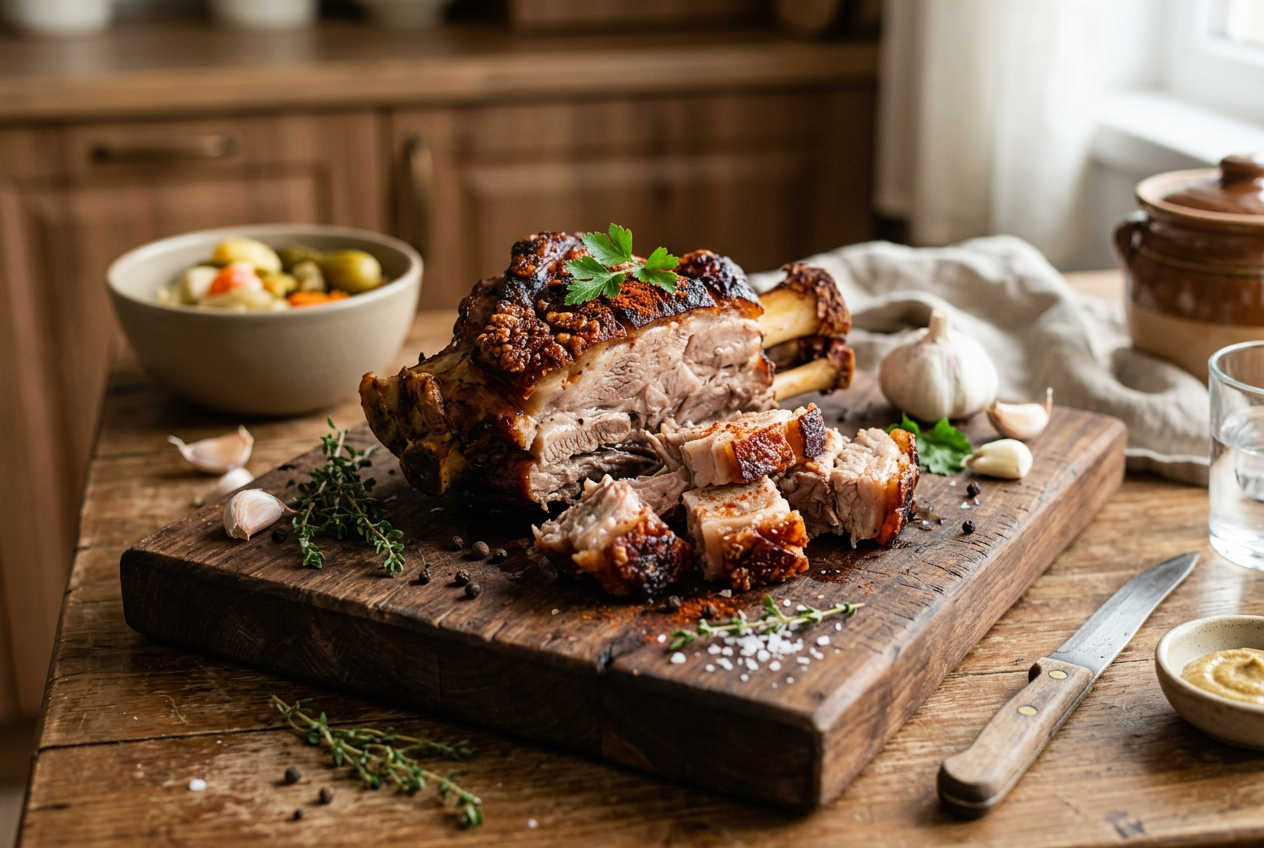
The centerpiece is the bone-in smoked pork knuckle. The bone and skin are rich in natural collagen, which dissolves into a delicate gelatin during prolonged simmering, giving the soup that pleasant density and characteristic body.
To complement the texture of the meat, it is ideal to add browned smoked ribs or a kaiser bacon generously layered with delicate streaks of meat and tender fat. A few pieces of dry smoked sausage added near the end release small golden specks of flavorful fat onto the surface of the dish.
Discover the selection of smoked meats and specialties from local artisans on Sezamo, ready-sliced and carefully packaged.
 MEAT AND SALT Smoked pork knuckle


Preparing the beans: The science of soaking and the secret against bloating
The reasons why many people hesitate to cook dried beans are the long preparation time and subsequent digestive discomfort. Both issues have clear scientific explanations and extremely simple practical solutions. Through proper soaking and changing the water correctly during the early stages of boiling, you eliminate hard-to-digest compounds without compromising the final flavor.
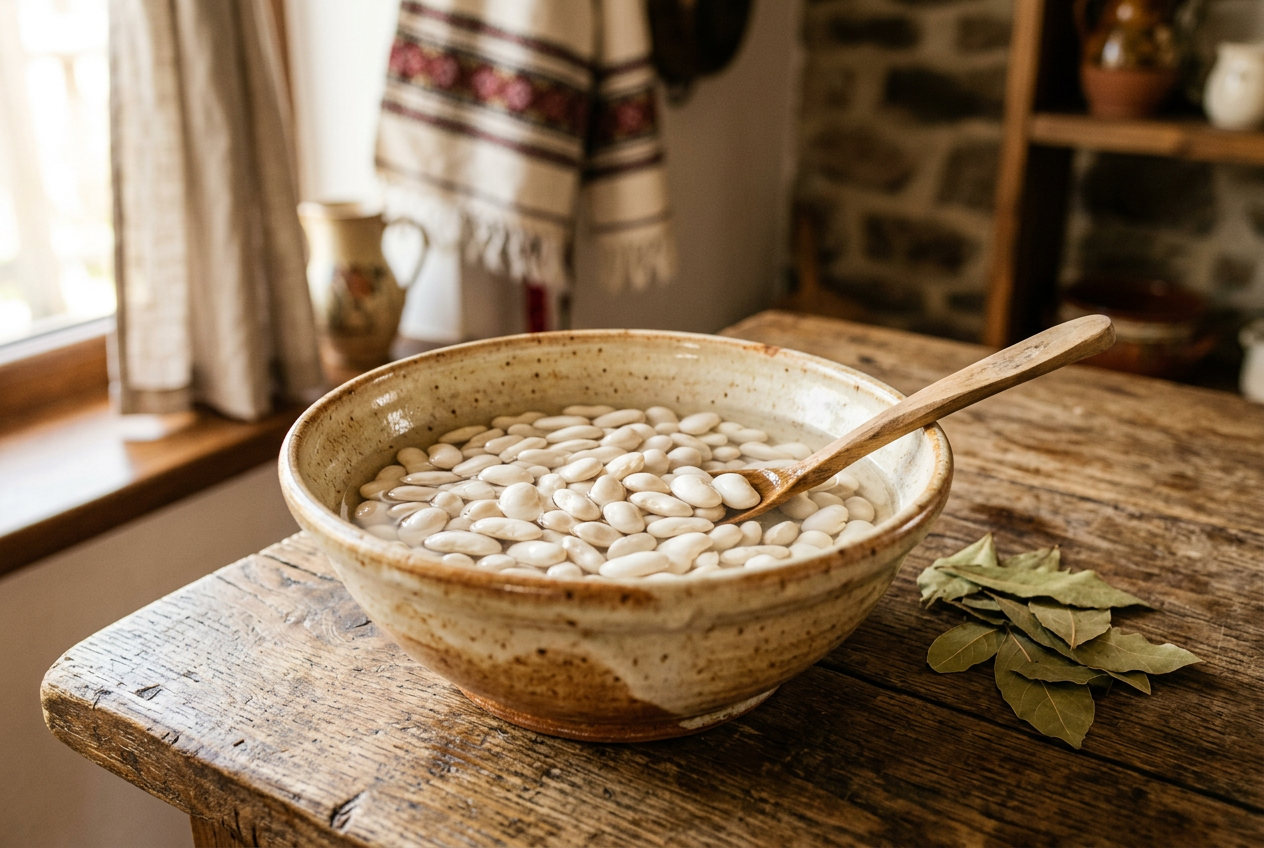
Slow overnight soaking
Leave the white beans in plenty of cold water for at least 8 to 12 hours. The volume of water should be at least three times greater than that of the beans. During this stage, the beans double in volume and begin to dissolve phytic acid.
Draining the soaking water completely
The water in which the beans were soaked is never used for cooking. Discard it and rinse the beans thoroughly under cold running water to wash away any remaining impurities.
The two-water boiling method
Put the beans on to boil in clean water. When the water comes to a rolling boil, let them cook for 10 minutes, then drain the water completely and pour fresh hot water over the beans. Repeating this process dissolves the oligosaccharides (raffinose and stachyose) responsible for bloating.
The quick option: premium canned beans
If time does not allow for overnight soaking, choose tender, pre-cooked beans from the range of dried legumes and canned goods on Sezamo, which you can add in the last 20 minutes of the soup.





Slow Simmering: The Alchemy of Collagen and Natural Soup Density
A common mistake is rushing the boiling over high heat. At high temperatures, the meat toughens, and the beans split chaotically on the outside before cooking evenly in the middle. True mastery lies in gentle simmering over low heat, allowing the sugars in the vegetables and the gelatin from the bone to create a rich, cohesive texture without ever resorting to flour or a roux.
1. Smoked hock base
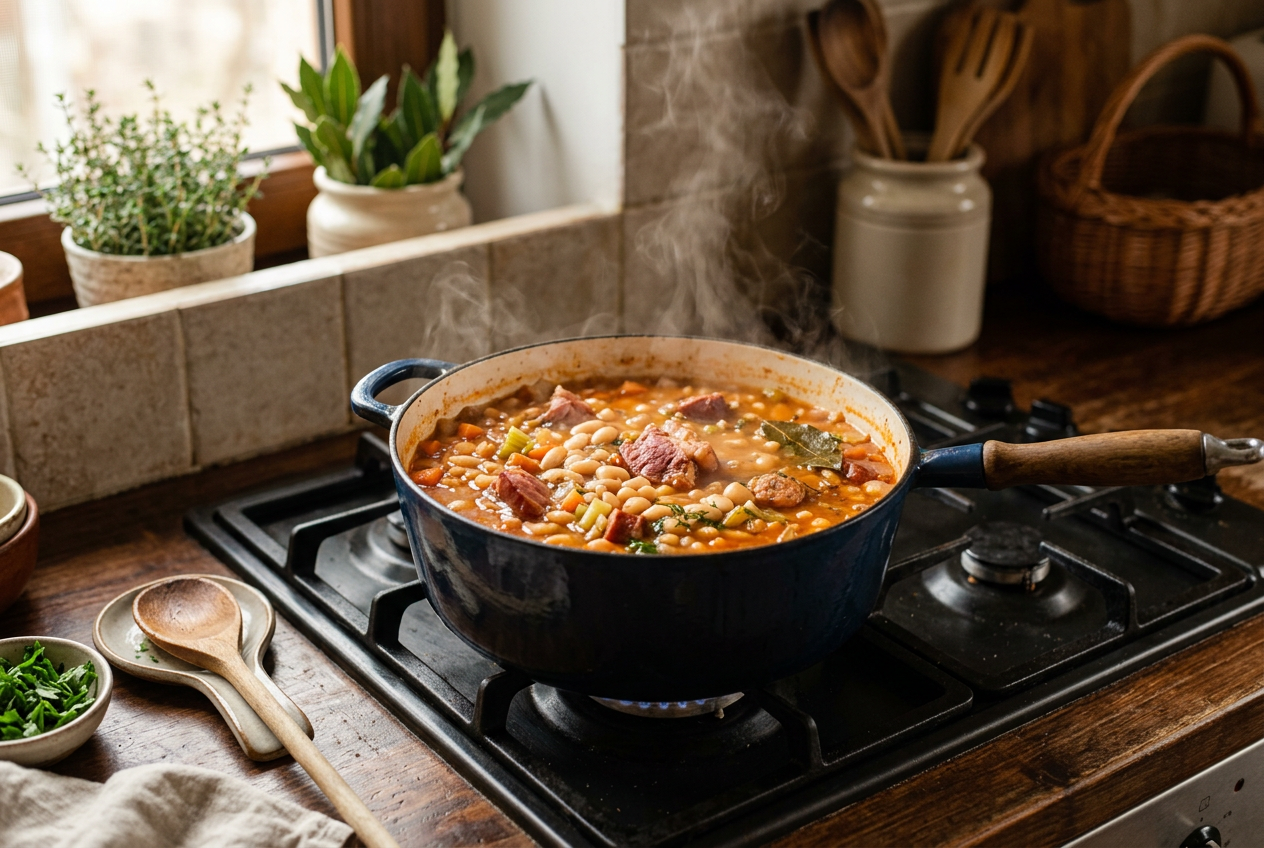
Place the pieces of smoked hock to boil in a spacious pot with clean cold water. Let them simmer over low to medium heat for about 60 minutes, skimming off any foam as needed, until the meat starts to easily fall off the bone.
2. The meeting of beans and meat
Once the smoked meat has imparted its initial flavours to the broth, add the blanched beans. Simmer them together over low heat. The beans will absorb the savoury meat juices, becoming incredibly tasty from the inside out.
3. Sweet vegetables in two stages
Add the chopped onion, thinly sliced carrots, parsnip root, and diced celeriac. If you want a richer flavour, you can sauté the vegetables for 5 minutes in a little oil or lard before stirring them into the simmering pot.

 45 min

 Under an hour
The Art of Seasoning: Tarragon in Vinegar, Live Borș, and Garden Herbs
A bean soup only develops true character when you balance the richness of smoked fat with acidity and fresh aromatic notes. Fat needs acidity to remain digestible and enjoyable, while dried and fresh herbs bring complex layers of freshness.
Never add acid before the beans are tender
Acidic compounds in borș, tomato juice, or vinegar strengthen the pectin in the cell walls of the beans. If you add tomatoes or borș while the beans are still hard, they will never soften properly, no matter how long you continue cooking them.
In Transylvanian cuisine, leaves of tarragon preserved in wine vinegar are the ultimate secret: the flavored vinegar cuts through the fat, and the subtle anise flavor of tarragon transforms a simple bean soup into a masterpiece.
If you prefer the classic version from Wallachia or Moldavia, bring one liter of fresh, unpasteurized borș from Sezamo to a boil and pour it into the pot only in the last 5 minutes, along with a generous bunch of finely chopped fresh lovage.