

Only a few items left
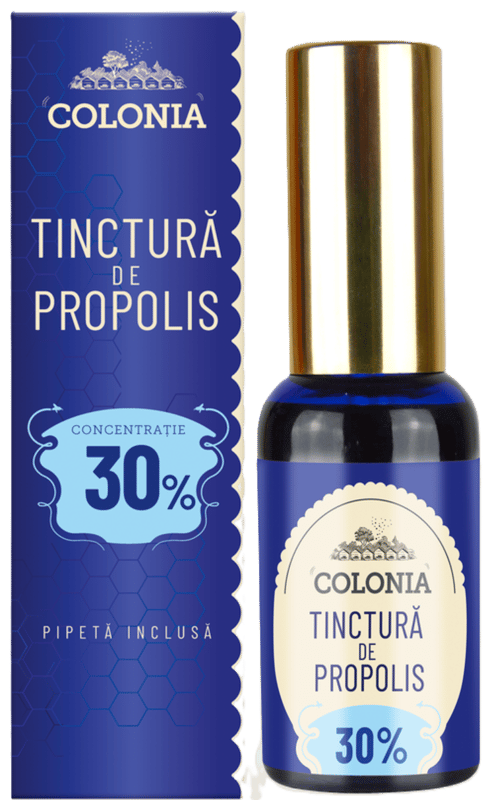
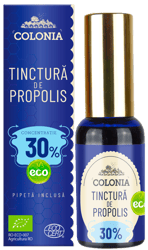
This 30% propolis tincture from the Romanian brand Colonia is a concentrated alcoholic solution featuring propolis extract with tree resins, beeswax, and essential oils. Preserved in a 30 ml cobalt blue glass bottle that filters UV rays, it mixes easily into water, tea, or honey, and is strictly for adults aged 18 and older.
More from this brand


Country of origin
Description
Propolis was used since ancient times by the Egyptians. They were known for using various bee products for medicinal and cosmetic purposes. Honey was appreciated for its antibacterial and healing properties, and beeswax was used in the preparation of ointments and cosmetics. Propolis was used in a similar way, given its antimicrobial and anti-inflammatory properties. The Egyptians used to apply propolis topically on the skin to help heal wounds and other skin lesions, or they used it in various mixtures or ointments to treat skin or mucosal conditions. Propolis tincture is an alcoholic solution that contains propolis extract. Propolis is a substance produced by bees from plant sap and other natural resources, such as tree resin. Bees use propolis to seal their hive and protect it against bacteria, viruses, and other pathogens. Propolis has antibacterial, antiviral, antifungal, and anti-inflammatory properties. Propolis tincture is obtained by extracting the active substances of propolis in alcohol or another solvent. This process helps preserve the beneficial properties of propolis and allows for the creation of a concentrated solution that can be easily administered in the form of drops or added to various products. It is used in alternative medicine and natural products to improve health. In general, propolis tincture is an alcoholic solution containing propolis extract. Propolis itself is a complex substance, made up of a variety of compounds, such as:Resins: Gathered by bees from tree buds and other plant sources. Wax: Sourced from bees. Essential oils: Contribute to the aroma and therapeutic properties of propolis. Pollen: Gathered by bees. Phenolic compounds: Include flavonoids, caffeic acid, ferulic acid, and others. These compounds give propolis its antioxidant, anti-inflammatory, and antibacterial properties. Minerals: There may be trace minerals in propolis, depending on the sources from which the bees collect the resin. Vitamins: Propolis may contain certain vitamins, such as vitamin B and vitamin C. Propolis tincture is associated with various benefits for the human body, due to its antibacterial, antiviral, antifungal, and anti-inflammatory properties. Benefits of consuming propolis tincture:Strengthening the immune system: Propolis contains substances that can stimulate the immune system, helping the body fight against infections. Antibacterial and antiviral properties: Propolis tincture can help fight bacteria and viruses, contributing to the prevention or treatment of respiratory or digestive tract infections. Anti-inflammatory: Propolis has anti-inflammatory properties, which can be useful in managing inflammation in the body. Wound healing: Propolis can accelerate the wound healing process and help regenerate tissues. Antioxidant effect: Propolis contains antioxidants that can help protect cells against oxidative damage. Antitumor properties: Some research suggests that propolis might have antitumor potential, but further research is needed to confirm these effects. Correct administration of propolis tinctureThe correct administration of propolis tincture can vary depending on the purpose of use and the specific product you are using. In general, propolis tincture is often consumed in the form of drops dissolved in a liquid. Here are some general recommendations:Dosage: The dosage can vary depending on the concentration of the propolis tincture and the manufacturer's recommendations. In general, it is recommended to start with small doses and gradually increase, depending on the body's response. Adding to liquids: Many people choose to add drops of propolis tincture to a glass of water, tea, or juice. This is a common method of administration. The exact number of drops can vary, and dosage information should be available on the product label or provided by the manufacturer. Sublingual: Some people prefer to place the tincture drops under the tongue to allow direct absorption into the bloodstream through the oral mucosa. This is a quick way to introduce the active substances into the body. Mixing with honey: You can also mix propolis tincture with honey to improve the taste and to also benefit from the extraordinary properties of honey. External application: In some cases, propolis tincture can be applied directly to the skin to help heal wounds or treat dermatological problems. Make sure to follow the manufacturer's instructions or the advice of a medical professional in this case. The bottles in which the product is found are blue because they best preserve the properties of the product inside. Blue Glass (Cobalt Glass): Blue glass, or cobalt glass, is known for its ultraviolet (UV) ray filtering properties. It provides a natural barrier against ultraviolet radiation, which can affect the quality and stability of liquids or chemicals stored inside the container. UV Protection: Blue glass absorbs and blocks a significant portion of UV radiation, thus helping to protect photosensitive substances, such as essential oils or pharmaceutical products, which can suffer damage due to UV light exposure. Chemical stability: Blue glass is considered more chemically inert than other types of glass. This means it is less likely to chemically interact with the substances stored inside, thus contributing to maintaining the stability of their composition over the long term. Preserving product quality: Blue bottles are often used to store light-sensitive products. Protecting these products from UV radiation helps maintain their quality and effectiveness. Durability: Blue glass is known for its durability and corrosion resistance. It can provide a robust physical barrier against external factors that could affect the integrity of the liquids stored inside.
Composition & Allergens
Composition
30% propolis brut, 30% alcool etilic de cereale