Skip navigation

EGIS

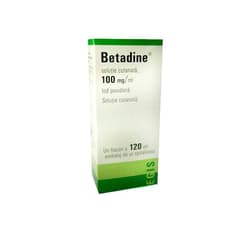
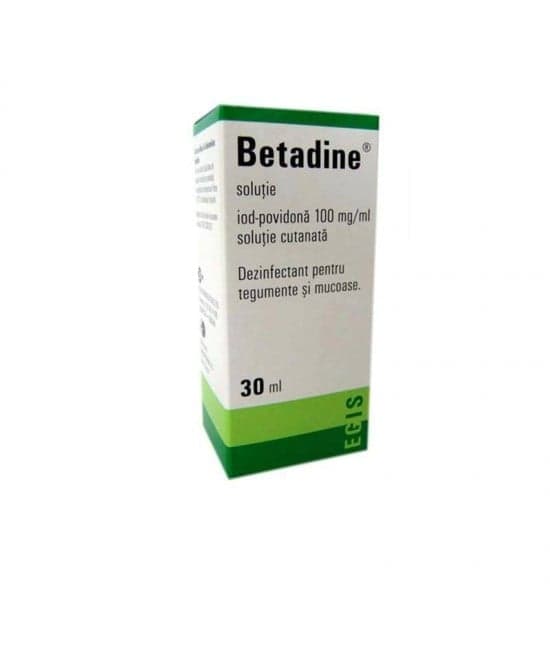
BETADINE 10% SOLUTION X

Product from
Farmacia
1 ml
RON 33.29 RON 33.29 /ml

Delivery within 3 hours


You're reading an Auto-translation.

Composition. The active substance is povidone iodine. One ml of solution contains 100 mg of povidone iodine. The other ingredients are: glycerol, nonoxynol 9, anhydrous citric acid, anhydrous disodium phosphate, sodium hydroxide (10% solution), purified water.

Therapeutic indications. Betadine contains povidone iodine which is a broad-spectrum antiseptic substance, acting against bacteria, viruses, fungi and protozoa (unicellular organisms).

Betadine is used in:

- skin disinfection before injections, transfusions, perfusions, blood sampling, punctures, biopsies;

- preoperative disinfection of the skin and mucous membranes (partial or total - preoperative baths);

- asepsis of wounds, including skin burns;

- adjuvant in bacterial and fungal skin infections;

- ophthalmological interventions, preoperatively, as Betadine diluted solution.

Dosage and method of administration.

Always use this medicine exactly as described in this leaflet or as your doctor or pharmacist has told you. Talk to your doctor or pharmacist if you are not sure.

Betadine is applied either as such or in diluted form.

Betadine is not diluted with hot water, but with water at body temperature.

The solution is not indicated for oral administration.

For preoperative skin disinfection, avoid dripping the solution outside the operating field (risk of skin irritation).

Application of Betadine in undiluted form, for disinfection of intact skin before injections, transfusions, perfusions, blood sampling, punctures, biopsies, as well as for disinfection of wounds or burns: the cutaneous solution can be used several times a day.

Betadine is used for hand disinfection as follows:

- usual hand disinfection - 2 x 3 ml of undiluted solution is left in contact for 30 seconds;

- preoperative hand disinfection - 2 x 5 ml of undiluted solution is left in contact for 5 minutes.

For skin disinfection, the undiluted solution is used and left in contact until dry.

If an isotonic solution is required, the dilution is made with physiological saline or Ringer's solution.

Precautions.

Before using Betadine, talk to your doctor or pharmacist.

In preoperative preparation, avoid prolonged contact with the patient's skin. Prolonged exposure to the solution may cause irritation or rarely serious skin reactions. Chemical burns of the skin may occur due to prolonged contact. Discontinue treatment if skin irritation, contact dermatitis or hypersensitivity reactions occur.

Do not heat the medicine before use.

Keep out of the reach of children.

When large amounts of iodine are administered, patients with goiter, thyroid nodules, or other non-acute thyroid conditions are at risk of developing hyperthyroidism (overactive thyroid function). In the absence of strict indications, in this category of patients, the application of povidone iodine solution should not be done for a long period of time and on a large area of the skin. Even after the end of treatment, a possible occurrence of symptoms of hyperthyroidism should be monitored and if necessary, thyroid function should be monitored. Treatment should not be used before or after radioiodine scintigraphy or radioiodine treatment for the treatment of thyroid carcinoma.

It is recommended to avoid administration in patients with renal insufficiency.

In people with more sensitive skin, a transient skin rash may rarely occur. To avoid this phenomenon, the use of Betadine on the skin should be tested before regular use.

Contact with eyes should be avoided. After use, wash hands thoroughly.

Prolonged use (more than 14 days) or on large surfaces (more than 10% of the body surface) in patients with latent thyroid function disorders (especially in the elderly) should only be done after weighing the therapeutic benefit/risk balance. These patients should be closely monitored even 3 months after discontinuation of treatment.

Oxidizing properties can cause deterioration of some metals, while plastic or textile material is resistant to povidone iodine.

In some cases, a color change may occur, which is often reversible. Betadine stains can be removed from textiles by washing with warm water and soap, and for persistent stains, sodium thiosulfate or ammonia solution should be used.

Special warnings.

Pregnancy and breastfeeding

During pregnancy and breastfeeding, povidone iodine should only be used if strictly indicated and for a minimum period of time. Because iodine crosses the placenta and is excreted in breast milk and because of the increased sensitivity of the fetus or newborn to iodine, during pregnancy and breastfeeding, povidone iodine should be used in as small amounts as possible. Moreover, the concentration of iodine is higher in breast milk compared to the concentration in serum. The use of povidone iodine can induce transient hypothyroidism (reduced thyroid gland activity) in the fetus or newborn. Thyroid function monitoring of the child may be necessary. Possible oral ingestion of the solution by the infant must be avoided.

Driving and using machines

Betadine does not affect the ability to drive or operate machinery.

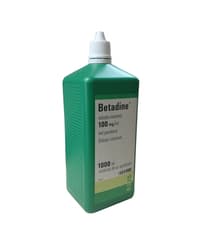
Packaging. Box with a 30 ml green PE bottle of cutaneous solution, provided with a PE dropper


Page updated on: 08.06.2021


: Iod povidona