
The complete guide to tapioca: benefits, secrets, and delicious pudding
Small, white, and seemingly unassuming, tapioca conceals a fascinating versatility. Whether you dream of a smooth and creamy pudding with an intense aroma of vanilla and coconut milk, or you want to discover the unmistakable elastic texture of gluten-free dishes, this ingredient instantly wins you over. Find out in the lines below the story of the cassava root, its benefits for the body, and the secrets to transforming these little pearls into sweet masterpieces right in your kitchen.
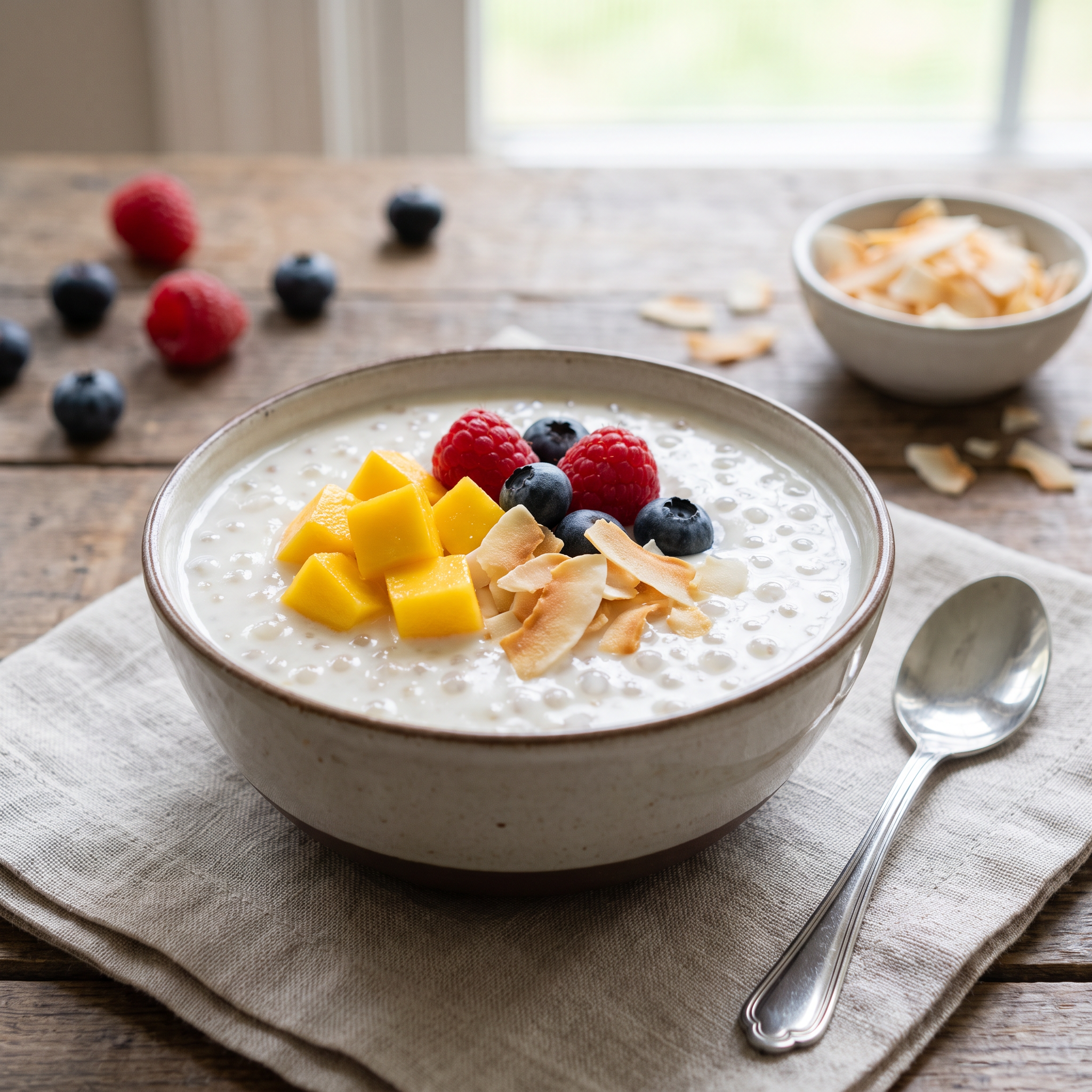
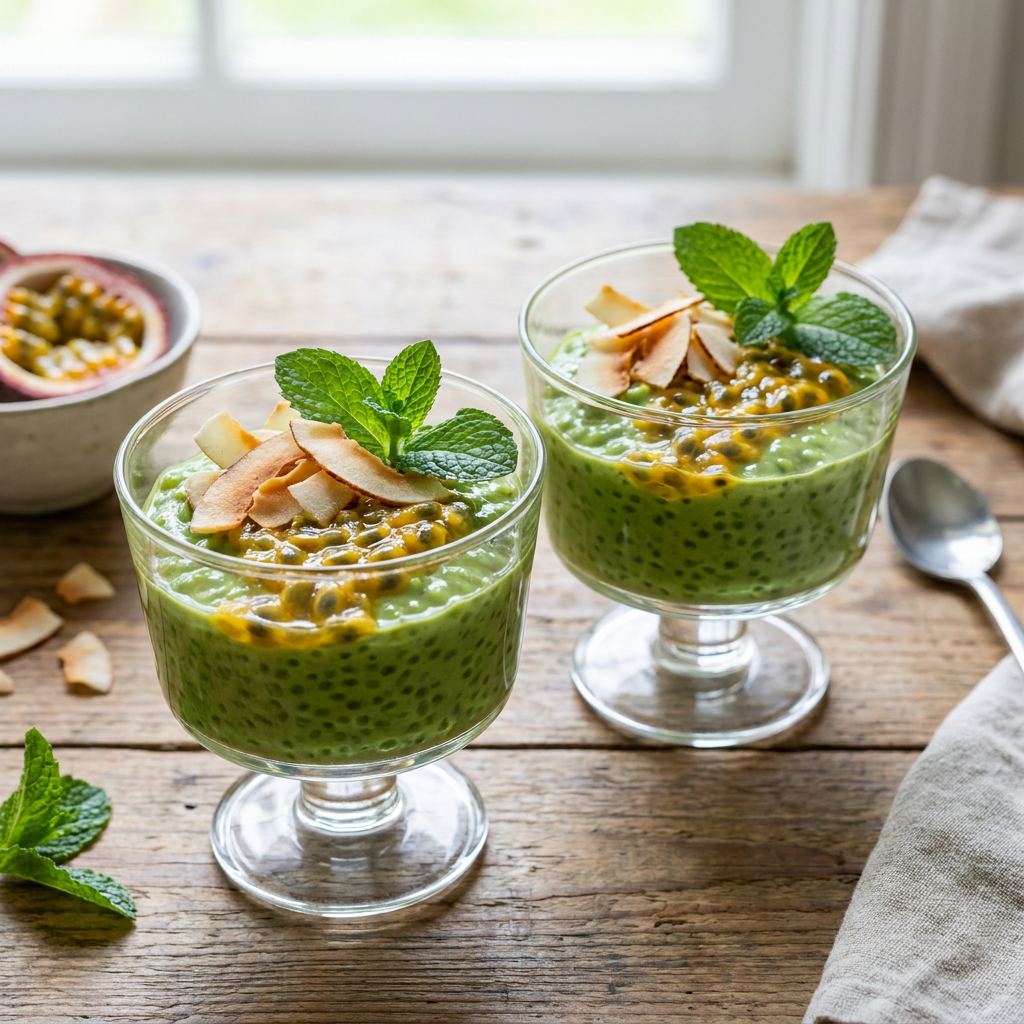
Velvety texture, translucent pearls, and the freshness of fruit: the perfect dessert combining flavor with easy digestion.
Exotic origins and the magic of cassava: what tapioca really is
Behind the shimmering pearls lies a fascinating journey that began in the heart of South America's tropical rainforests.
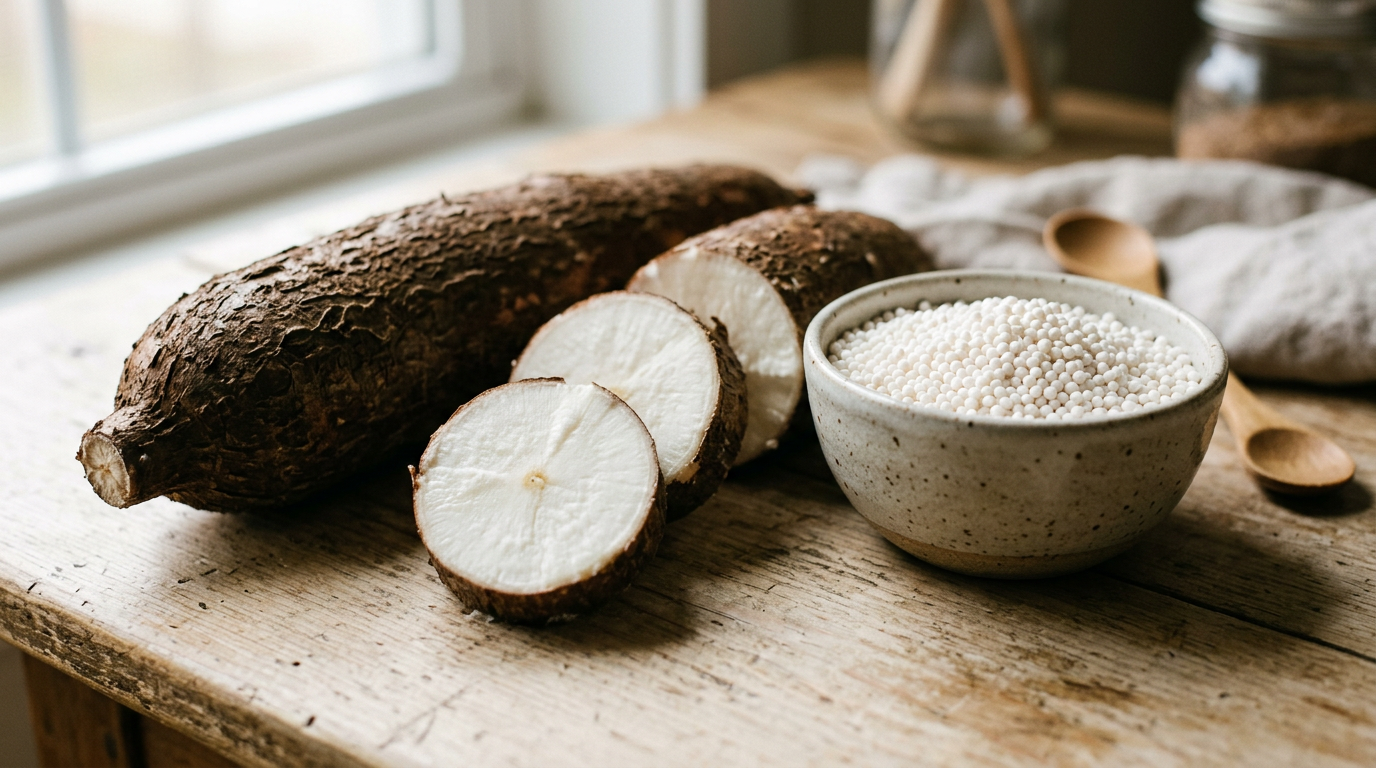
Tapioca is neither a cereal grain nor a miracle seed that appeared overnight. It is the pure starch extracted from the tuberous root of the cassava plant, scientifically known as Manihot esculenta and commonly referred to as cassava or yuca. Originally cultivated by indigenous communities in Brazil and the Amazon basin, this resilient plant has over the centuries become a vital source of food for hundreds of millions of people across Latin America, Africa, and Asia.
Fresh cassava root undergoes a meticulous process of washing, peeling, shredding, and hydraulic pressing to remove bitter compounds and vegetable water. The resulting starch-rich liquid is collected, and the white powder naturally settles at the bottom. After drying and a gentle heat treatment, the moist paste is passed through special sieves and mechanically agitated on hot plates, forming the familiar small, round granules that become crisp upon drying.
What makes tapioca truly remarkable in gastronomy is its neutral flavor profile and physical behavior when heated. In their dry state, the pearls are opaque and snow-white. But the moment they absorb hot liquid, the starch granules hydrate and gelatinize completely, turning into perfectly translucent, soft, and chewy pearls. On Sezamo, you can find traditional pearls such as Sanovita Tapioca pearls, as well as organic varieties from the Rice, pasta, dried legumes, soy category, ideal for quick recipes.


Easy on digestion, generous with energy: health benefits
Tapioca is appreciated across the medical and culinary world for the extraordinary gentleness with which it treats the digestive system.
One of tapioca's greatest assets is its completely hypoallergenic nature. Being a product derived from a tuber, it contains no gluten, wheat, rye, or barley. Moreover, it contains no dairy proteins, eggs, nuts, or soy, making it a safe choice for people with celiac disease, non-celiac gluten sensitivity, or multiple food allergies.
100% Gluten-Free
It does not cause inflammatory reactions in the intestinal mucosa and successfully replaces wheat starch in sweet dishes or elastic doughs.
Stomach-friendly
Its fine structure is quickly broken down by digestive enzymes without causing bloating or slowing transit, making it excellent for breakfast or children's snacks.
Clean and sustained energy
Rich in complex carbohydrates and low in saturated fats and sodium, it provides a sustained release of energy for intense physical activity or busy days.
Did you know that tapioca contains resistant starch? This special fraction of carbohydrates reaches the colon intact, where it nourishes beneficial microbiome bacteria and stimulates the production of short-chain fatty acids, essential for immunity.
Forms of tapioca: small pearls, boba, or starch and how to choose them
In the kitchen, tapioca comes in several forms, each with a specific role and dedicated preparation techniques.
When exploring the virtual shelves on Sezamo, you will notice that tapioca comes in the form of pearls of different sizes, but also as a fine powder known as tapioca starch or cassava flour. Although they come from the same parent plant, their culinary behavior differs considerably.
| Commercial form | Appearance and size | Recommended use | Average cooking time |
|---|---|---|---|
| Small tapioca pearls | Opaque white balls of 1-2 mm | Classic creamy puddings, sweet soups, desserts in a glass | 15-20 minutes over low heat |
| Large pearls (Boba) | Round balls of 5-8 mm | Asian Bubble Tea drinks, cold milk teas | 30-40 minutes plus steeping |
| Tapioca starch / powder | Extremely fine white powder | Thickening sauces, velvety soups, Brazilian breads | Dissolves cold, thickens instantly when heated |
| Whole cassava flour | Beige powder with natural fibers | 1:1 substitute for wheat flour in pancakes and pound cakes | Bakes in doughs and batters |
While small pearls remain the indisputable star for desserts, fine starch such as Bio Planet Organic Tapioca Starch from the Flour, sugar and baking ingredients section is the secret weapon for glossy, gluten-free sauces. Unlike cornstarch or potato starch, tapioca provides a spectacular crystal-clear finish and leaves no raw flour aftertaste.
The art of boiling: the secret to a perfect, lump-free texture
Cooking tapioca pearls is a simple dance between hydration, steady heat, and gentle stirring.
Many home cooks worry that the pearls will stick to the bottom of the pot or stay hard in the center. In reality, tapioca just requires a little attention and the right liquid ratio. Follow these four essential steps for an impeccable result every time.
The golden liquid ratio
Always use 1 part tapioca pearls to 4 or 5 parts liquid (water, fresh milk, or creamy plant-based milk). The pearls absorb plenty of liquid as they expand.
Optional but helpful soaking
For small pearls, soaking them for 20-30 minutes in cold liquid before turning on the heat shortens cooking time and ensures a soft, even texture all the way to the core.
Low heat and continuous stirring
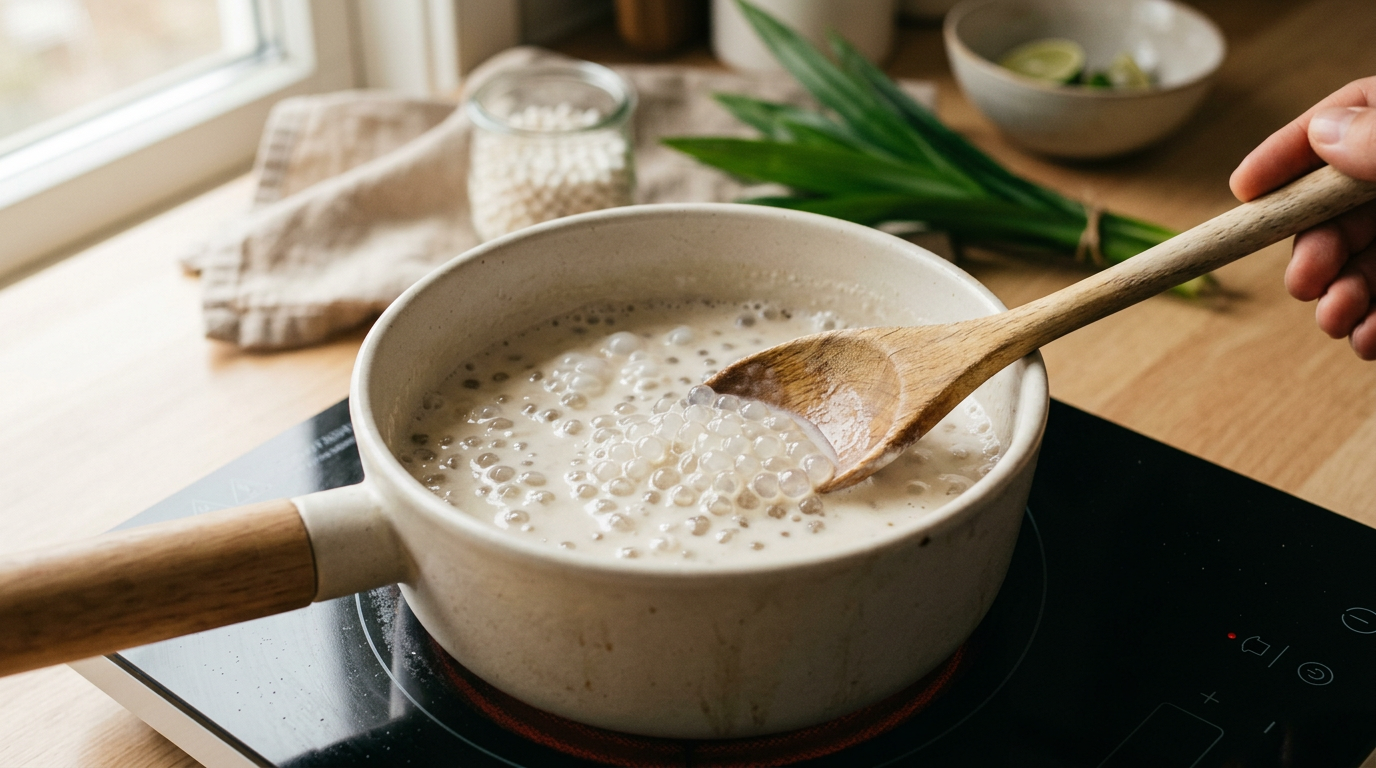
Simmer everything over low heat in a heavy-bottomed or non-stick saucepan. Stir frequently with a silicone spatula to prevent the starch from sticking to the bottom of the pan.
The transparency test
The pearls are perfectly cooked when they turn translucent and glassy. If you still see a small, opaque white dot in the center of the pearls, leave them covered with a lid for another 3-5 minutes.
Pastry chef's tip for intense flavor
Do not add sugar or sweetener at the start of cooking, as concentrated sugar can slow down starch gelatinization. Stir in the sweetener, vanilla paste, and a pinch of salt only in the last 5 minutes, when the pearls are almost completely translucent.


The iconic tapioca pudding: creamy harmony with coconut milk and mango
An exotic, smooth, and refreshing dessert that brings the atmosphere of a tropical holiday right to your plate.
Of all the ways to prepare it, the pairing of tapioca pearls and rich coconut milk is legendary. Borrowed from Southeast Asian cuisine, this recipe captivates with the divine contrast between the tender pearls and the thick tropical fruit sauce. It is completely plant-based, lactose-free, and can be prepared ahead of time for any moment of the day.
Fresh ingredients
- 100 g small tapioca pearls
- 400 ml Marks & Spencer Coconut Milk
- 250 ml still water or almond milk
- 3 tablespoons Kitchin Organic Coconut Sugar
- 1 teaspoon pure Bourbon vanilla extract
- 1 pinch of fine sea salt
- 1 ripe mango, diced
- Fresh raspberries and toasted coconut flakes
Step-by-step instructions
1. Liquid base: In a non-stick saucepan, combine the water and coconut milk. Pour in the dry tapioca pearls and let them rest for 15 minutes to start hydrating.
2. Slow simmering: Place the pot over low heat. Stir steadily with a spatula, scraping the mixture from the bottom. In about 18 minutes, the liquid becomes silky smooth, and the pearls turn translucent.
3. Flavouring: Turn off the heat, stir in the coconut sugar, vanilla extract, and pinch of salt. Let the pudding sit in the pot for 5 minutes, allowing it to settle and reach its optimal thickness.
4. Assembly: Divide the warm or chilled pudding into elegant glasses. Top with fresh purée or crisp mango cubes, fragrant raspberries, and a generous sprinkle of crunchy coconut flakes.