
Quinoa vs. Couscous: Nutritional Guide and Recipes
Are you looking for a nutritious, tasty, and quick-to-prepare side dish for your daily meals? Quinoa and couscous are two extremely popular options in modern cuisine, but they differ fundamentally from a nutritional, culinary, and gluten-content perspective. In this complete guide, we analyze in detail their nutritional values, health benefits, the secret to flawless preparation, and the best ways to integrate them into your daily diet.
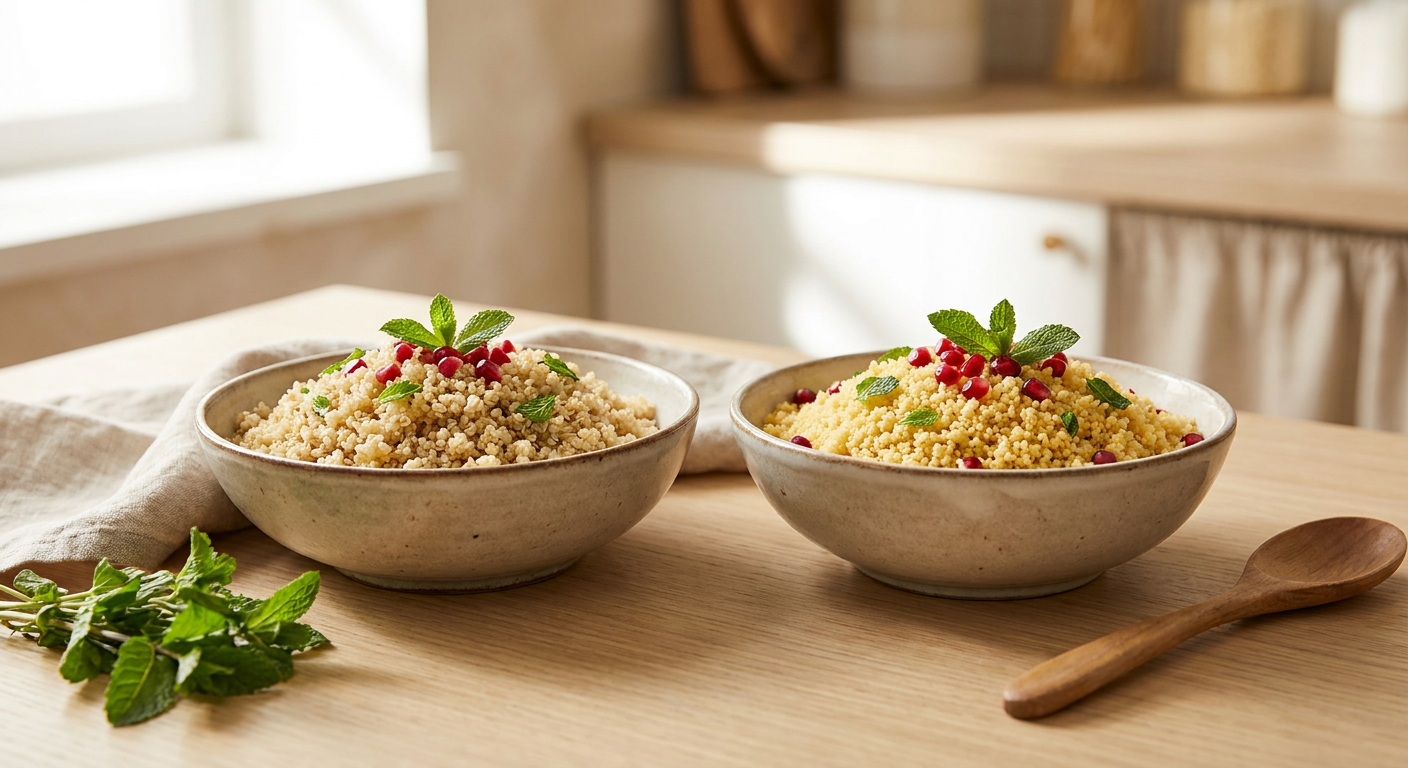
Origins and identity: What actually are quinoa and couscous?
Although they seem similar at first glance when served on a plate as a side dish, quinoa and couscous belong to completely different culinary worlds. Understanding their origin is the first step to making the right choice in the kitchen.
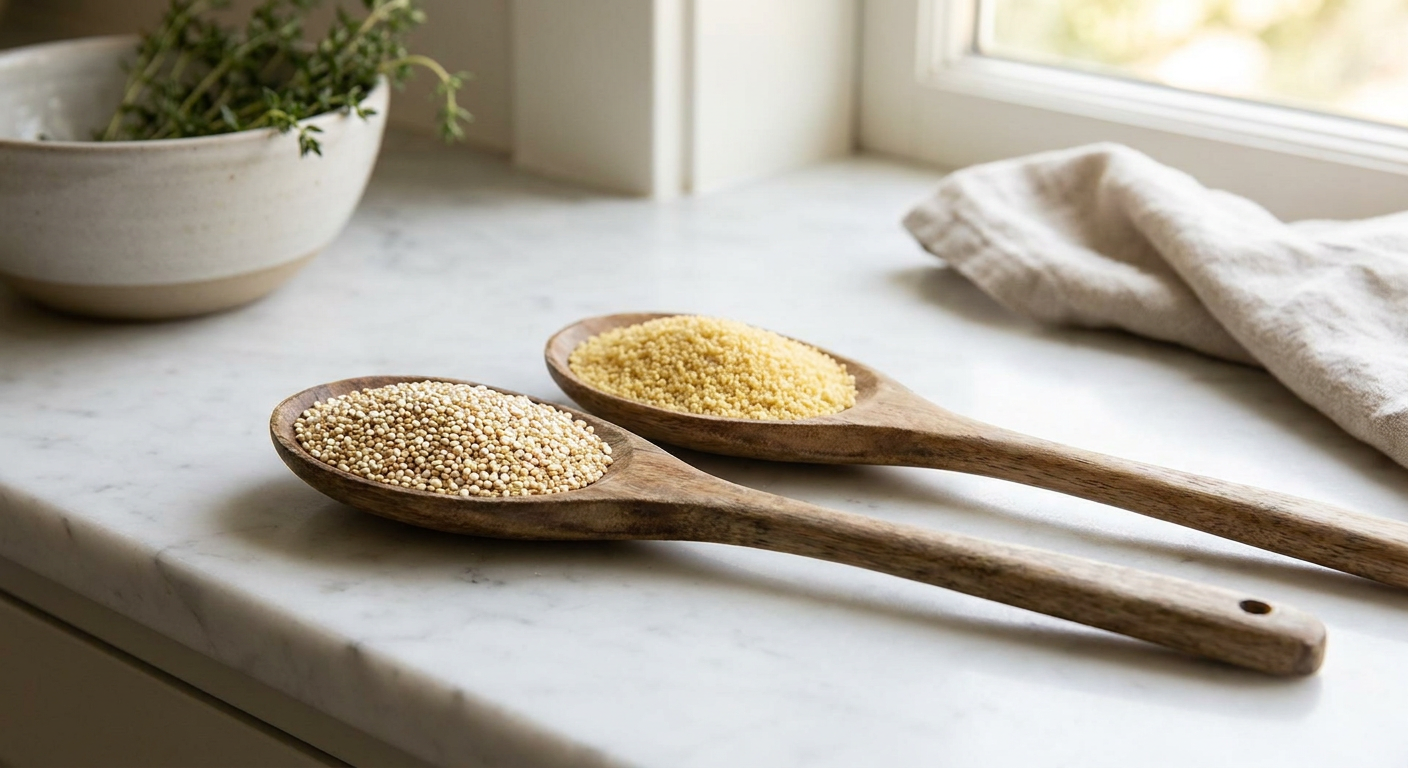
Quinoa (Chenopodium quinoa) is not a true cereal, but a pseudo-cereal. Originating from the Andes Mountains region of South America (where it was cultivated by the Incas for thousands of years and called the 'mother of all grains'), quinoa actually represents the seeds of a plant related to spinach and beets. Because it is a clean seed, quinoa is naturally gluten-free, making it an excellent choice for people with celiac disease or gluten intolerance. Discover the selection of gluten-free products on sezamo.ro.
Couscous, on the other hand, is a traditional culinary preparation from North Africa and the Mediterranean basin. It is not a plant or a whole grain recipe, but a special form of pasta made from durum wheat semolina moistened and rolled into small spheres. Therefore, classic couscous contains gluten and offers the light and airy texture specific to wheat dishes. Explore the entire range in the pasta and couscous category on sezamo.ro.
Nutritional Battle: Proteins, Fiber and Glycemic Index
When it comes to the nutrient profile, the differences between the two options are significant and can influence your energy levels throughout the day.
Quinoa is a champion of complete proteins. Unlike most plant-based grains, quinoa contains all 9 essential amino acids that the human body cannot synthesize on its own (including lysine). In addition, it offers double the amount of fiber compared to white couscous and is an excellent source of essential minerals such as iron, magnesium, phosphorus, zinc, and folate. Thanks to its fiber and healthy fats, quinoa has a low glycemic index (approx. 53), releasing energy gradually without causing sudden blood sugar spikes.
Couscous excels in lightness and selenium. Although it has a lower amount of fiber and complete proteins, couscous is very low in fat and provides a concentrated dose of selenium (a powerful antioxidant that supports thyroid function and the immune system). Cooked couscous has a low caloric intake per serving and is easily digested, making it ideal for quick and light evening meals.
| Nutrient (per 100g uncooked) | Quinoa (White/Tricolor) | Couscous (Durum Wheat) |
|---|---|---|
| Energy value | ~368 kcal | ~376 kcal |
| Proteins | ~14.1 g (Complete) | ~12.8 g (Incomplete) |
| Carbohydrates | ~64 g | ~77 g |
| Dietary fiber | ~7.0 g | ~3.2 g |
| Fats | ~6.1 g (Unsaturated) | ~0.6 g |
| Gluten | Gluten-free (0%) | Contains gluten |
| Glycemic Index (GI) | Low (~53) | Medium-High (~65) |
| Key minerals | Magnesium, Iron, Zinc, Potassium | Selenium, Manganese |




Step-by-step preparation guide: How to cook them flawlessly
The difference in structure between a dense seed and fine wheat semolina determines completely different cooking methods. Follow these simple steps for perfect results every time.
How to prepare Quinoa (15 min)
- Rinsing (Mandatory): Rinse the quinoa in a fine mesh strainer under cold running water for 1 minute to remove the bitter saponins.
- Water ratio: Use exactly 2 parts water or vegetable stock to 1 part quinoa (e.g., 100g quinoa to 200ml liquid).
- Boiling: Bring to a boil with a pinch of salt. When it boils, reduce the heat to low, cover with a lid, and let it simmer for 15 minutes.
- Resting: Turn off the heat and leave the pot covered for another 5 minutes. Fluff the grains gently with a fork.
How to prepare Couscous (5 min)
- Liquid ratio: Use an equal ratio of 1 part boiling liquid to 1 part couscous (e.g., 100g couscous to 100ml water/stock).
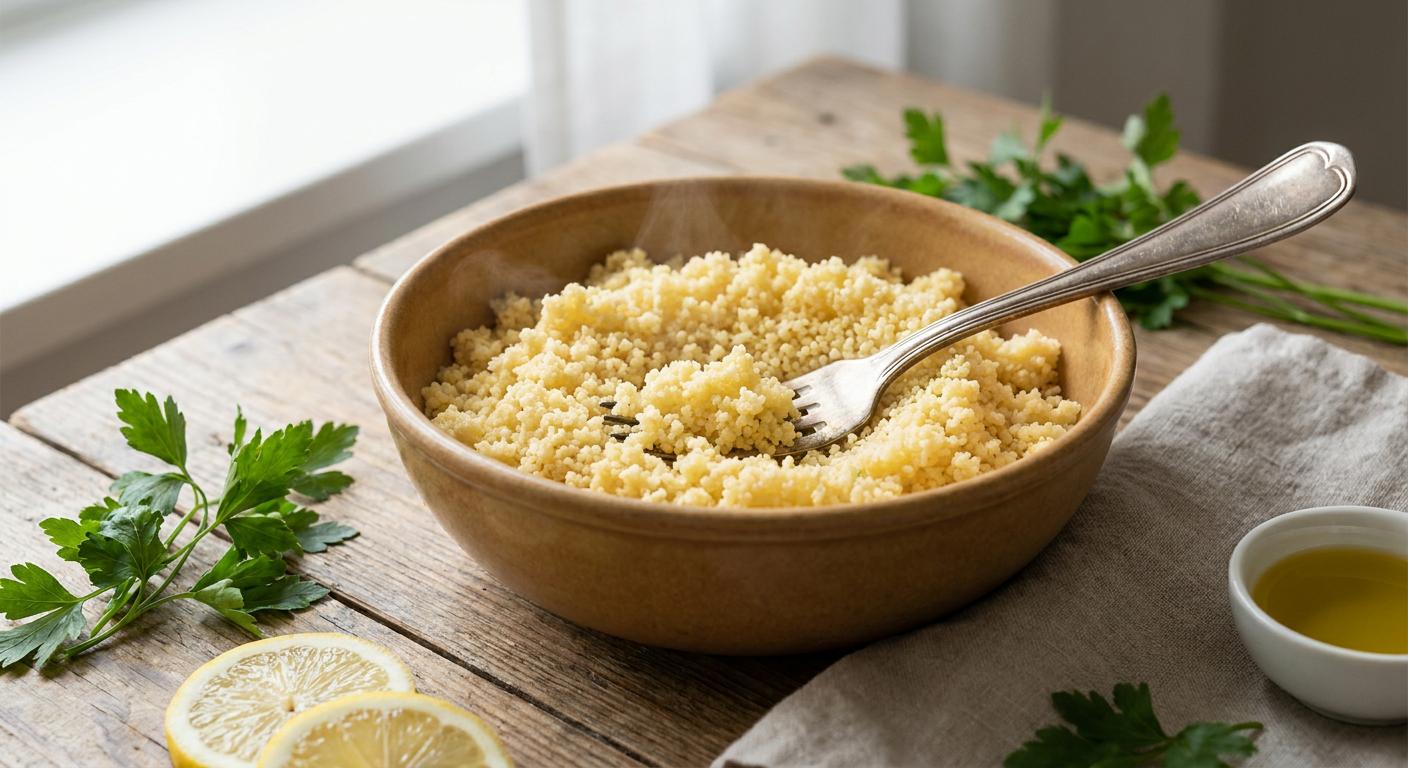
- Steeping: Place the dry couscous in a bowl, add a pinch of salt and a teaspoon of olive oil, then pour in the boiling water.
- Covering: Seal the bowl with a lid or a plate and let it sit undisturbed for 5 minutes.
- Fluffing: Remove the lid and fluff the grains using a fork. The couscous is ready!

 45 min


Culinary applications and ideal pairings for every day
The versatility of these two ingredients allows you to transform simple ingredients from your fridge into spectacular, healthy, and exceptionally tasty meals.
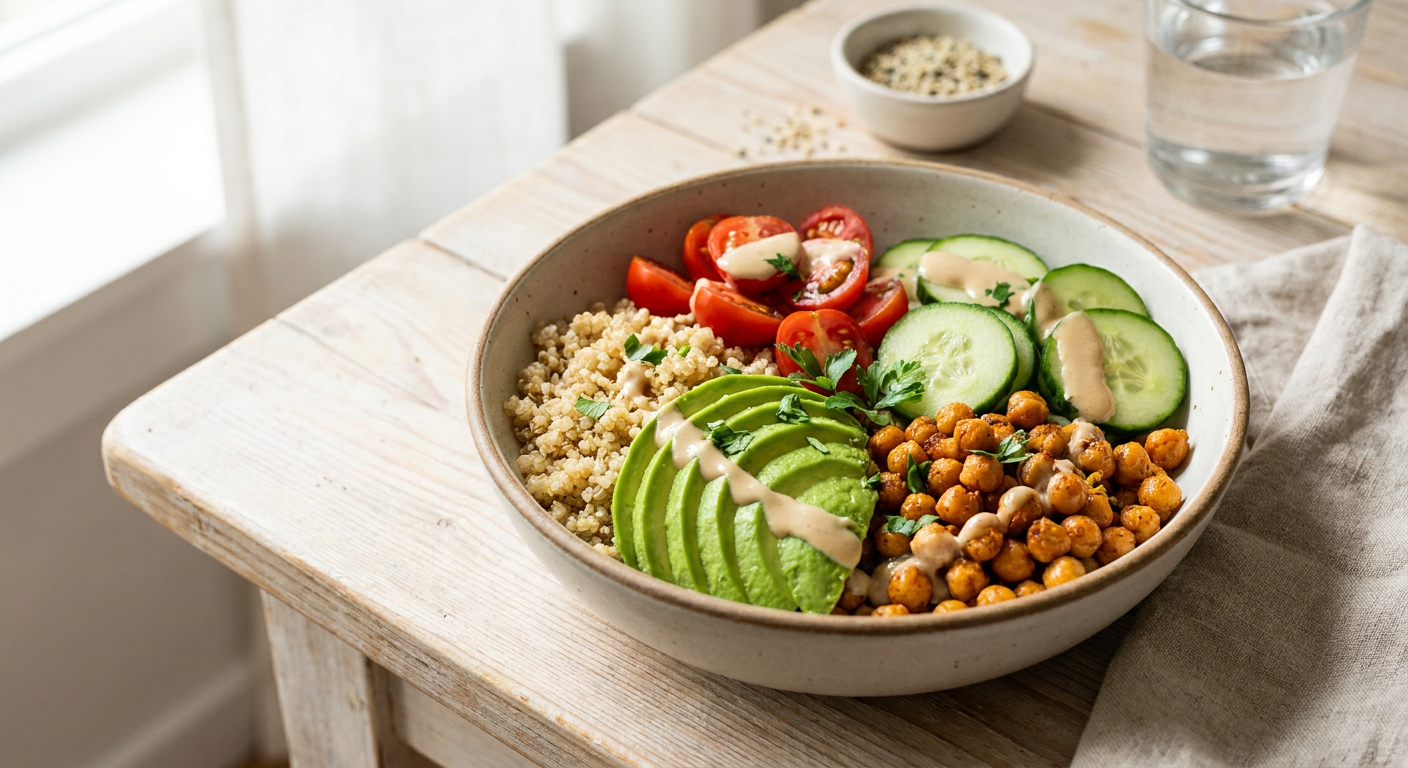
Where Quinoa shines: Thanks to its slightly crunchy texture and subtle nutty flavor, quinoa is the ideal base for nutritious Buddha Bowls, hearty summer salads with avocado, cherry tomatoes, crunchy seeds, and feta cheese, or as a nutritious filling for bell peppers, mushrooms, or baked zucchini. Also, quinoa boiled in almond milk with a pinch of cinnamon, nuts, and polyfloral honey becomes an exceptional warm breakfast that provides stable energy until lunch. Order the basic ingredients from the rice and pulses category on sezamo.ro.
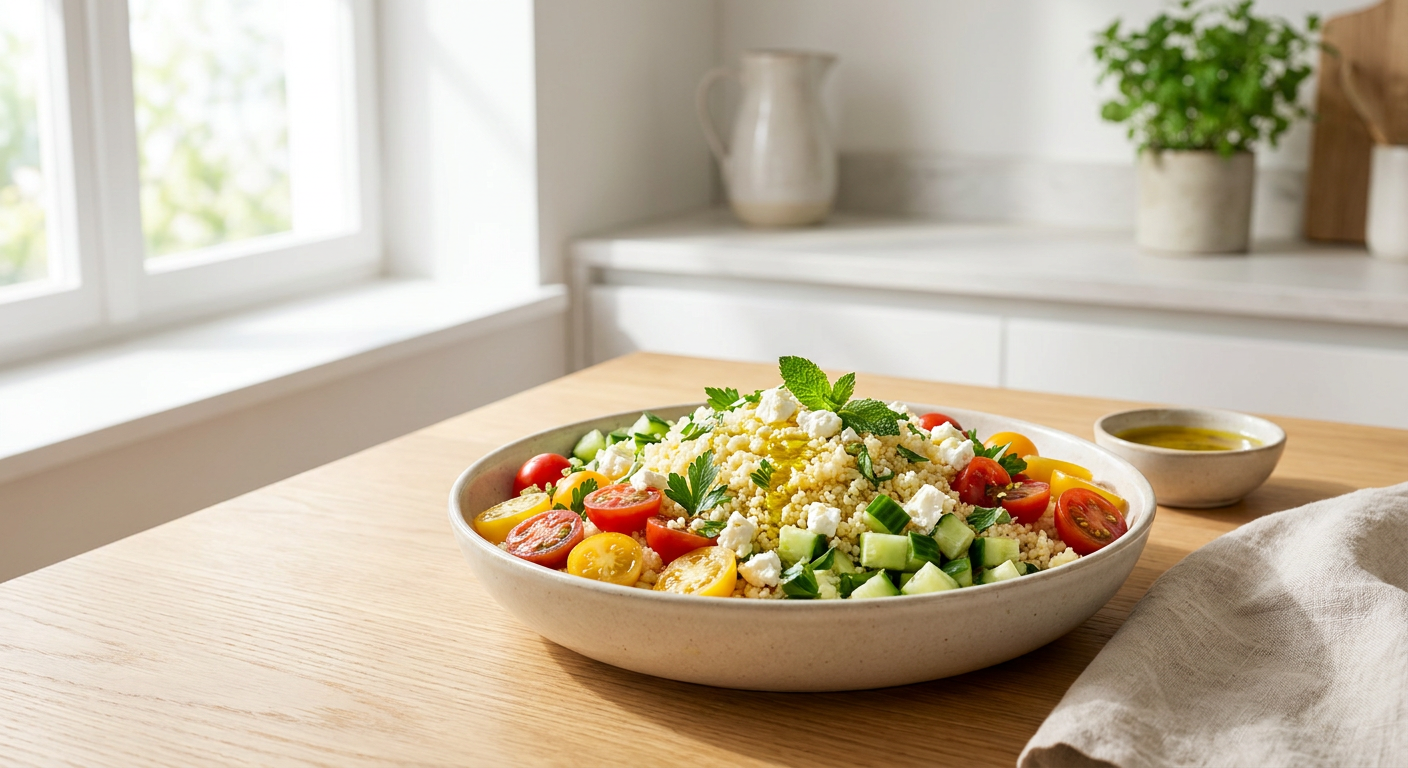
Where Couscous shines: Being a true gastronomic "sponge" for flavors, couscous instantly absorbs olive oil dressings, oriental spices, and the juices of browned roasts. It is the ultimate side dish for Mediterranean stews, stir-fried vegetables, grilled fish, or a tender chicken breast from Ferma Vranceana. In addition, it is the undisputed star of the traditional Tabbouleh salad with generous bunches of fresh parsley, aromatic mint, juicy tomatoes, and lemon juice.
Small gourmet combinations: Try mixing warm couscous with pomegranate seeds, raisins, and sliced almonds for a refined North African touch. For quinoa, add a creamy dressing made of tahini, lemon, and roasted garlic for extra Mediterranean flavors.


Nutritionist's Verdict: What to choose based on your lifestyle
Both ingredients deserve a place of honor in your pantry, but the ideal choice depends on your health goals, taste preferences, and available time in the kitchen.
If your main goal is to increase your intake of fiber and high-quality plant proteins, quinoa is undoubtedly the most nutritionally dense choice. On the other hand, if you need an ultra-quick lunch prepared in just 5 minutes without turning on the stove for long, couscous is the unbeatable ally for busy days.
Recommendation in brief:
- Choose Quinoa if: You follow a strict gluten-free diet, want a high intake of complete plant proteins, practice intense sports training, or seek to keep your blood sugar levels stable throughout the day.
- Choose Couscous if: You only have 5 minutes to prepare dinner, want a light and very low-fat side dish, or want a fine base that highlights rich sauces.
- sezamo tip: Alternate them with confidence during the week! Use quinoa for lunch bowls taken to the office (as it keeps its crunchy texture for hours) and couscous for quick afternoon dinners alongside fresh vegetables.
Quick kitchen tricks and proper storage
To save precious time during busy weeks, the meal prep strategy is ideal. You can boil a double batch of quinoa on Sunday. Cooked and cooled quinoa keeps excellently in an airtight glass container in the refrigerator for 4-5 days, or it can be frozen in individual portions for up to 3 months, ready to be added directly to salads or hot soups.
A simple chef's trick to boost the flavor of both ingredients: instead of plain water, hydrate or boil them in concentrated vegetable or chicken stock. Add organic lemon zest, a crushed garlic clove, and a pinch of cumin or turmeric to the hot liquid. The taste will be incredibly rich!
If you want an extra touch of flavor for the quinoa, toast the dry grains in a pan without oil for 2 minutes before adding the water. This simple toasting process intensifies the natural nutty flavor.