
Baking soda: 10 brilliant uses in the kitchen and home
From melt-in-your-mouth tender beef steak to cleaning without a single drop of harsh chemicals, baking soda is the most versatile helper in your pantry.
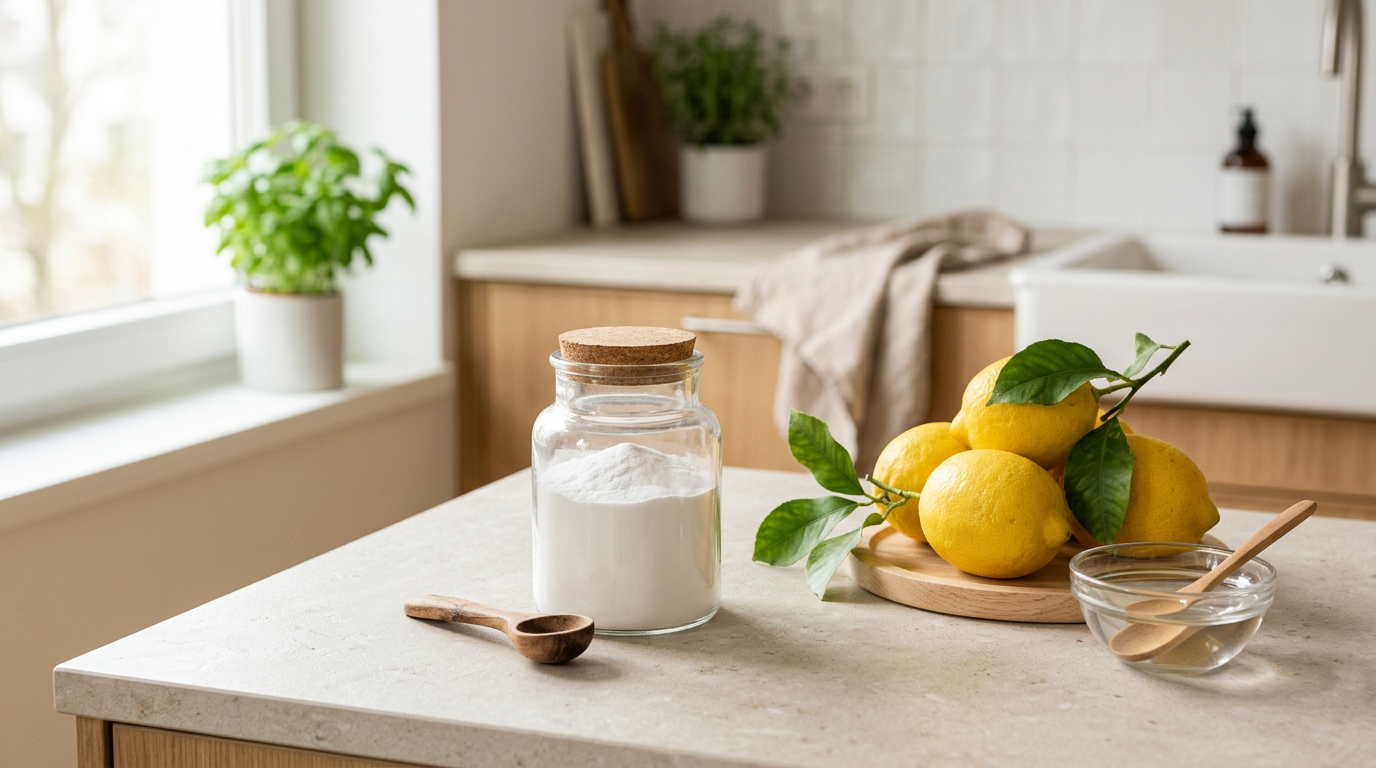
The little white powder: the science behind the magic.
Almost every household has a little bag or jar tucked away somewhere in the back of the kitchen cupboard. We often view it merely as a backup solution for baking or a traditional remedy, but baking soda holds remarkable power.
Under its scientific name sodium hydrogen carbonate (NaHCO3), this white crystalline powder is a pure mineral salt, completely food-safe and biodegradable. Its extraordinary power comes from its chemical balance: it has a moderately alkaline pH of around 8.3. When it comes into contact with any acidic compound or when heated, it releases carbon dioxide in the form of effervescent bubbles.
It is precisely this amphoteric nature that makes it an absolute champion of versatility. It can neutralize both strong acids and aggressive bases, balancing the chemistry of food and breaking down organic grime without damaging delicate fibers or materials. Furthermore, its crystalline particles provide an extremely gentle mechanical cleaning action, being firm enough to dislodge hardened grease, yet soft enough not to scratch glossy surfaces.
The secret to a clean home and a flavorful kitchen does not lie in dozens of expensive bottles, but in a simple, pure ingredient from nature.
Whether you want to prepare the juiciest Romanian mici, achieve a tender beef roast without hours of waiting, or eliminate lingering odors from the fridge, baking soda offers practical, fast, and affordable solutions. Let's discover together how you can use it to its full potential right in your own home.
The secret of great chefs: tenderizing meat and perfect mititei.
Have you ever cooked a beef steak or thinly sliced cuts that ended up dry and rubbery on the plate? Baking soda holds the key to a spectacular transformation of meat fibers.
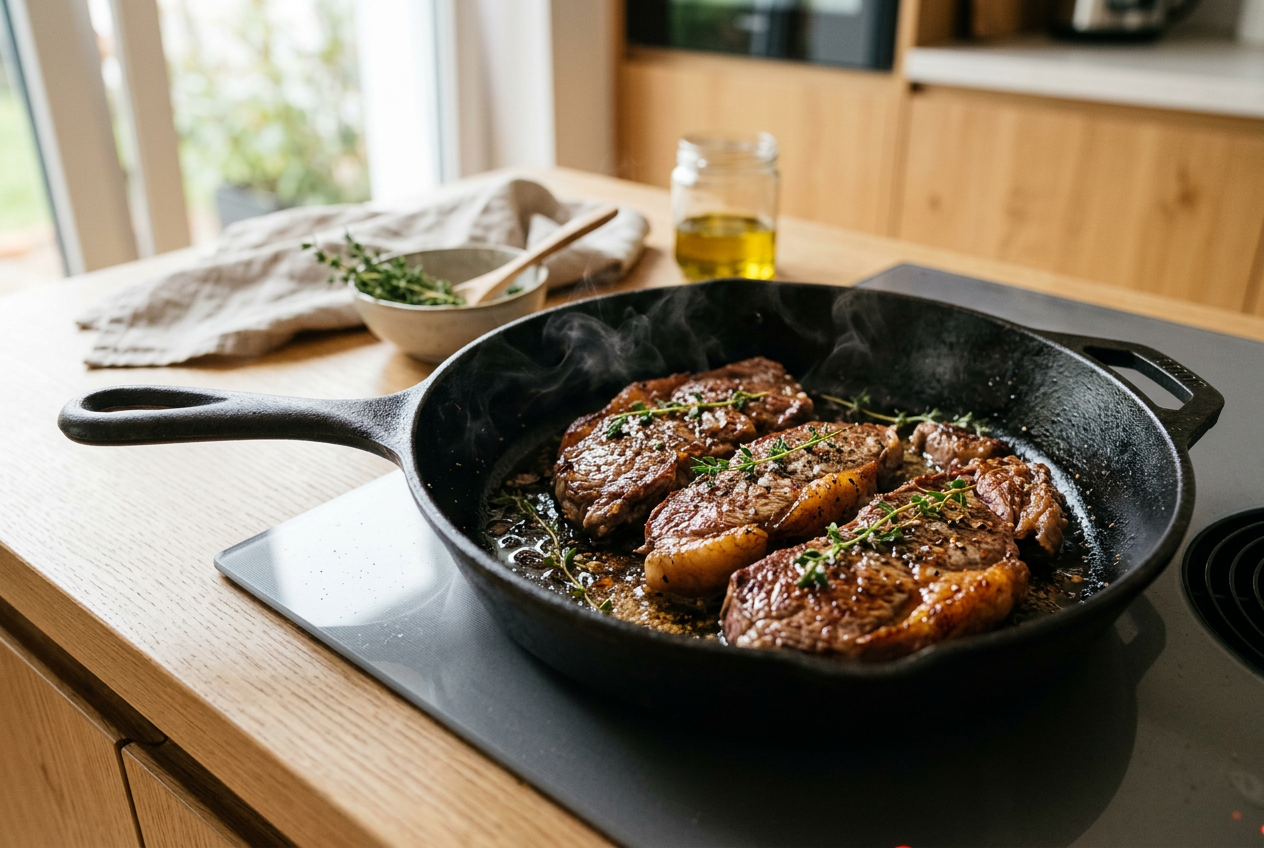
The muscle physics of meat is simple: under the high heat of a pan or grill, proteins contract tightly, squeezing out cellular water and leaving the meat tough. This is where the trick known in Asian restaurants as velveting, used by generations of passionate butchers, comes in.
By applying a mild baking soda solution, the pH on the meat surface quickly increases. This alkaline environment prevents protein bonds from contracting excessively during cooking. Natural juices stay locked inside, and the meat fibers become incredibly tender and juicy, even with more affordable cuts of fresh beef or pork.
Dissolving the solution
For 500 g of thinly sliced meat, dissolve 1 level teaspoon of baking soda in 100 ml of cold water. Pour the solution over the meat and massage gently for even penetration.
Optimal resting
Let the meat marinate for 15 to 20 minutes at room temperature. Do not exceed 30 minutes, so that the meat texture retains its pleasant firmness.
Thorough rinsing
Rinse the slices very well under cold running water to remove any trace of alkalinity. Pat the meat dry with paper towels until completely dry before cooking over high heat.
The legend of authentic Romanian mici
Did you know that traditional mititei owe their fluffy texture and juiciness precisely to baking soda? In the classic mixture of minced pork and beef, baking soda added alongside concentrated bone broth creates an aerated micro-emulsion. While grilling over hot coals, the meat retains its tenderness and develops that golden-brown crust adored by all Romanians. You can try our traditional grilled mici recipe directly or choose from Sezamo's selection of minced meat and fresh mici.

 35 min


 Small sausages Iordache made from pork and beef


Airy doughs and divine textures: the art of smart baking.
Home baking is a delicious chemistry, and baking soda is the catalyst that makes the difference between a dense dough and a soft, fluffy, and airy pastry.

To understand how baking soda works in the oven, we need to know the fundamental rule of activation: pure baking soda cannot act alone. It needs an acidic component present in the dough to kick off the effervescent reaction as soon as the ingredients are mixed.
If your recipe uses creamy yogurt, buttermilk, fresh lemon juice, apple cider vinegar, or even honey and natural non-alkalized cocoa powder, baking soda reacts instantly. Millions of tiny carbon dioxide bubbles are formed and trapped in the flour's gluten network, increasing the volume of the dough during baking.
Pure baking soda
It is a purely alkaline compound, roughly 4 times stronger than baking powder. It reacts immediately upon coming into contact with an acidic liquid and heat. If there is not enough acid in the dough, some of the baking soda remains unactivated, leaving a slightly salty and bitter aftertaste.
Classic baking powder
It is a complete formula that already contains baking soda, a stabilized dry acid, and cornstarch. It activates in two stages: upon hydration and through the heat of the oven. It is ideal for neutral doughs and batters that do not contain fermented dairy or citrus.
The secret trick for crisp green vegetables
When boiling broccoli, green beans, or fresh peas, add a generous pinch of baking soda to the boiling water. Baking soda neutralizes the natural acids released by the vegetables during cooking, protecting chlorophyll from breakdown. The result will be an intense, vibrant green color and an impeccably crisp texture. Find all the essentials in the baking ingredients selection from Sezamo.




Eco-friendly cleaning without compromise: a sparkling clean home.
Giving up harsh chemicals and synthetic fragrances that irritate the respiratory tract does not mean you have to compromise on shine and impeccable hygiene.
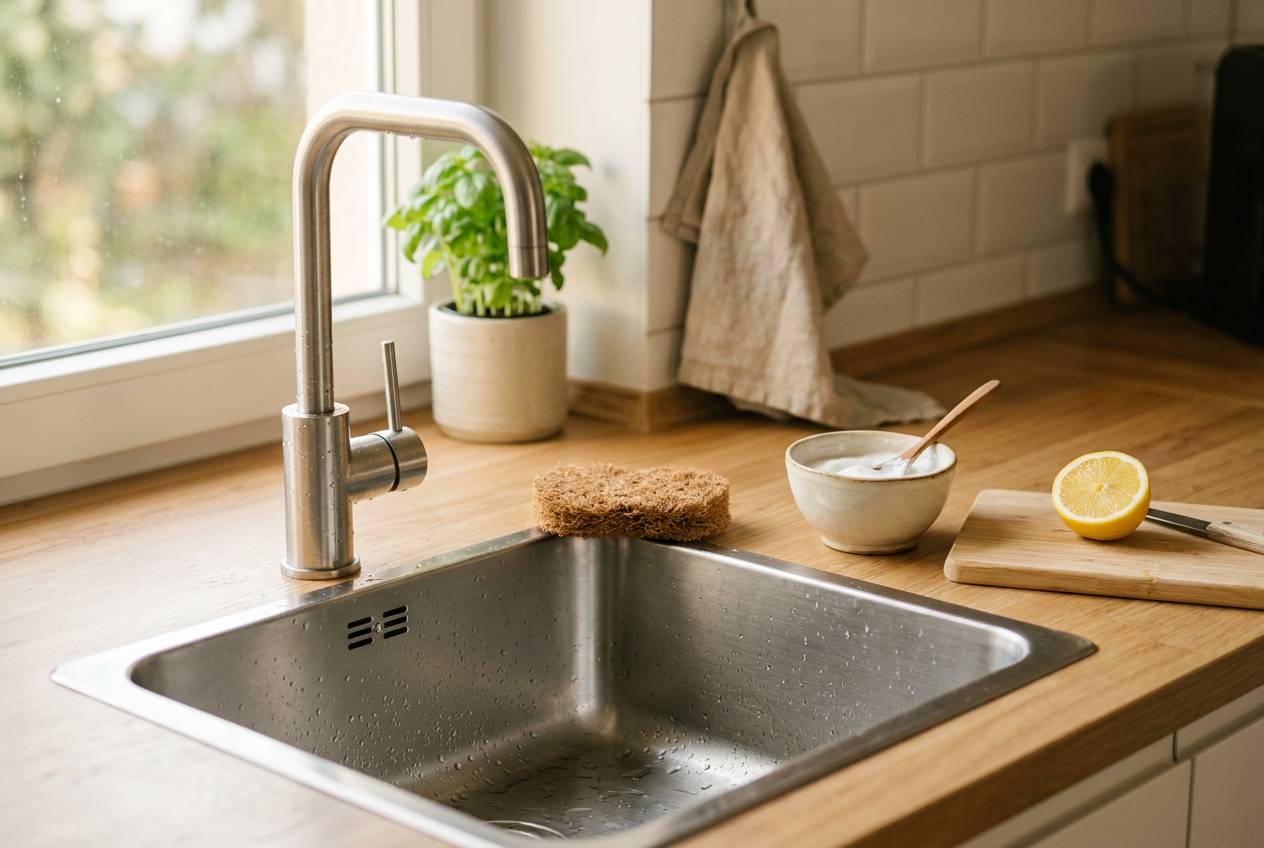
Why is baking soda the most beloved ally in eco-friendly cleaning? It all comes down to its physical and chemical structure. On the mineral hardness scale, baking soda has a value of 2.5, which means it is softer than glass, glazed ceramics, enamel, or stainless steel. It can remove stubborn grease build-up and burnt-on residue through mechanical friction without scratching.
In addition, when it comes into contact with organic kitchen grease, its alkaline nature triggers a mild saponification process, transforming fatty acids into water-soluble salts. As a result, grease easily lifts away with a simple wipe of a damp sponge.
Degreasing paste
Mix 3 parts baking soda with 1 part warm water until you get a thick paste. Spread the paste onto the oven walls or burnt baking trays, let it sit for 2 hours, then wipe with a damp cloth. Burnt-on grease cleans off without aggressive scrubbing.
Wooden cutting boards
Wood absorbs strong aromas of fish, garlic, and onion. Sprinkle a generous layer of baking soda over the surface of the cutting board and scrub firmly with half of a fresh lemon. The citric acid dissolves impurities, while the baking soda leaves the wood clean and odor-free.
Fresh drains
Pour a cup of baking soda directly down the sink drain, followed by a cup of heated white vinegar. The fizzing foam will break down grease and soap build-up. After letting it work for 15 minutes, pour 1 liter of boiling water down for a complete rinse.
If you prefer pre-dosed formulas made with natural and biodegradable ingredients, explore our dedicated range of eco-friendly cleaning products and detergents from certified producers.