
Crispy baked sweet potatoes: Recipe and secrets
Perfectly roasted sweet potatoes are one of the great pleasures of modern cooking. With a golden crust that crunches appetizingly with every bite and a velvety inside, full of natural sweetness, they instantly win over any dinner guest. Still, anyone who has tried to make them at home knows they can easily turn into a soft, soggy side dish if you skip the essential steps. Here is your complete guide to achieving an impeccable crust and the most inspired flavor combinations.
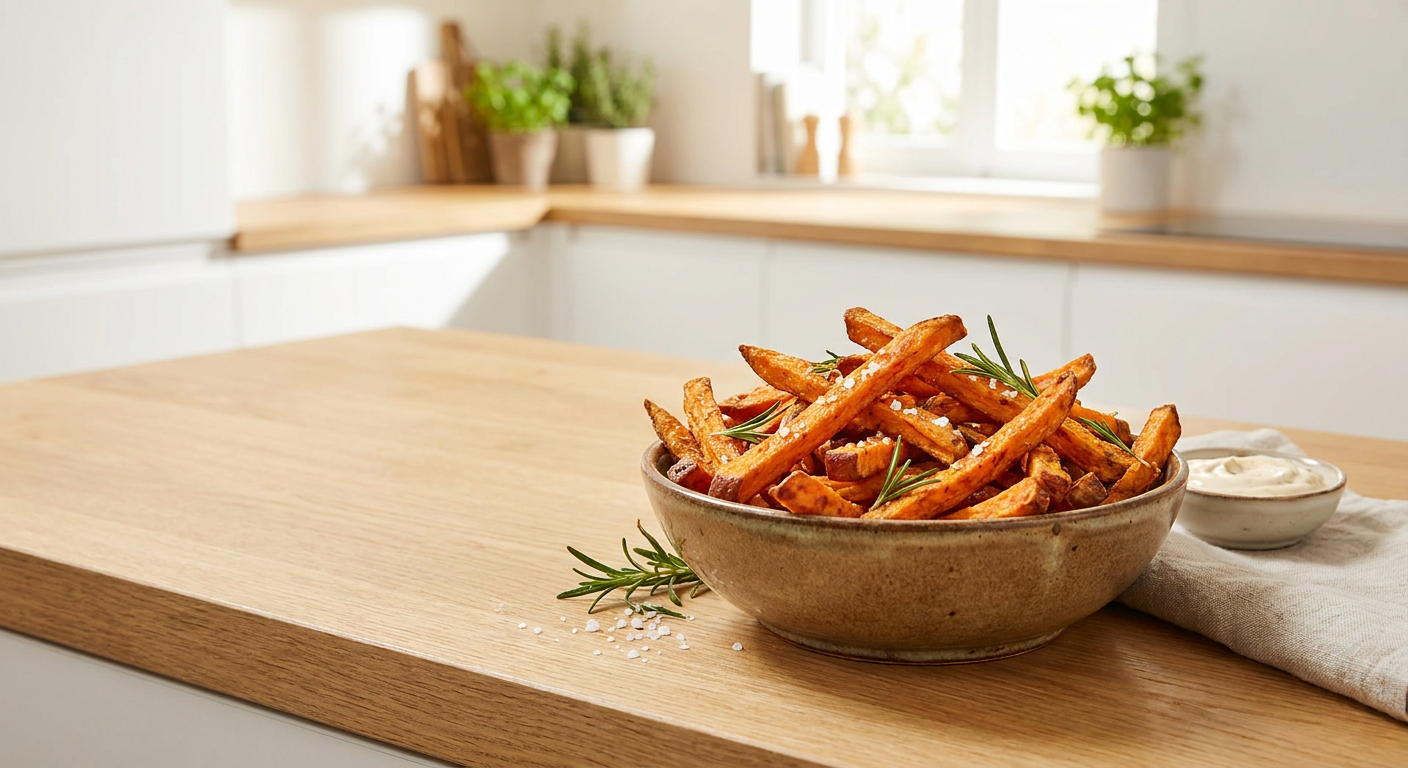
Why sweet potatoes need a different approach
The secret to a memorable texture begins with understanding the ingredient. Unlike classic white potatoes, sweet potatoes have a unique chemical composition dominated by natural sugars and high moisture.
When you put sliced sweet potatoes straight into the oven, the sugars in the flesh begin to liquefy and caramelize before internal moisture can evaporate. The result is often a soft texture, similar to baked mash, lacking that crispy bite. To transform these spectacular tubers into a truly crispy snack, professional chefs apply two simple principles: removing excess wet surface starch and applying a protective thermal barrier.
If you choose fresh potatoes from the Sezamo selection, you will notice that firm specimens, with smooth skin and an intense orange color, provide the most balanced ratio between moisture and fleshy consistency. Smaller or medium tubers are generally denser and easier to slice into even sticks.
Rich in dense, dry starch. At high temperatures, the surface starch gelatinizes and naturally forms a hard, crispy crust without much intervention.
Rich in free water and soluble carbohydrates. Without an outer barrier, internal steam softens the exterior, which is why added starch and thorough drying are essential.




Impeccable prep: uniform cutting and a cold bath
To achieve that perfect restaurant-quality texture, preparing the sweet potatoes before they hit the oven is the step that works 80% of the magic. Here are the three indispensable steps:

Cut the potatoes into sticks about 8 to 10 millimeters thick. If cut unevenly, thin tips will burn quickly while large pieces will stay raw and soggy.
Submerge the sticks in a generous bowl of very cold water or even with a few ice cubes. The cold water dissolves and extracts excess free sugars and sticky surface starch.
Remove the potatoes and pat them dry with clean towels until the surface is completely dry to the touch. Any remaining drop of water will create steam in the oven, ruining the crispiness.
The secret to a golden crust: cornstarch and a thin coating of oil
If you have ever tried the classic recipe and ended up with soft potatoes, this is the secret ingredient that will change everything: cornstarch.
After thoroughly drying the sweet potatoes, place them in a clean zip-lock bag or a spacious bowl and sprinkle a level tablespoon of cornstarch for each kilogram of potatoes. Shake the container well so that each stick gets an invisible, extremely fine coating, resembling a veil of powder. The cornstarch absorbs the last moisture molecules from the surface layers of the vegetables and, under heat, forms a crispy micro-mesh that prevents the sudden evaporation of moisture from within.
The next step is the oil. A common mistake is using too much, which will drown the potatoes and leave them greasy. Two tablespoons of oil per kilogram of potatoes are ideal. Using quality olive oils from the Sezamo pantry or an extra virgin oil with a neutral flavor, massage the potatoes with clean hands until each stick has a subtle sheen, without a pool of liquid gathering at the bottom of the bowl.
Never pour the oil before the cornstarch! If you pour the oil first, the cornstarch will clump into sticky lumps instead of forming a fine, even powder across the entire surface of the potatoes. The correct order is always: dried potato, evenly distributed cornstarch powder, and finally a thin coating of oil.


The art of seasoning: flavors that enhance the sweetness
The sweet potato is a blank canvas full of flavor. To create a fascinating contrast on the taste buds, combine its natural sweetness with warm, spicy, smoky, or salty spices.
Choosing aromatic spices from the Sezamo range transforms a simple side dish into a culinary star. Whether you opt for a classic combination or Mediterranean notes, here are the most popular blends:
Granulated garlic powder paired with quality Spanish smoked paprika creates a deep wood-grilled note, perfectly balancing the sweetness of the caramelized sugars.
Finely chopped fresh rosemary needles and a generous shower of finely grated Parmesan in the last 5 minutes of baking deliver an unmatched crispy umami crust.
An invigorating combination inspired by Mexican cuisine. Hot chili flakes added during baking and a drizzle of fresh lime juice upon serving bring an energizing contrast.
Salt is hygroscopic, drawing water out of plant cells. If you sprinkle salt on the potatoes before they go into the oven, their surface will be covered in water droplets, causing them to steam in their own juices. Sprinkle fine sea salt flakes only the moment you take the steaming tray out of the oven.


