
Ghee vs. Clarified Butter: Differences and Cooking Benefits
Have you ever experienced the moment when you put a generous piece of butter into a hot pan, and in a few seconds the kitchen fills with dense, bitter smoke? Fresh butter is undoubtedly the king of breakfast and the soul of refined pastry, but when it comes to high temperatures, its complex composition becomes a culinary trap. The response of chefs everywhere is separating pure fat from water and proteins. That is how two absolute stars of gourmet cuisine emerged: European clarified butter and the legendary ghee from Eastern tradition. Although both promise browned dishes without a drop of smoke, the differences between them will completely transform the way you cook.
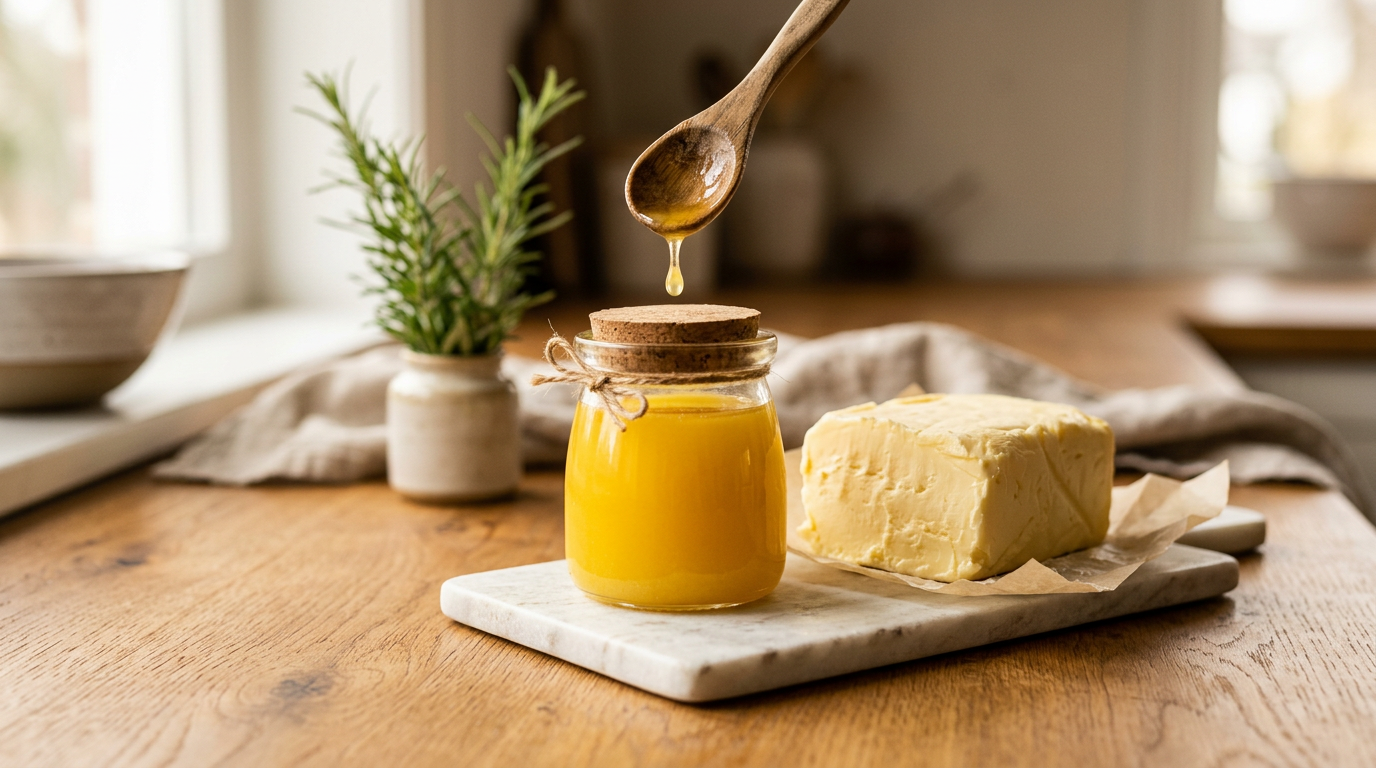
The anatomy of butter from the fridge: why it gives in to high heat
To understand why butter behaves so unpredictably over heat, it is worth taking a look under the culinary microscope. The classic table butter you order on Sezamo is not a pure fat, but a charming natural emulsion consisting of three distinct components: about 80 to 82 percent milk fat, between 16 and 18 percent water, plus a remaining 1 to 2 percent represented by protein solids, mainly casein, whey, and lactose.
When you place a cube of butter in a warm pan, the water immediately begins to boil and sizzle loudly. As the pan temperature exceeds 100 degrees Celsius, the water gradually evaporates. The critical problem arises around 150 degrees Celsius: the milk proteins and milk sugar left without the protective shield of water fall directly onto the hot metal and instantly begin to char. This process produces acrolein, a substance with a pungent odor, bitter taste, and toxic effects on the body.
The secret of the world's great cuisines has always been simple and ingenious: if you completely extract the water and remove all solid milk proteins, you get a golden fat of impeccable purity. This purified fat not only no longer burns in a hot pan, but also gains remarkable heat tolerance and a pantry shelf life of several good months.
Simple clarified butter versus ghee: the nuance that changes the taste
Although many use the terms interchangeably, there is a clear culinary boundary between a classic European clarified butter and an authentic Indian-inspired ghee. The difference lies not in the starting raw material, but in the simmering time and the precise moment when the heat is turned off.
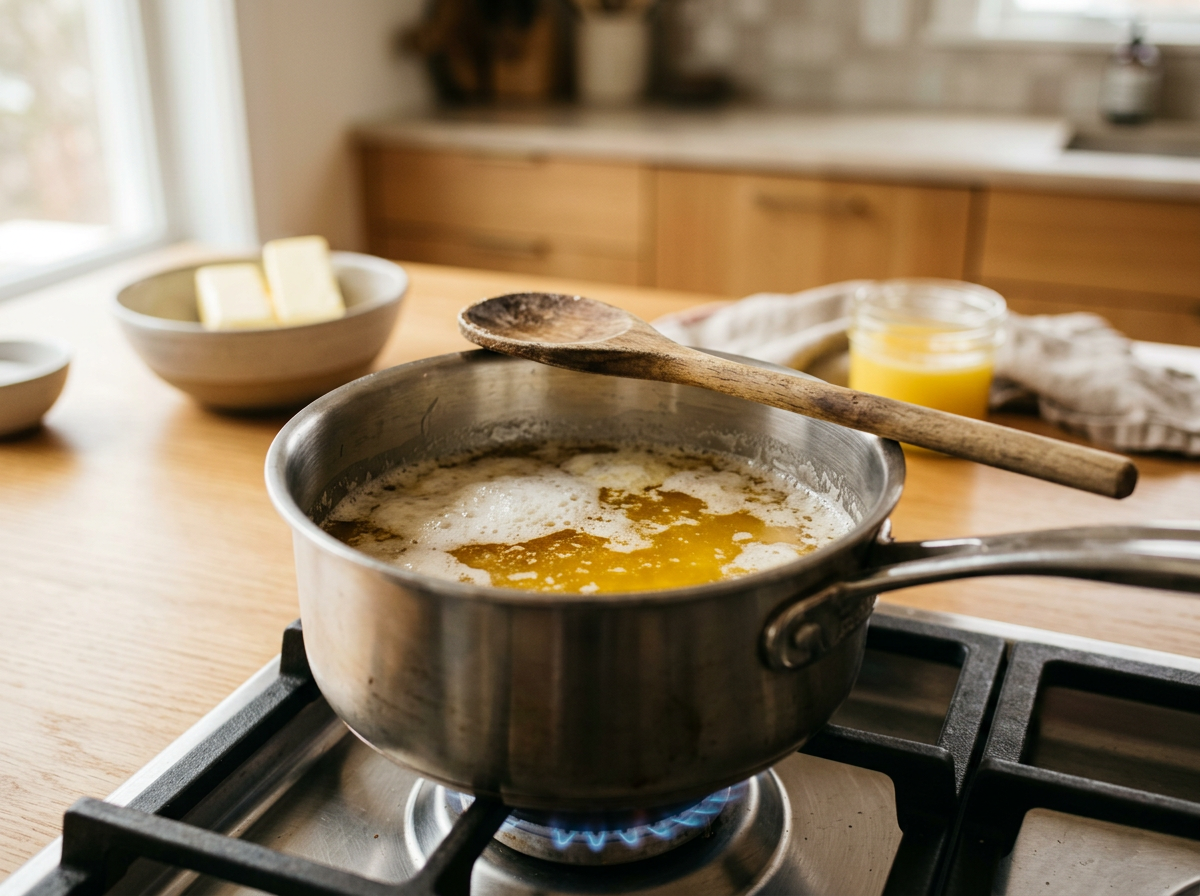
In French cuisine, clarified butter is obtained by gently heating a block from the fresh butter category. The butter melts over very low heat until the water evaporates, and a white whey foam rises to the surface. This foam is carefully skimmed off, and the golden liquid is strained immediately before the milk solids settled on the bottom of the pan change color. The result is a clear, straw-yellow fat with a delicate, clean taste of sweet butter.
At the opposite pole, ghee undergoes an additional stage of cooking on the flame. The butter continues to simmer even after the water has evaporated. During this time, the milk solids settled on the bottom of the saucepan begin to brown slightly, undergoing a controlled Maillard reaction. This slight caramelization infuses the entire fat with deep notes of roasted hazelnuts, walnut, and caramel, transforming the liquid into a copper elixir with an intense and unmistakable aroma.



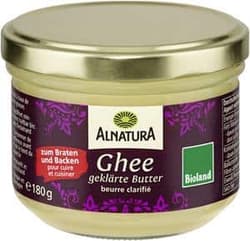

 Al Dar Unt clarifiat ghee 100%
Smoke point and the science of temperature: why cast-iron pans love ghee
The smoke point represents the temperature threshold at which the chemical bonds of a cooking fat break down, releasing visible smoke, free radicals, and potentially carcinogenic substances. For anyone who loves cooking a beef steak with a crispy crust, frying aromatic rice, or browning vegetables in a heavy cast-iron pan, knowing this point is vital.
While unrefined butter starts to dangerously degrade as low as 150 degrees Celsius, classic clarified butter withstands up to 200 degrees Celsius without hesitation. Ghee takes this performance even further: the precise elimination of water and any protein molecules pushes its smoke point to a spectacular 250 degrees Celsius. This resistance far exceeds extra virgin olive oil, standard sunflower oil, and even pork lard.
| Fat type | Smoke point | Residual water | Lactose and casein | Flavor profile | Ideal use |
|---|---|---|---|---|---|
| Classic butter 82% | 150 to 175°C | 16 to 18% | Present | Milky, sweet, creamy | Fresh bread, pastries, cold-mounted sauces |
| Clarified butter | 200 to 210°C | Under 0.2% | Imperceptible traces | Pure, delicate, neutral butter | Hollandaise sauce, delicate pan-seared fish, sautéed vegetables |
| Ghee butter | Up to 250°C | Almost 0% | Completely absent | Intense, toasted hazelnut | Cast-iron steaks, Asian dishes, quick sautés |
Why is this stability so valuable for your family's health? When you fry in a fat that doesn't reach its critical burning point, the food does not absorb bitter oxidation products. The center of the meat remains juicy, the exterior becomes crispy and browned, and your home stays airy and welcoming, without suffocating clouds of smoke.
Easy digestion and nutrition: goodbye lactose intolerance
Millions of people avoid dairy products due to lactose intolerance or sensitivity to milk proteins, especially A1 casein. This is where the biochemical miracle of clarified butter and ghee comes in. By physically removing the water content and carefully filtering out all coagulated residues, both products become virtually lactose- and casein-free.
This purification turns them into a safe and comfortable option for people who love the authentic taste of butter, but want to avoid bloating or gastric discomfort. In addition, the nutritional profile of pure fat offers benefits that ultra-processed plant fats can never match.
Discover clean options from partner farms in our selection of butter and dairy fats, respecting animal welfare and providing whole milk from pasture-fed cows.
What you'll find in a spoonful of pure ghee
The fat in clarified butter contains short- and medium-chain fatty acids, known for supporting gut flora and providing immediate energy.


The passionate chef's guide: when to choose each variety
Smart cooking does not mean throwing classic butter in the trash and blindly replacing it with ghee in every dish. On the contrary, the secret lies in pairing the profile of each fat with the right cooking technique and the sensory result you want to achieve.
- Beef browned on cast iron without a drop of smoke.
- Creamy Indian curries such as the classic Dal Makhani.
- Root vegetables flawlessly caramelized in the oven.
- Gourmet popcorn with a deep aroma of browned butter.
- Noble emulsions: Hollandaise sauce and Béarnaise sauce.
- Delicate trout or pike-perch fillets quickly pan-seared.
- Crisp sautés of fresh mushrooms or fine asparagus.
- Silky fried eggs cooked over medium to high heat.
- Fluffy crescents, croissants, and delicate layered doughs.
- A generous layer on a warm slice of sourdough bread.
- Mounting cold sauces at the end of cooking for intense gloss.
- Homemade cookies and cakes where moisture matters.
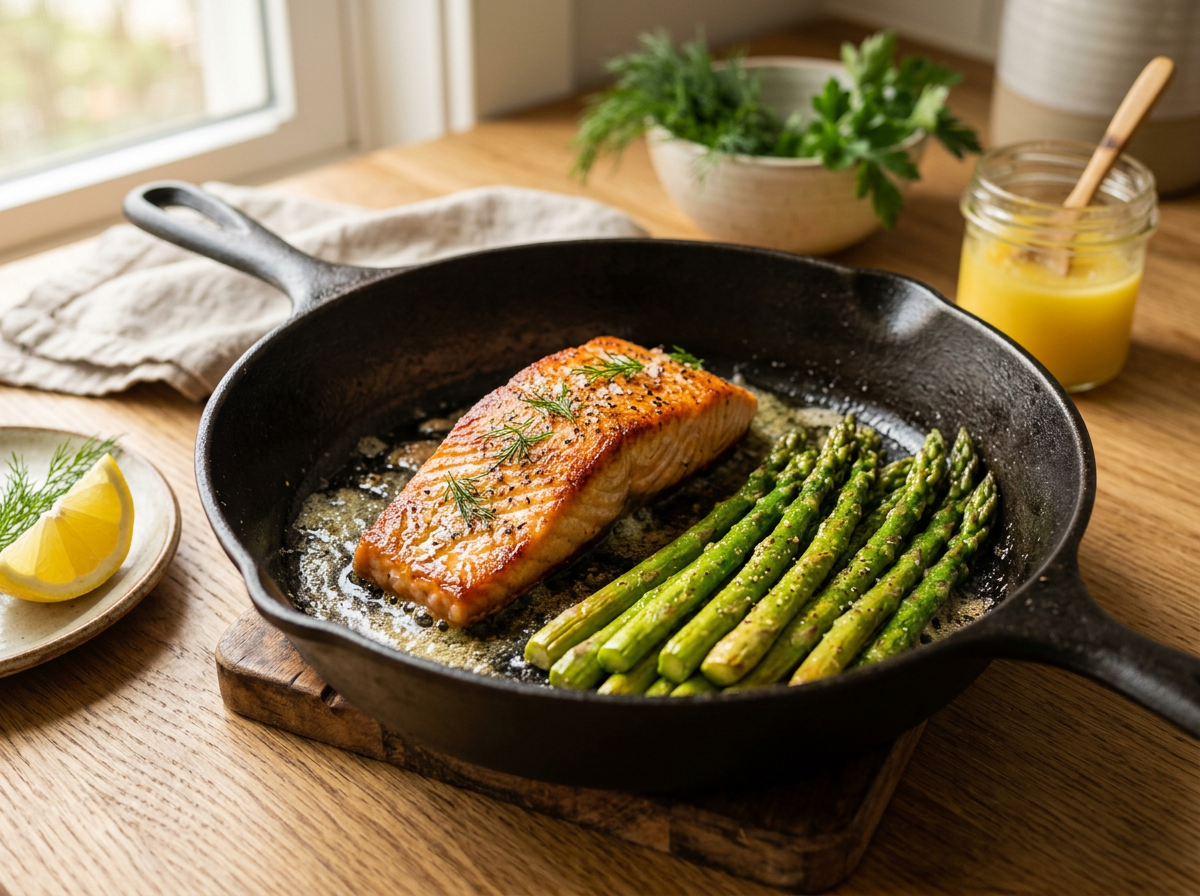
If you want to test the magic of ghee tonight, try the Dal Makhani recipe on Sezamo Chef where lentils and spices blend into a silky sauce. And for the refinement of European clarified butter, get inspired by the pike-perch recipe with carrot purée, where the fish gets a perfectly golden crust.

 260 min


 Under an hour
Long-term pantry storage and step-by-step preparation at home
One of the biggest practical advantages of clarified butter is its exceptional shelf life. Why does classic butter spoil in the fridge after a few weeks? The answer is water. Moisture provides fertile ground for the growth of microorganisms and for the process of hydrolytic rancidification. By removing water down to the last drop, ghee becomes completely biologically stable and can be stored at room temperature for several months.
If you want to experiment with preparing it in your own kitchen using top-quality Romanian butter from Sezamo, here are the simple steps followed by great chefs: