
Only 12 items left
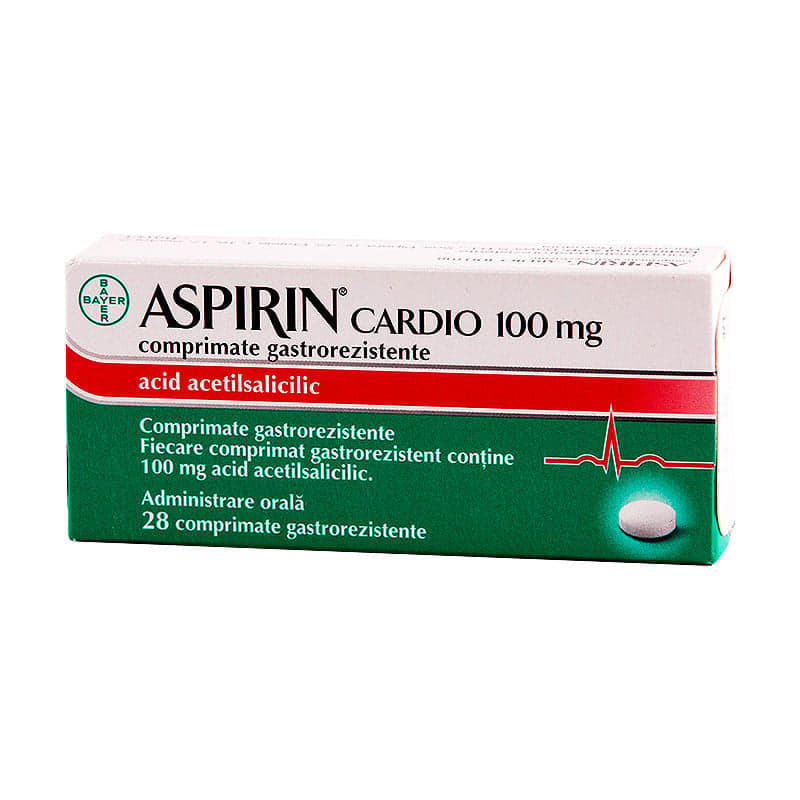
Bayer Aspirin Cardio 100 mg is an over-the-counter medication designed to support your cardiovascular health. It features 28 gastro-resistant tablets formulated with acetylsalicylic acid. They work by preventing blood clots, effectively reducing the risk of myocardial infarction and stroke. It is a reliable choice for secondary prophylaxis and long-term heart protection, easily taken with water after meals.
Similar products
More from this brand
Description

Composition. The active substance is acetylsalicylic acid. Each tablet contains 100 mg acetylsalicylic acid. Excipients: core - powdered cellulose, corn starch; film - methacrylic acid-ethyl acrylate copolymer 1:1, polysorbate 80, sodium lauryl sulfate, talc, triethyl citrate.
Therapeutic indications. Aspirin CARDIO 100 inhibits the adhesion and aggregation of blood platelets (thrombocytes) and thus prevents the formation of developing blood clots (thrombi) (inhibition of platelet aggregation). Aspirin CARDIO 100 mg is used:
- to reduce the risk of mortality in patients suspected of acute myocardial infarction,
- to reduce the risk of morbidity and mortality in patients with a history of myocardial infarction,
- for secondary prophylaxis of cerebrovascular accident,
- to reduce the risk of transient ischemic attacks (TIA) and stroke in patients with TIA,
- to reduce the risk in patients with stable and unstable angina pectoris,
- for thrombembolism prophylaxis after vascular surgery or surgical interventions, e.g. PTCA (Percutaneous Transluminal Coronary Angioplasty), CABG (Coronary Artery Bypass Graft), carotid endarterectomy, arteriovenous shunts,
- for prophylaxis of deep venous thrombosis and pulmonary embolism after long-term immobilization, e.g. after major surgery,
- to reduce the primary risk of myocardial infarction in individuals with cardiovascular risk factors, e.g. diabetes mellitus, hyperlipidemia, arterial hypertension, obesity, smoking, advanced age.
- for prophylactic inhibition of platelet aggregation in coronary aneurysm.
Dosage and administration.
Always take Aspirin CARDIO 100 mg exactly as stated in this leaflet. Please consult your doctor or pharmacist if you are unsure how to take this medicine.
Unstable angina pectoris, prophylaxis of myocardial infarction recurrence, after vascular surgery, prophylaxis of transient ischemic attacks (TIA) and cerebral infarction: The recommended daily dose is one gastro-resistant tablet of Aspirin CARDIO 100 mg (equivalent to 100 mg acetylsalicylic acid per day).
Acute myocardial infarction: The recommended daily dose is three gastro-resistant tablets of Aspirin CARDIO 100 mg (equivalent to 300 mg acetylsalicylic acid per day).
Prophylaxis of venous thrombosis and pulmonary embolism: The recommended daily dose is one Aspirin CARDIO 100 mg tablet (equivalent to 100 mg acetylsalicylic acid).
Prophylaxis of coronary vessel thrombosis in patients with multiple risk factors: The recommended daily dose is 1-2 Aspirin CARDIO 100 mg tablets (equivalent to 100-200 mg acetylsalicylic acid) or one Aspirin CARDIO 300 mg tablet (equivalent to 300 mg acetylsalicylic acid) at 2-day intervals.
Tablets should be taken after meals and swallowed whole with a sufficient amount of liquid (e.g., a glass of water). For the treatment of acute myocardial infarction, the first film-coated tablet should be crushed or chewed.
Aspirin CARDIO 100 mg is intended for long-term use. The doctor must decide on the duration of treatment.
Precautions
Take special care when using Aspirin CARDIO 100 mg
- if you have hypersensitivity to analgesics / anti-inflammatories / antirheumatics and in the presence of other allergies;
- if you have other allergies (for example, skin reactions, itching, urticaria);
- if you have bronchial asthma, hay fever, swelling of the nasal mucosa (nasal polyps) or chronic respiratory tract diseases;
- if you are undergoing concomitant treatment with anticoagulants (for example, coumarin derivatives, heparin - with the exception of low-dose heparin treatment)
- if you have a history of gastrointestinal ulcers, including chronic or recurrent ulcers or a history of gastrointestinal bleeding;
- if you have severe hepatic insufficiency;
- if you have renal insufficiency or cardiovascular circulatory insufficiency (for example, vascular renal diseases, congestive heart failure, hypovolemia, major surgery, sepsis or major hemorrhagic events), because acetylsalicylic acid can further increase the risk of renal insufficiency and acute renal failure;
- if you need to undergo surgery (including minor surgeries, such as tooth extractions): an increased tendency to bleed may occur. Please inform your dentist if you have taken Aspirin CARDIO 100 mg;
- if you suffer from congenital glucose-6-phosphate dehydrogenase (G6PD) deficiency, acetylsalicylic acid can induce hemolysis or hemolytic anemia. Factors that can increase the risk of hemolysis, for example, high doses, fever or acute infections.
Special warnings.
Pregnancy
If you discover that you have become pregnant during treatment with Aspirin CARDIO 100 mg, you must immediately contact your doctor. In the first and second trimesters of pregnancy, Aspirin CARDIO 100 mg can only be taken if your doctor has recommended it. In the last trimester of pregnancy, acetylsalicylic acid, the active ingredient of Aspirin CARDIO 100 mg, should not be taken in doses higher than 150 mg per day, due to an increased risk of complications for the mother and child before and during birth. In the last trimester of pregnancy, doses of up to 150 mg acetylsalicylic acid per day can only be taken if prescribed by your doctor.
Breastfeeding
Small amounts of acetylsalicylic acid and its active metabolites pass into breast milk. No negative effects on the child have been reported to date, therefore it is not necessary to interrupt breastfeeding, but the daily dose should not exceed 150 mg. If you take higher doses (more than 150 mg per day), the patient should stop breastfeeding.
Driving and using machines
No special precautions are necessary.
Packaging. Box with 3 blisters of 10 gastro-resistant tablets each
Page updated on: 09.06.2021
Composition & Allergens
Composition
: Acid acetilsalicilic