
Ciorba rădăuțeană: povestea și rețeta originală
Nu e o rețetă veche de sute de ani, deși gustul ei acru cu smântână pare desprins din alt secol. Ciorba rădăuțeană are un inventator cu nume și prenume, un oraș din Bucovina și o poveste pe care majoritatea celor care o mănâncă duminica nu o știu. Îți spunem de unde vine, ce pui în oală și, mai ales, cum să dregi zeama cu smântână și ouă fără să ți se taie în ultimul minut.
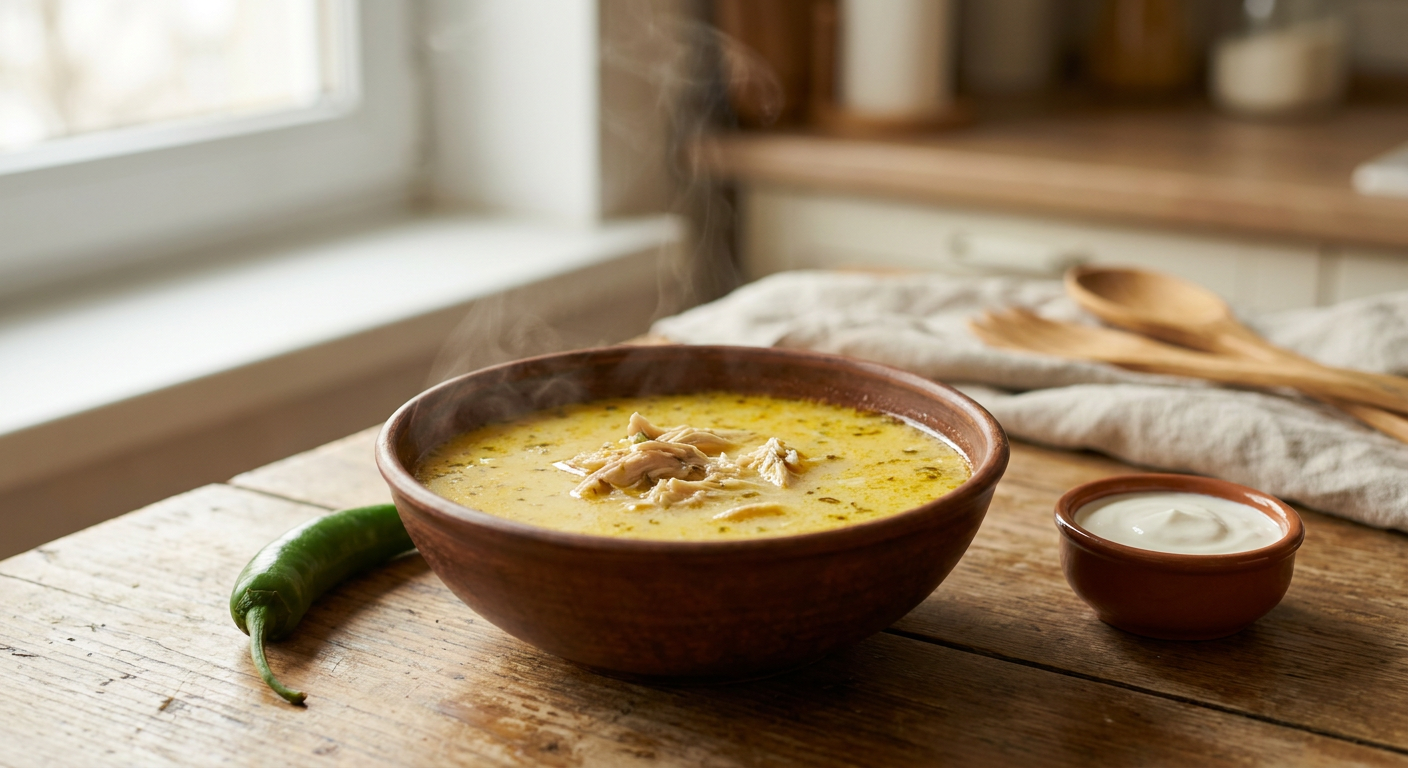
Cremoasă, acrișoară și gata în mai puțin de o oră de fiert efectiv.
O supă născută, nu moștenită
Spre deosebire de ciorba de burtă sau de borșul de vacă, moștenite din bucătăria românească veche, rădăuțeana e o invenție cu dată de naștere aproximativă: în jurul anului 1980, la un restaurant din Rădăuți, bucătăreasa Cornelia Dumitrescu a pus la cale o supă cremoasă de pui, dresă cu usturoi și smântână, fără roșii și fără foietaj de legume colorate. Rețeta a prins repede în tot orașul, apoi în toată Bucovina, iar de acolo a ajuns pe mesele din toată țara sub numele orașului care a lansat-o.
Ce a făcut-o diferită de restul ciorbelor românești a fost tocmai lipsa de zorzoane: zeamă limpede de pui, rădăcinoase tăiate mărunt, iar la final dresul acru cu usturoi din belșug. Nimic ars, nimic prăjit, doar fierbere blândă și răbdare pentru zeama de bază.
În oală intră doar ce contează
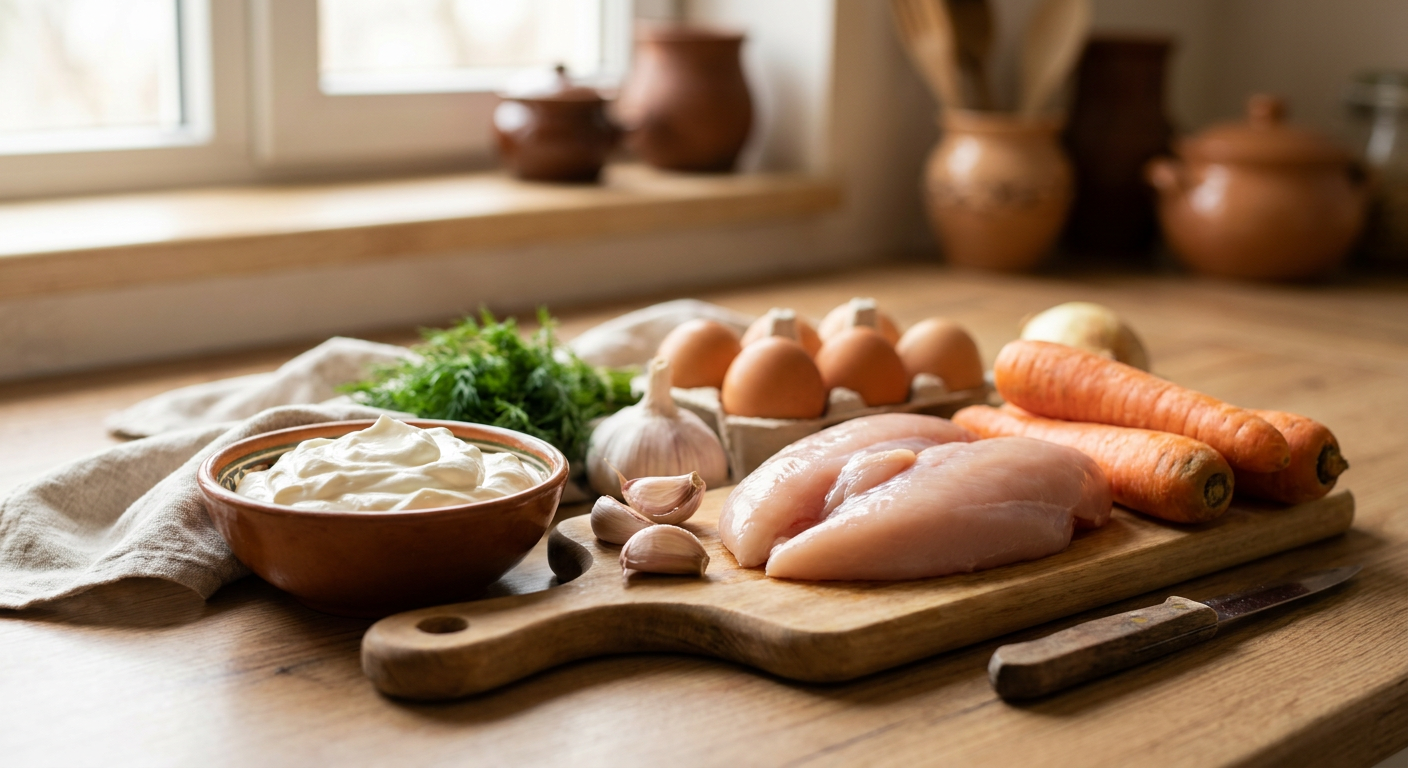
Lista scurtă e cheia. Rădăuțeana clasică nu are nevoie de mai mult de opt ingrediente de bază, dar fiecare trebuie să fie bun, pentru că zeama nu are unde să ascundă un ingredient slab. Nu există ceapă călită, nu există bulion, nu există foșofă, iar asta e intenționat: cu cât zeama e mai curată, cu atât se simte mai bine dresul de la final.
- Piept de pui cu os, pentru o zeamă cu gust, nu doar carne fiartă
- Morcov, păstârnac și țelină, tăiate cubulețe mici, nu răzuite
- Usturoi, mult mai mult decât ai pune la o ciorbă obișnuită
- Smântână grasă și ouă pentru dresul cremos
- Oțet sau zeamă de la murături pentru aciditatea finală
De ce cubulețe mici la rădăcinoase, și nu felii sau răzuite pe răzătoarea mare? Pentru că rădăuțeana se mănâncă cu lingura, dintr-un singur gest, iar bucățile trebuie să fie destul de mici cât să încapă fără să le tai în castron. Răzuite, rădăcinoasele s-ar dezintegra la fierbere și ar îngroșa zeama fără rost, înainte să apuce dresul să facă asta cum trebuie. Iar dacă vrei o variantă mai apropiată de cea servită azi în Bucovina, unele bucătărese adaugă și un pic de pătrunjel rădăcină alături de păstârnac, pentru o aromă și mai dulce a zemii de bază.
Zeama întâi, carnea pe urmă
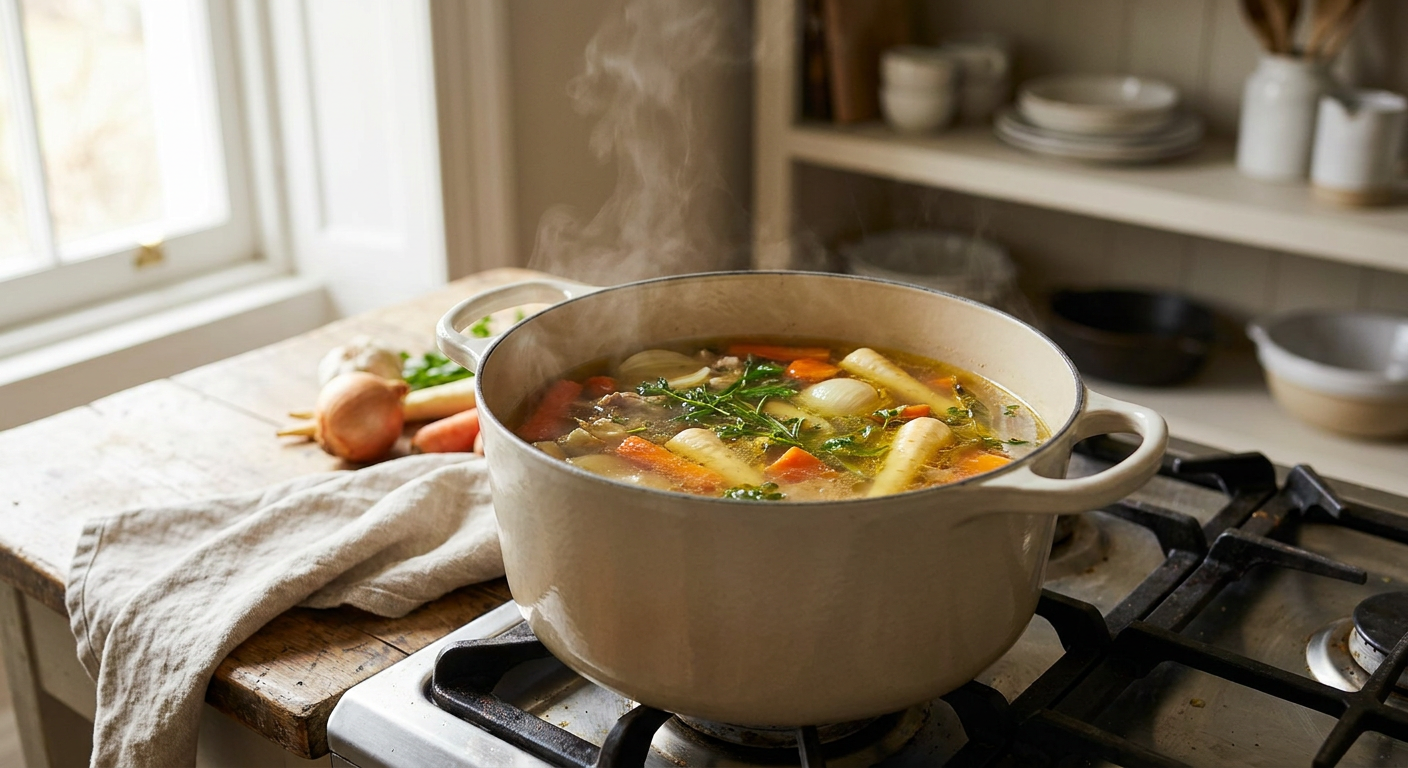
Rădăuțeana nu se grăbește la primul pas. O zeamă de pui fiartă în liniște, la foc mic, cu spuma luată constant, e diferența dintre o ciorbă limpede și una tulbure care miroase a carne fiartă în grabă. Dacă dă în clocot mare, zeama se tulbură și pierzi tocmai claritatea care face rădăuțeana altfel decât o supă obișnuită de pui.
Zeama de bază
Pui pieptul de pui la fiert în apă rece cu puțină sare, ia spuma des și lasă la foc mic 40 de minute, fără capac.
Rădăcinoasele
Adaugă morcovul, păstârnacul și țelina tăiate cubulețe mici și mai lasă totul la fiert încă 20 de minute, până sunt moi.
Carnea se scoate
Scoți pieptul de pui, îl lași puțin la răcit, apoi îl tragi fâșii cu furculița, niciodată tăiat cubulețe cu cuțitul.
Usturoiul pisat
Pisezi bine usturoiul cu puțină sare până devine pastă și îl pui deoparte pentru dres, nu direct în oala fierbinte.
După ce ai tras carnea fâșii și rădăcinoasele s-au înmuiat, o poți lăsa pe foc minim câteva minute bune înainte să treci la dres, ca gusturile să se lege bine. E momentul în care mulți grăbesc pasul, dar tocmai această răbdare de 5 minute face diferența între o zeamă plătă și una cu adevărat aromată.
 45 min

Dresul care face sau strică toată ciorba
Aici se pierd majoritatea rădăuțenilor de casă. Smântâna și ouăle nu se toarnă niciodată direct în oala clocotită, pentru că se taie pe loc și rămâi cu o zeamă cu firișoare, nu cu o cremă catifelată.
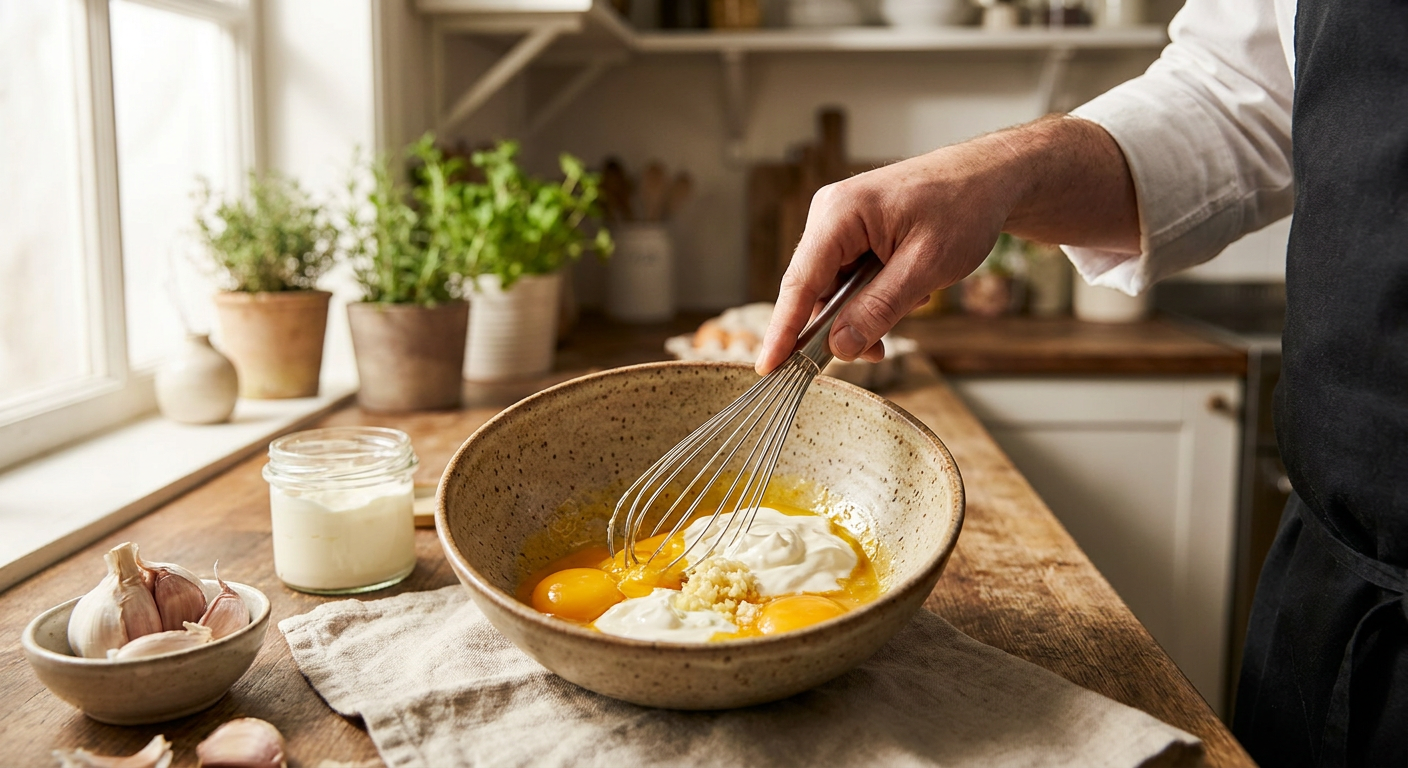
Amesteci într-un bol separat smântâna, gălbenușurile și usturoiul pisat până devine o pastă omogenă. Apoi iei câteva polonice de zeamă caldă, nu clocotită, și le torni treptat peste amestec, amestecând continuu, ca să egalizezi temperatura. Abia după ce compoziția s-a încălzit uniform, o torni înapoi în oală, la foc mic, fără să mai fiarbă în clocot.
Secretul: temperatura crește treptat, nu brusc. Dacă simți că zeama e prea fierbinte când torni compoziția, mai așteaptă un minut cu focul dat la minimum.